Lockouts · Strathroy-Caradoc
Break-In Damage Lock Repair in Strathroy-Caradoc
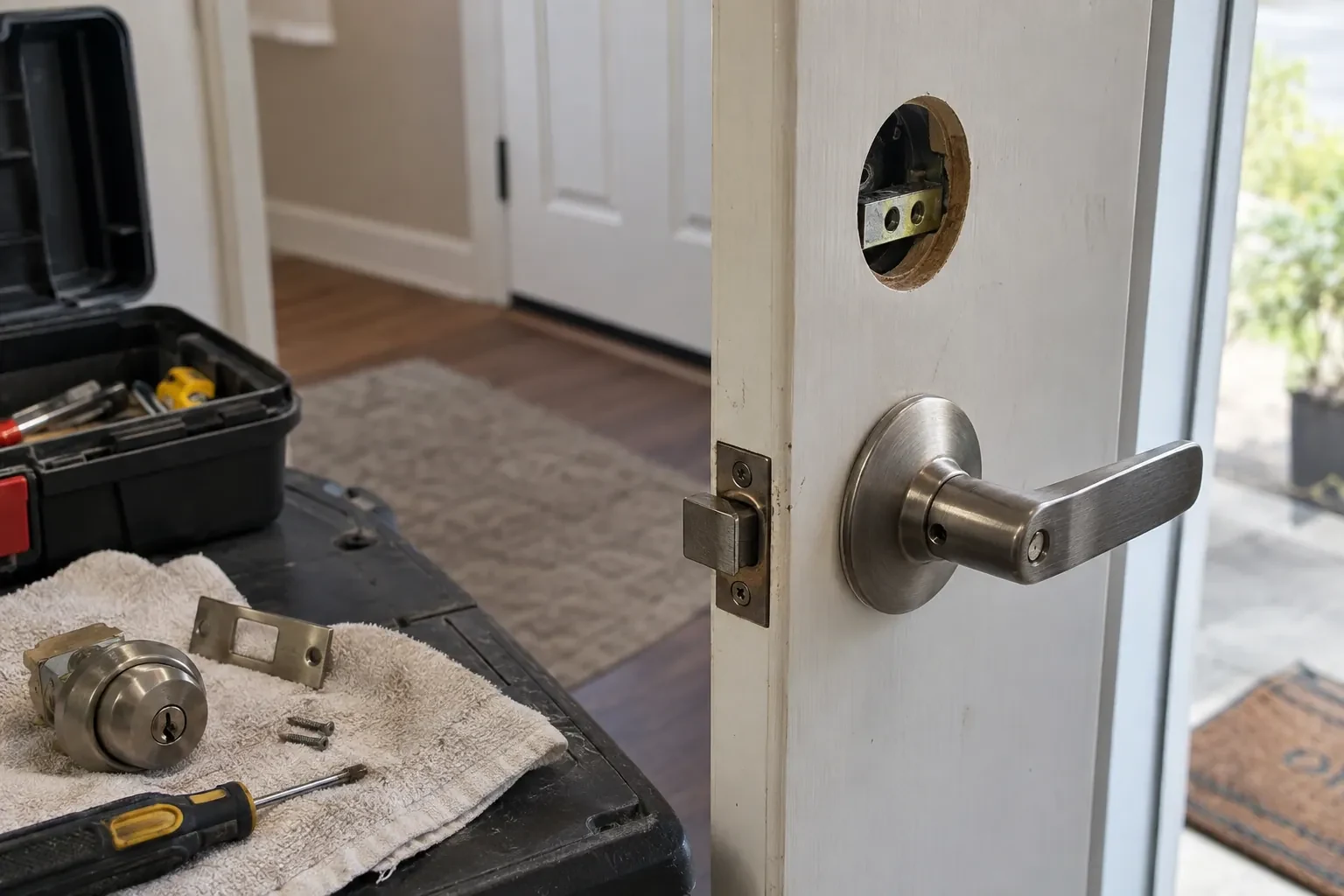
There is a hole where the cylinder used to be.
In plain words
Most forced doors fail at the frame, not the lock. A standard strike plate is held by two short screws in a softwood jamb, and a kick transfers the whole force of a body to those screws. The bolt usually survives; the wood around it does not. Swapping the deadbolt for a heavier one leaves the weak point untouched, so a proper break-in repair rebuilds the strike side with a boxed strike, a pocket cut to full depth and three-inch screws that pass through the jamb and the shim space into the stud behind. The lock is replaced too, but the frame is where security returns.
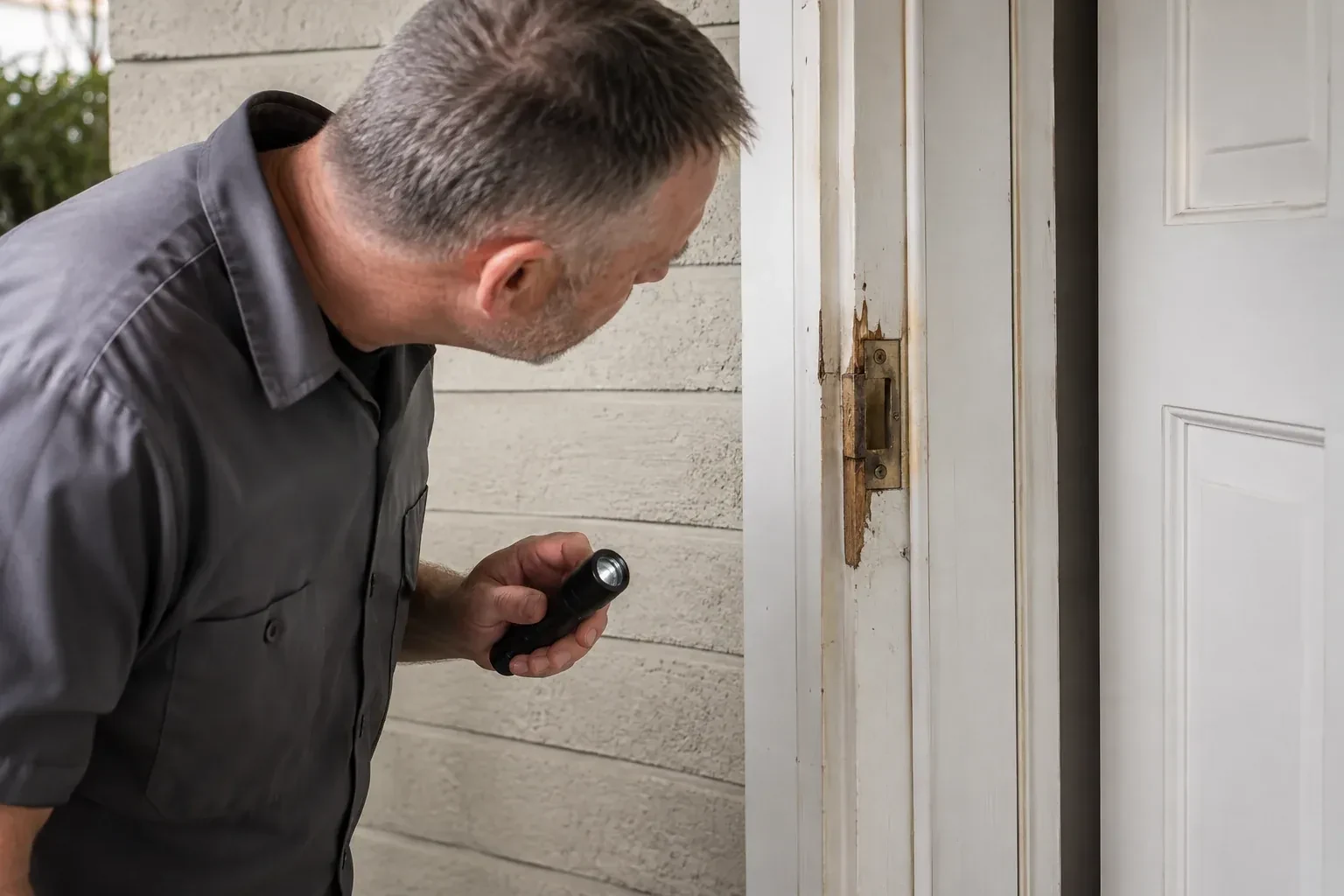
How the visit goesThey did not get in. The attempt left a screwdriver gouge in the door edge, a strike plate bent outward and a deadbolt that now needs a shove to throw. The lock held, but the door is telling you it was tested.
Break-In Damage Lock Repair
How the visit goes
Does the door still hang true
An impact hard enough to break a strike usually moves the door as well. The locksmith checks that the door sits square in its opening, closes on its weatherstrip without force, and that the bolt lines up with its pocket rather than dragging on the strike lip. Hinge screws are tested for grip, since a kick can pull them from the jamb even on the side that was not attacked, and the hinge leaves are checked for bending. Manufacturers treat strike position, pocket depth and door alignment as working parts of the lock, and a repair that ignores them produces a door that locks badly the day after it was fixed.
Rebuilding the strike side
The strike is where most forced doors failed, so it is rebuilt rather than reattached. The old plate comes off and the bolt pocket is cut to full depth, since a pocket that is too shallow stops the bolt from extending completely and leaves it easier to push back. A security strike with a boxed pocket is set flush into the jamb, its long screws driven through the jamb and shim space into the wall stud, with the longest screws placed nearest the door stop where the bolt bears. Pilot holes are drilled first so the screws seat without splitting the repaired wood. The bolt now pushes against framing lumber instead of two short screws in soft trim.
Glass and the reach-in problem
When entry came through glass beside the door, the lock was never the weakness, and the follow-up is about the glass. A tested security-film system, applied with its specified frame attachment, can slow an arm from passing through the sidelight, or the pane is replaced with laminated glass by a glazier. Where the layout allows, the deadbolt is repositioned beyond arm's reach of the glass. A thumb-turn stays on the inside, because it lets everyone leave without hunting for a key, and a keyed inside cylinder trades one risk for a worse one if there is ever a fire. The result keeps the intruder out and the way out clear.
Break-In Damage Lock Repair
In the van
Grade 1 deadbolt with one-inch throw
Security strike box
Hinge reinforcement plate
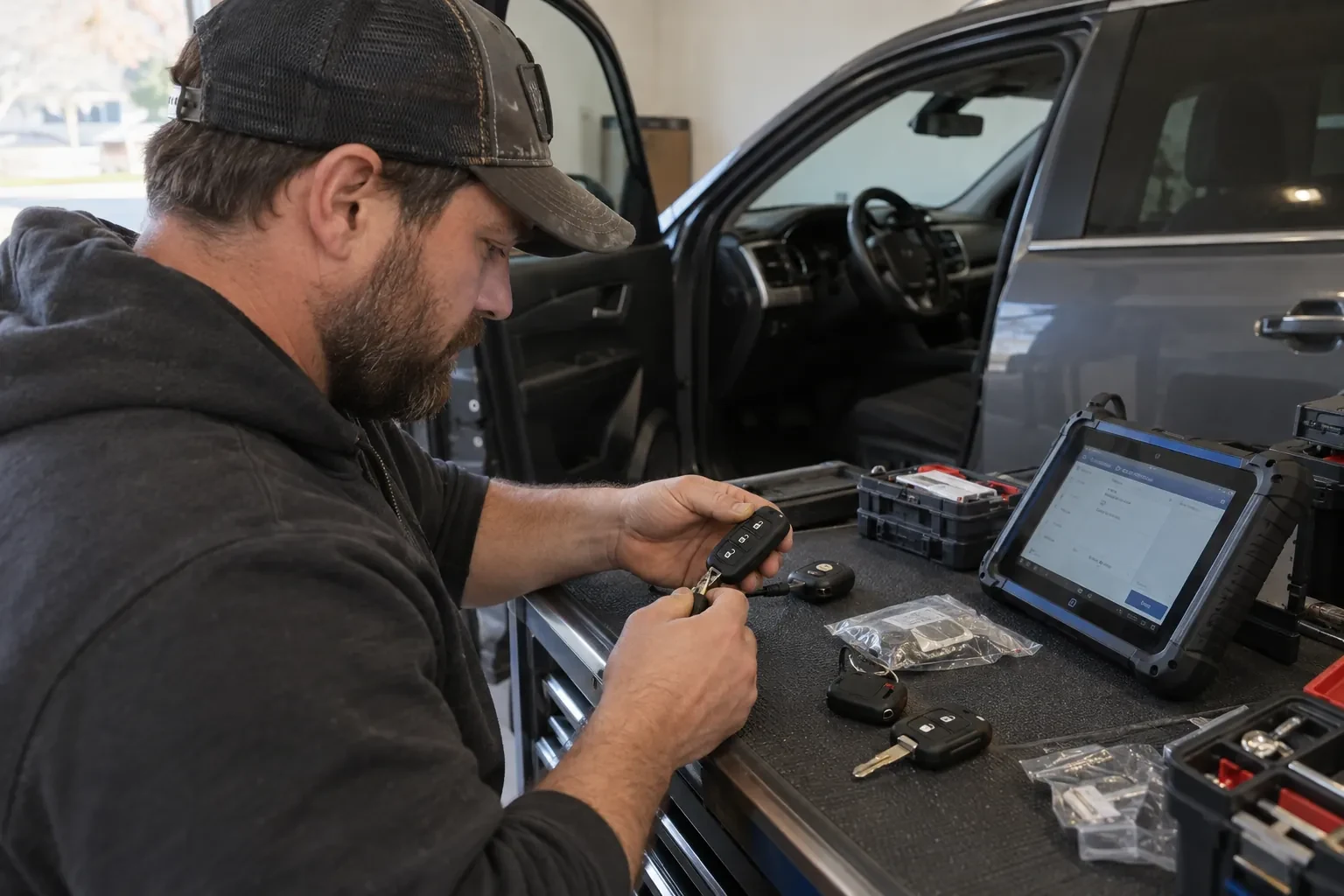
Replacement cylinder or core
Three-inch strike and hinge screws
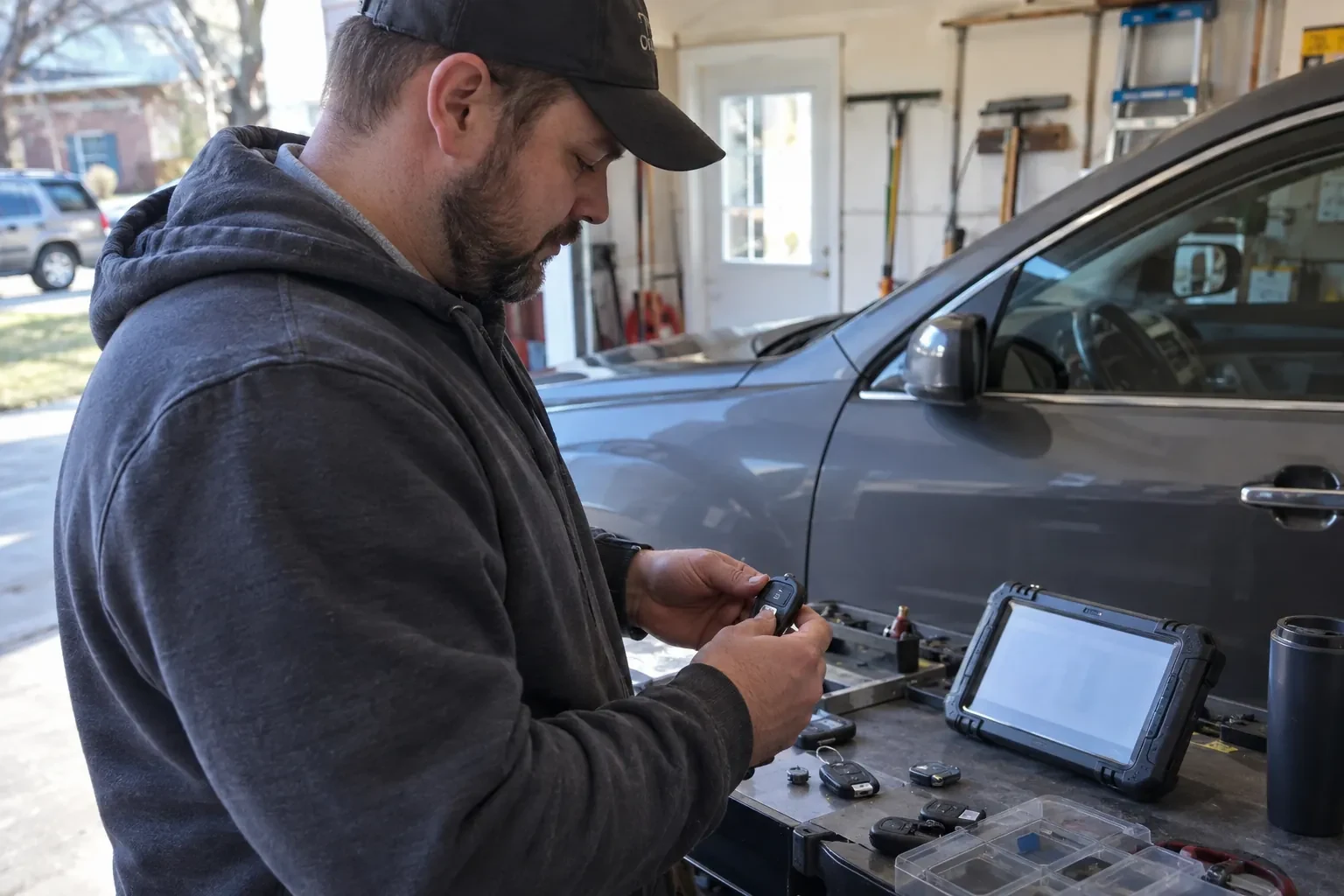
Break-In Damage Lock Repair
What affects the quote
How many parts were damaged
One broken cylinder on a sound frame is a small repair. A torn strike, a split jamb, a crushed door edge and bent hinges together are a longer visit with more hardware, and the quote follows the count.
Matching finish and style
Choosing hardware that matches the existing trim, finish and handle style on your other doors can mean ordering rather than fitting from stock, which the quote notes.
Sliding door hardware
Putting a slider back on its track, replacing its latch and adding anti-lift blocks, a foot bolt or an auxiliary lock is a different parts list from a hinged door, and is quoted as such.
What to have ready
- What kind of lock was on the door: knob, lever, deadbolt, mortise or keypad?
- Which door or opening was forced, and does it still close at all?
- Is this a suite door in an apartment or condo building?
Break-In Damage Lock Repair: questions
QuestionsI rent. Who arranges the repair, and can I change the lock myself?
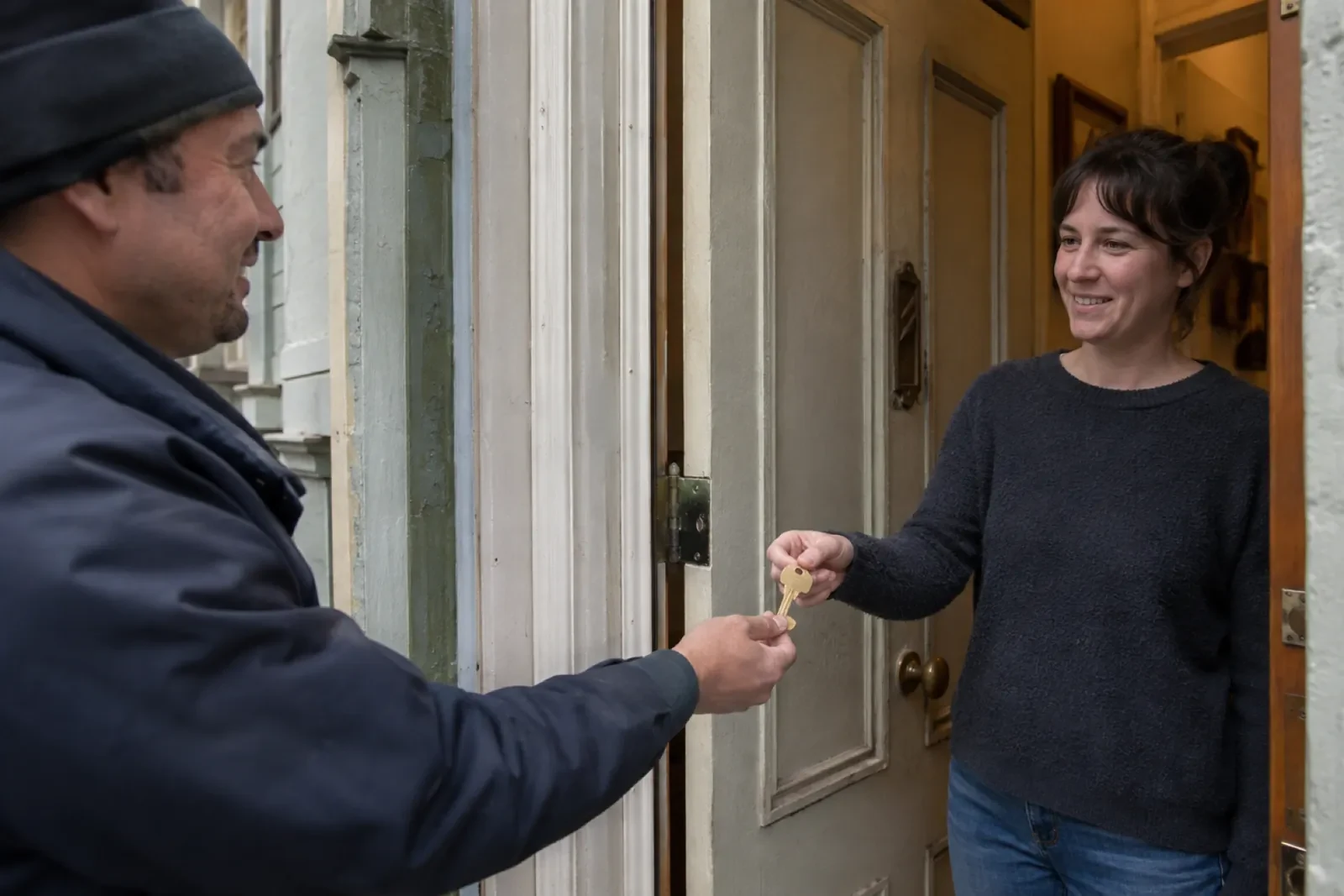
Tell your landlord or property manager as soon as the police have been called; provincial tenancy law makes the landlord responsible for repairs to the unit, and most will arrange the locksmith. A tenant may not change locks without the landlord's agreement, and a landlord who changes them must give the tenant keys, so the visit is coordinated between you. If you arrange securing yourself in an emergency, keep the receipt and the record of what was done for both sides.
Someone reached through the sidelight to turn the thumb-turn. Should I fit a deadbolt keyed on both sides?
It is tempting, but a thumb-turn lets everyone in the household leave by that door without hunting for a key, special device or special knowledge, so a keyed inside cylinder is the wrong fix. Better answers are a tested security-film system or laminated glass in the sidelight to slow an arm from passing, moving the deadbolt beyond arm's reach of the glass where the door allows, and a glass-break sensor if you have an alarm.
Why did the frame break instead of the lock?
Because that is where the weak point was. A standard strike plate is held by two short screws in a soft wood jamb, and the deadbolt only reaches into a shallow pocket behind it. A kick delivers the full weight of a body to those screws, and the wood around them splits along the grain. The bolt itself is rarely the failure. That is why the repair concentrates on the strike side: a boxed strike, a full-depth pocket and long screws into the stud.
Related services
- Business Lockout ServiceAfter last night's power flicker the card reader beside the clinic door shows nothing.
- Broken Key ExtractionThe apartment key snapped mid-turn, leaving the cylinder twisted halfway between locked and open.
- Seized & Jammed Lock OpeningThe shop's lever handle goes down as usual, but the latch inside the mortise case never pulls back.