Lockouts · Strathroy-Caradoc
Lost Keys — Same-Visit Rekey
You were shovelling the driveway after dark and the ring must have slid out of your coat pocket somewhere under a metre of snow.
In plain words
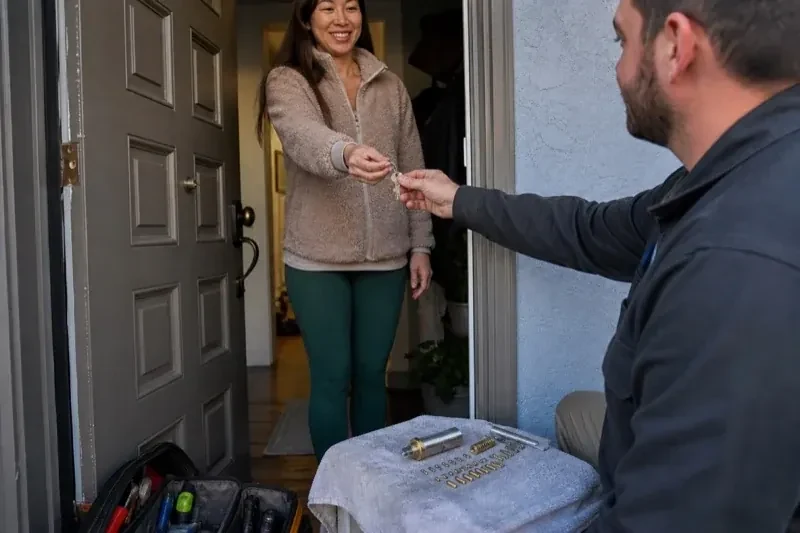
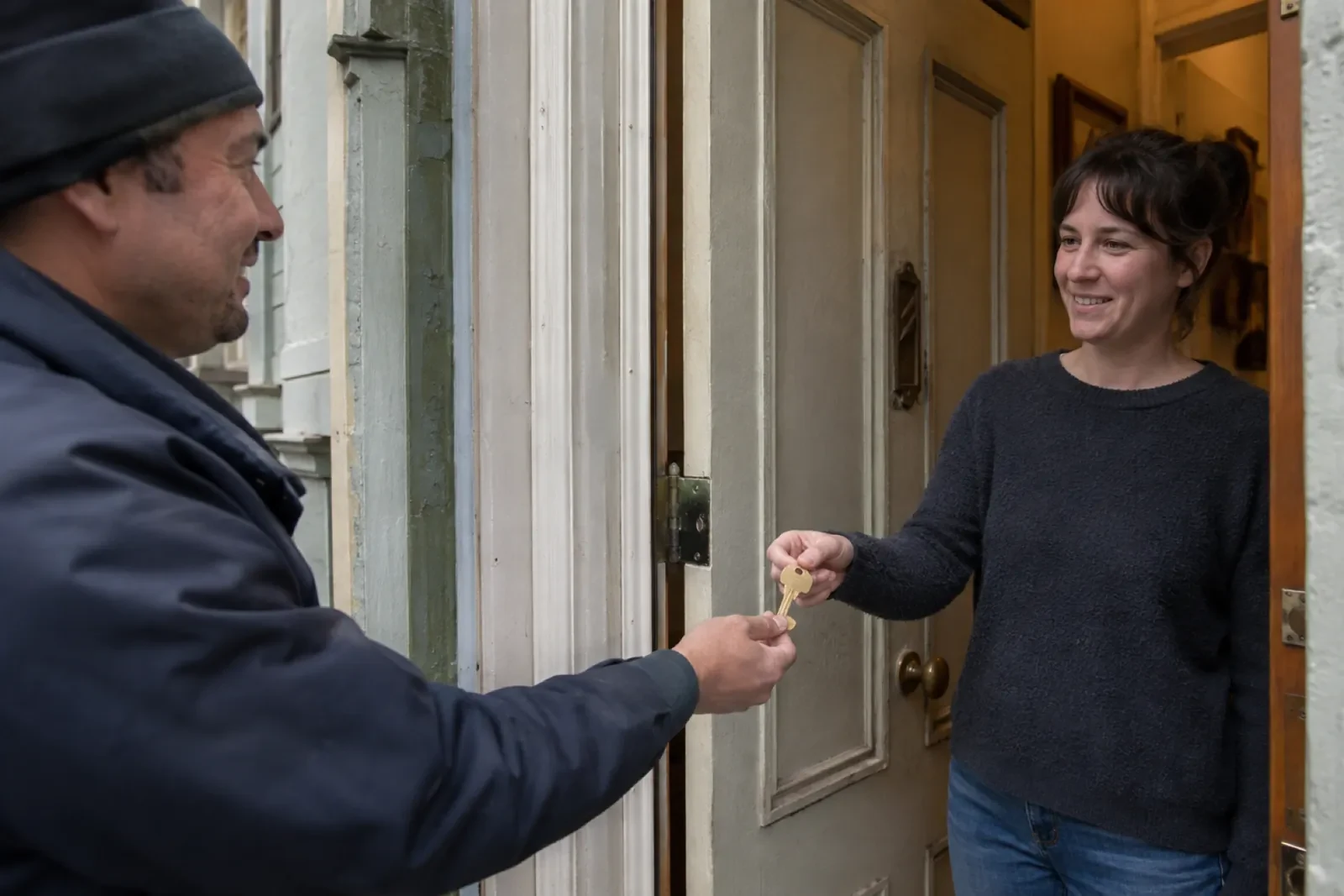
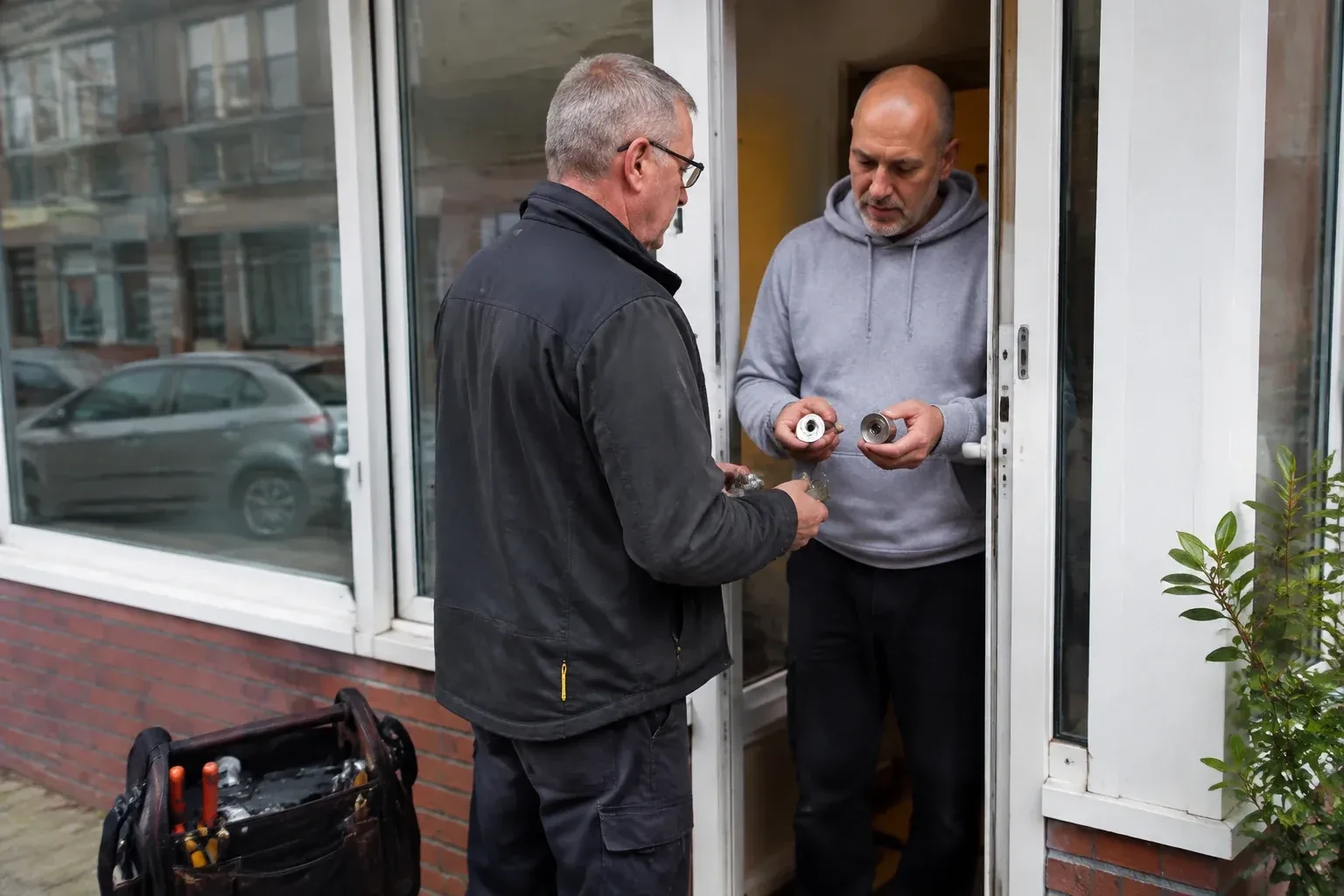
If you rent, losing a key is handled in three steps rather than one. Tell your landlord first, since a lock change on a rented unit goes smoother when both sides know about it and both end up with a working key. Then the locksmith rekeys the suite door, and any other cylinder that key fitted, with both parties knowing. Finally new keys are cut for you and for the landlord's set, so the arrangement that existed before the loss is restored on a fresh combination. Landlords generally welcome the call; their hardware stays in place and their own key set is refreshed too.
How the visit goesThe renovation wrapped up in the spring. The crew was good, the kitchen looks right, and the key you handed the foreman on day one was never handed back. Nobody kept track of who on the crew carried it.
Lost Keys — Same-Visit Rekey
How the visit goes
How many keys, and who gets them
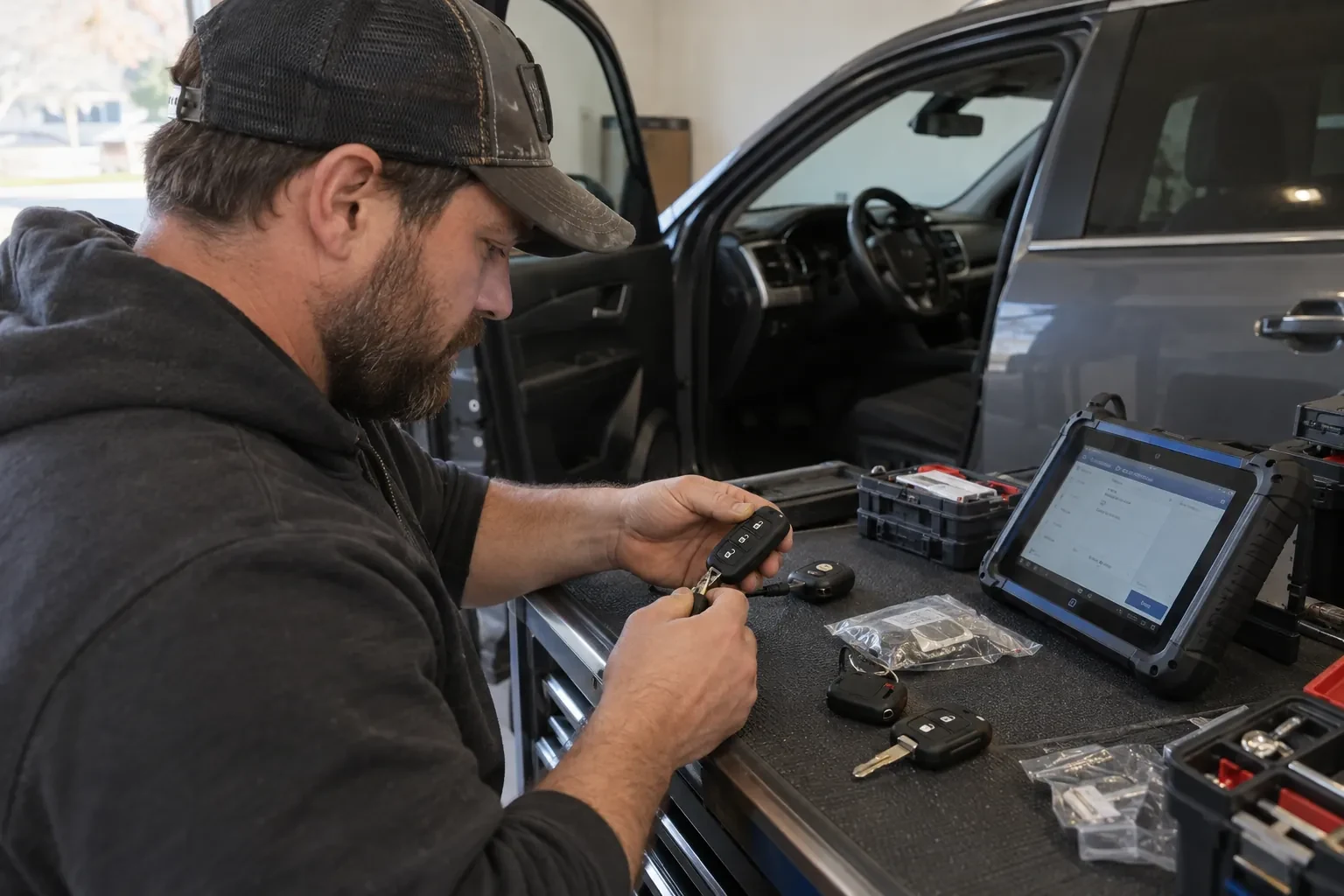
Before pins are touched, the number of keys is agreed, because that number is the whole point of key control. The locksmith asks who in the household or business needs one: each adult, a teenager, a caregiver, the neighbour who feeds the cat, the landlord, the cleaner. Each name gets a key and the total is written down. Anyone who had a copy of the old key but is not on the new list is, from that moment, simply someone without a key. Knowing the count on day one is what makes it possible, years later, to say with confidence exactly how many keys to this property exist.
Testing every key in every lock before leaving
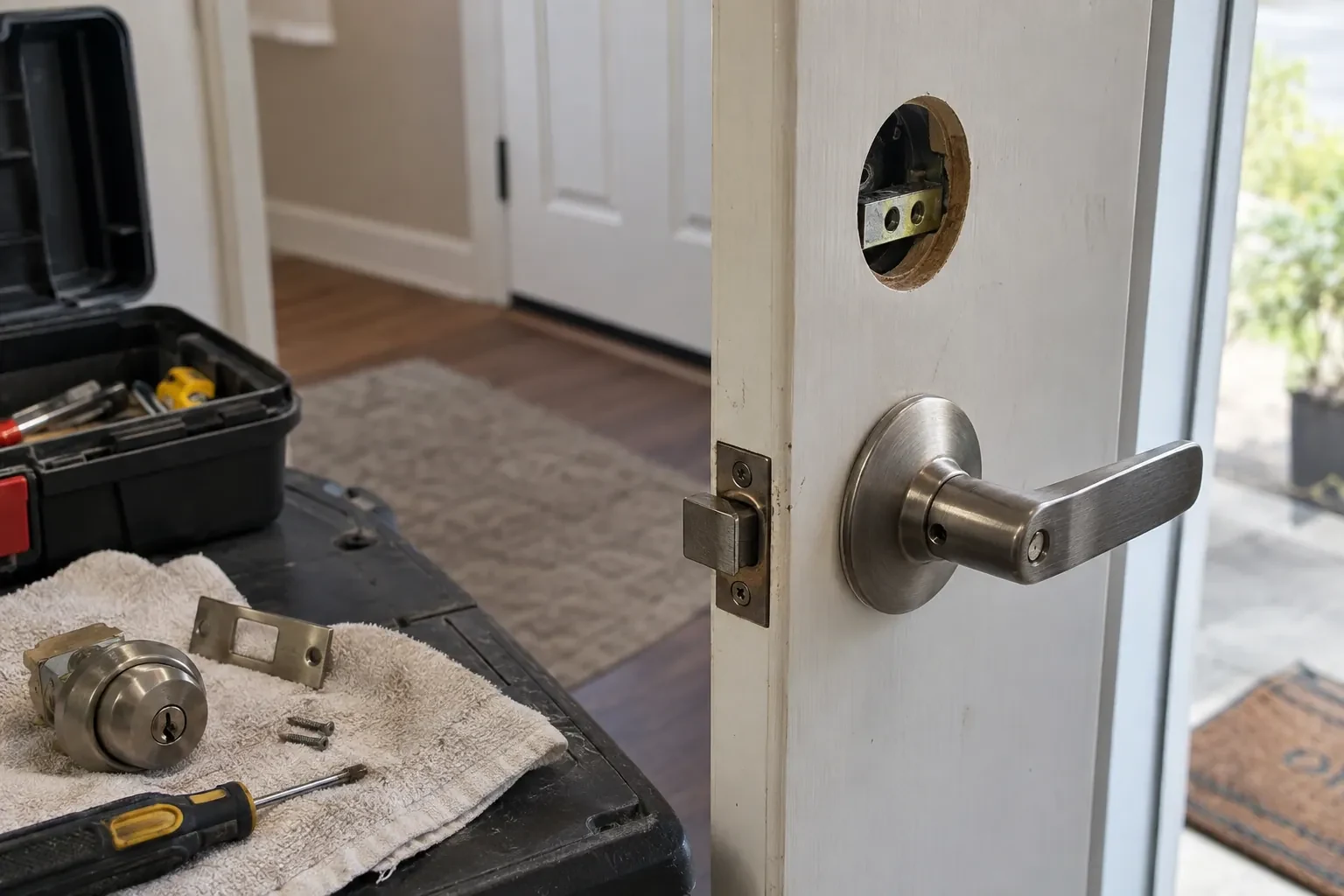
The last part of the work is deliberate repetition. Each new key is tried in each cylinder it should open, with the door open and again with it closed and bolted, so a pin that feels fine on the bench is proven on the door. The old key is tried too and shown turning nothing. Cylinders that were dry or gritty get the lubricant their maker specifies, a puff of graphite, PTFE or a specified liquid product, and a few cycles to spread it. Screws are checked snug, covers seated, and the pile of old keys and any swapped cylinders is handed to you or taken away as you prefer. Only then is the key count confirmed and written down.
One key on the ring
If the house was keyed alike during the visit, the ring that goes back in your pocket is lighter. One key opens the front door, the back door, the garage entry and the gate. Each family member carries one thing instead of a jangle, and the question of which key goes to the dog walker has one answer. New doors added later, a shed or a workshop, can be pinned to the same code when they are installed. Guests and sitters find the arrangement easier too, and a single key is a good deal harder to lose than a bunch.
Lost Keys — Same-Visit Rekey
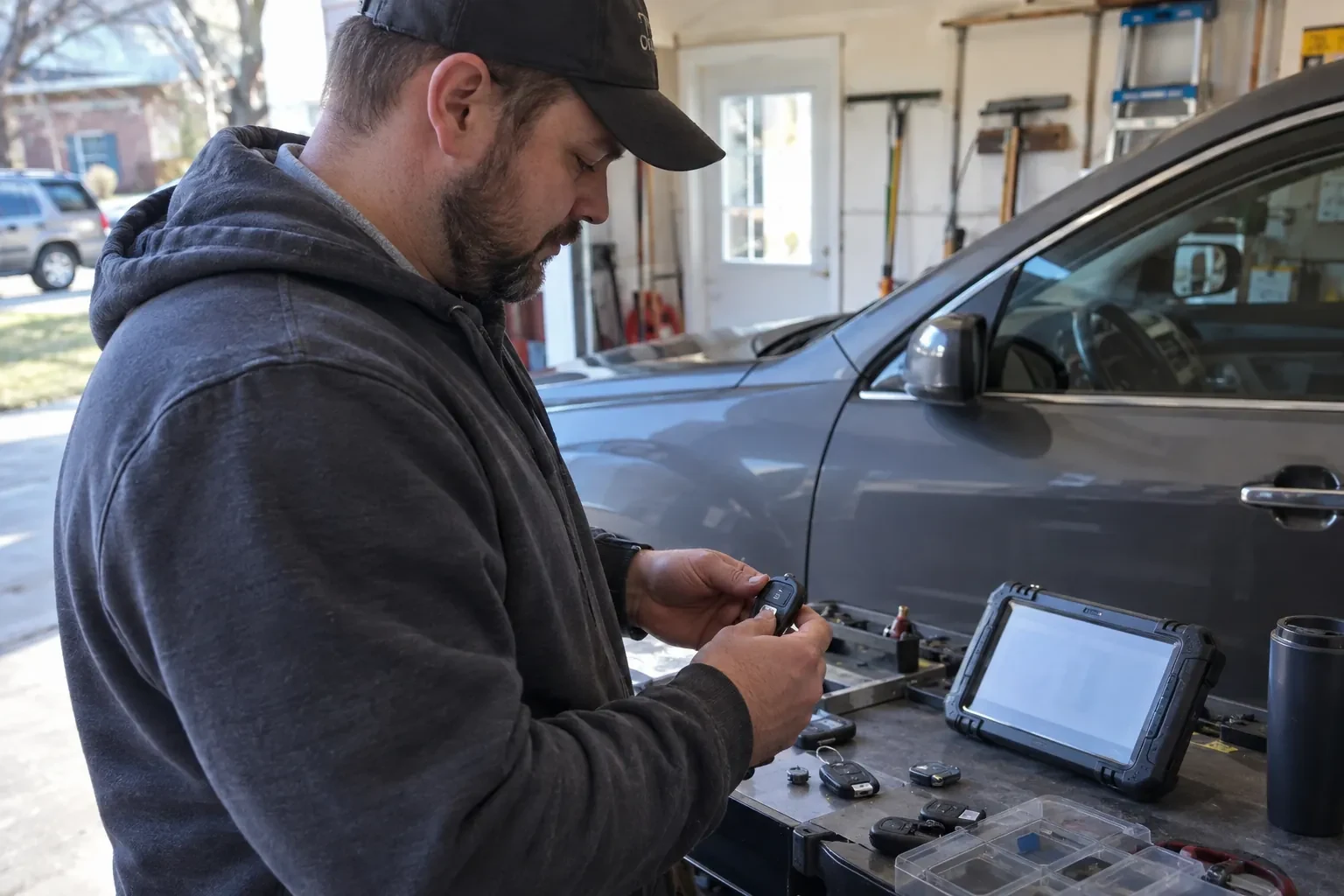
In the van
Dry graphite or PTFE lubricant
Top pins and cylinder springs
Rekeyable-cylinder reset tool
Cylinder retaining-clip and cap tools
Key blanks in common keyways
Lost Keys — Same-Visit Rekey
What affects the quote
Travel to the property
Every call-out includes the drive. A house across town and a rural property at the end of a concession road involve different time on the road, and the quote reflects the trip.
Homeowner-rekeyable cylinders without a working key
Resetting a homeowner-rekeyable cylinder when its key is gone uses that system's own reset fixture, where the installed lock supports one, and a few extra minutes per cylinder, which shows as a small line on the quote.
How many cylinders are on the list
A front door with a deadbolt and a handle is two cylinders. Add the back door, the garage entry, a side door and a shed and the count climbs, and the quote follows the number of cylinders repinned.
What to have ready
- Was a garage remote, building fob or car key on the same ring?
- Would you like every exterior door to work on one key?
- Is the property a condo or apartment with shared entrance doors?
Lost Keys — Same-Visit Rekey: questions
QuestionsI live in a condominium. Which locks are mine to rekey?
Your suite door is generally the one you can act on, and it may sit on a building master system, so the locksmith plans the rekey so the master still operates while the old change key stops working. Lobby doors, the parking gate, amenity rooms and the mailroom belong to the corporation; report a lost fob or key for those to the property manager, who deactivates or reissues it. The locksmith can help sort which is which.
How long does a whole-house rekey take?
Plan on an hour or two for a typical house with three or four cylinders, including the walk-through, identification, pinning, cutting and testing. Each additional cylinder adds a little, as does swapping a cylinder to bring a mismatched door onto the same key, resetting a homeowner-rekeyable lock or clearing a garage opener. The locksmith gives a realistic window on the phone once the list of doors is known.
My lock is the homeowner-rekeyable type but the working key is lost. Can it still be reset?
Yes. Those cylinders let an owner change the key with a small learn tool, but only while a working key is in hand. Without one, a design such as Kwikset SmartKey is removed and placed in its own reset fixture, returning it to a blank state; other cylinder types are rekeyed by their own method instead. A new key is then set and the lock goes back on. It is a few extra minutes rather than a replacement.
Related services
- Business Lockout ServiceAfter last night's power flicker the card reader beside the clinic door shows nothing.
- Broken Key ExtractionThe apartment key snapped mid-turn, leaving the cylinder twisted halfway between locked and open.
- Break-In Damage Lock RepairThere is a hole where the cylinder used to be.