Commercial · Strathroy-Caradoc
Access Control Installation
Something went missing from the storeroom over a weekend, and when you ask who was in the building, the honest answer is anyone with a key.
In plain words
Access control installation swaps a shared metal key for an electronic one: a card, a fob, a code, or a phone tap that a controller checks against a list the business manages. When someone leaves the company, their credential is switched off in seconds instead of triggering a rekey of every door they could open. The reader and locking hardware go in at each entrance that needs it, wired to a controller that holds the schedule, and the whole system is handed to the business to run once it has been tested and confirmed working.
How the visit goesHead office wants a record of who opens the branch and when, tied to an actual name rather than a shared code scrawled on a sticky note taped under the till.
Access Control Installation
How the visit goes
Reading the door and the frame
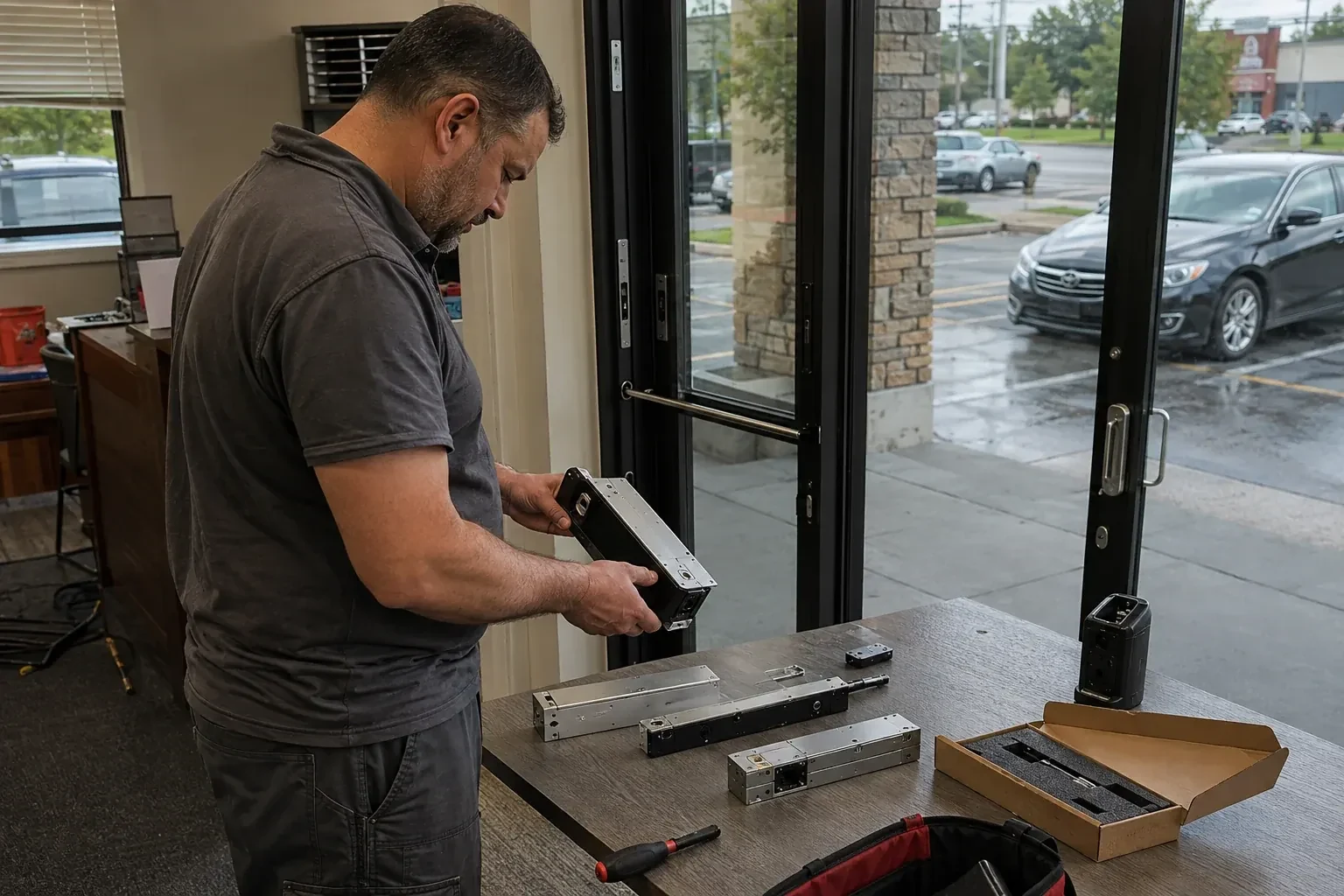
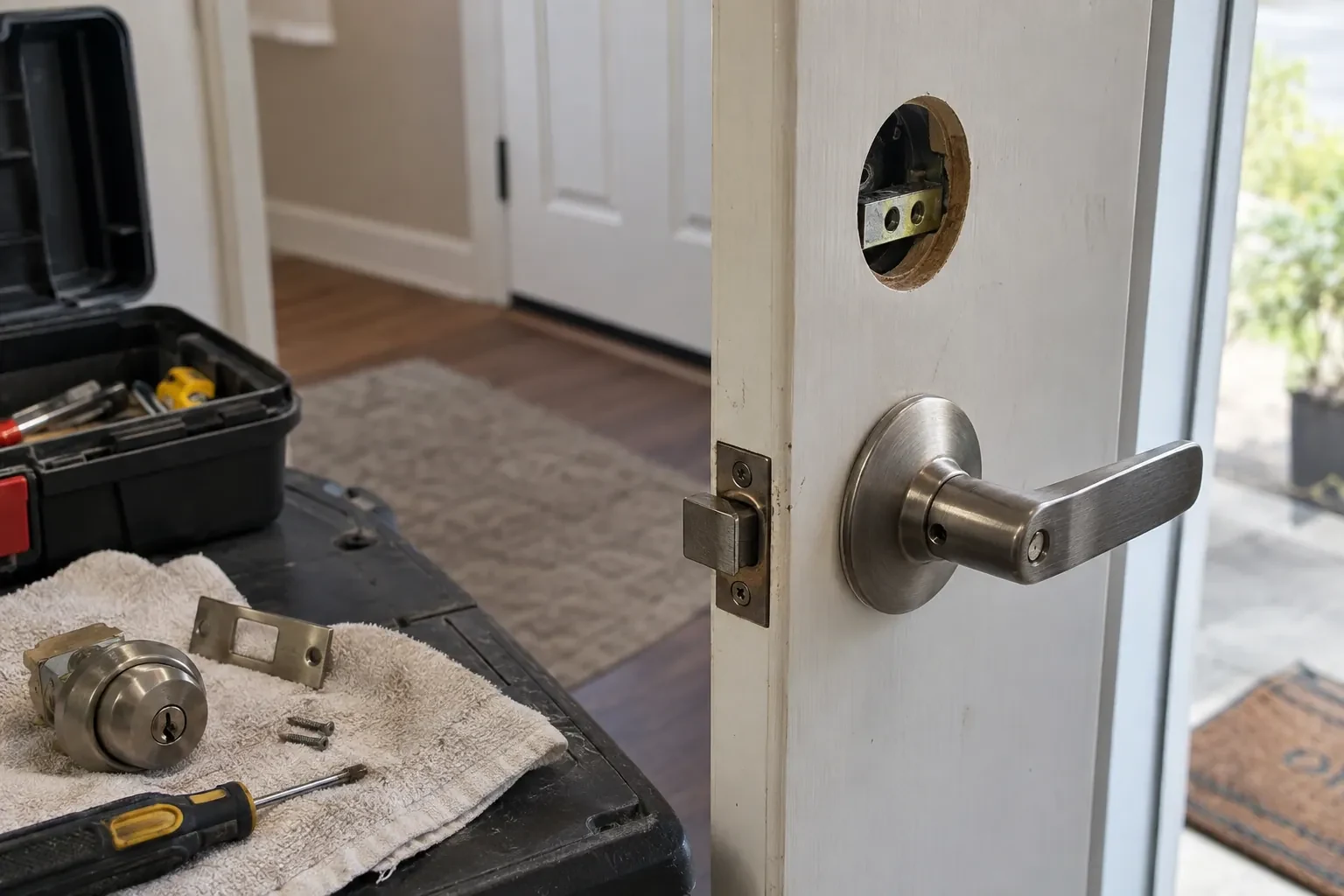
Every opening gets a physical look before it gets any wiring. The locksmith checks what the door and frame are made of, which way the door swings, whether an electric strike will seat cleanly in the existing frame, and whether the door sits on a fire separation, which changes what can be added to it. A hollow metal frame, a wood door, and an aluminum storefront door each take different hardware, and a door that already sits loosely in its frame is noted before an electric strike or a magnetic lock is chosen for it, since alignment decides how reliably the lock releases.
Commissioning day: training the people who will run it
The last step is not technical: it is sitting down with whoever will administer the system and walking through adding a person, revoking a lost card, pulling an entry log for a specific door and date, and changing a schedule for an upcoming holiday or event. The locksmith answers questions on the spot rather than leaving a manual to be read later, confirms the administrator account works with full access, and leaves contact information for anything that comes up once the system has settled into daily use.
Keeping the mechanical override where it belongs
Where a controlled door has a mechanical override, that key is worth treating with the same care as any master key: held by a named person or two, not left in a drawer everyone can reach, and used mainly as a fallback rather than a daily habit. Because that key bypasses the electronic record entirely, using it routinely quietly undoes the audit trail the system was installed to provide, on any door where one is fitted. Keeping it for genuine emergencies is what keeps the electronic system the normal way in, and the key the backup it was meant to be.
Access Control Installation
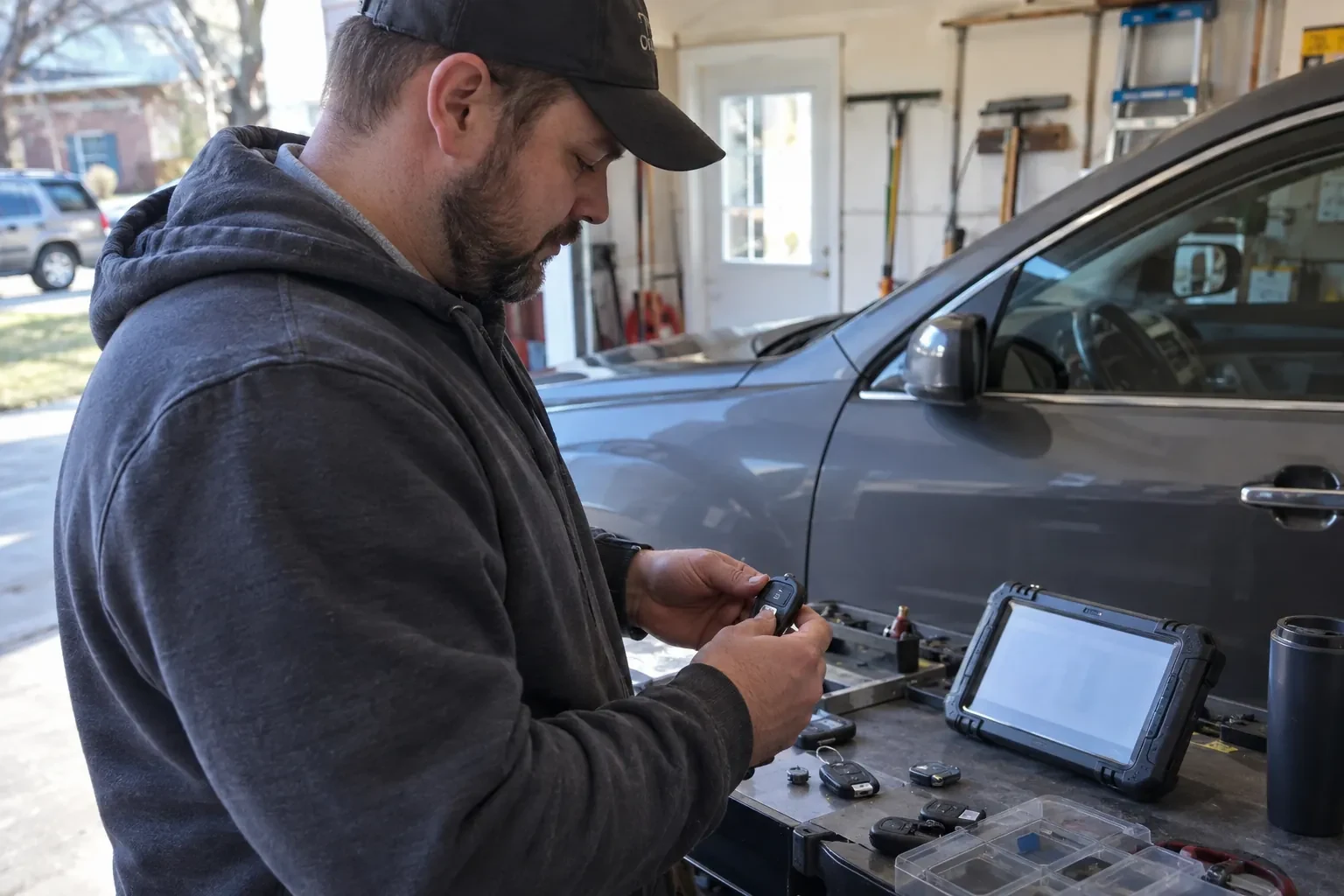
In the van
Keypad readers
Power supply with battery backup
Fire alarm interface relay
Access control panel
Card and fob readers
Access Control Installation
What affects the quote
Room left for future doors
Sizing the controller and power supply with some spare capacity for a door or two added later costs a little more at installation but avoids a second controller purchase when the building later adds an opening.
How many doors are being controlled
A single entrance and a building with a dozen openings are different jobs in scale rather than kind, and the number of doors, readers and locks involved is the largest single factor in sizing the work.
Whether any door is also a fire exit
An exit route on a magnetic lock brings its own hardware — a request-to-exit device and a fire alarm tie-in — while an electric strike paired with a free-egress lockset can meet the same one-motion exit without those extra components, unlike a purely interior door.
What to have ready
- Do you already have an alarm or camera system in place?
- Which doors do you want to control with the new system?
- Is any of these doors also a fire exit or required exit route?
Access Control Installation: questions
QuestionsHow long does an installation usually take?
A single standalone door is usually finished within a day, including testing and training. A building with several networked openings, cabling to run and a controller to program takes longer, and is often planned across more than one visit so cabling, hardware, and software configuration each get proper attention rather than being rushed through in one pass.
Is a keypad code as secure as a card or fob?
A keypad code needs no card to lose, but a code shared among several people is effectively no longer individual, and a forgotten code left active is a common weak point. A card or fob tied to one named person avoids that particular issue, since it is switched off individually rather than reset for everyone at once. Many businesses use a code for general areas and a card wherever entry needs to be traceable to one person.
What happens to the doors if the power goes out?
Outage behaviour depends on how that opening was built: battery backup can be sized to carry the reader, the lock and the controller through a typical outage, so a brief power loss need not lock anyone out or, on a fire-alarm-tied opening, lock anyone in, but that backup and any mechanical key override are specified per opening rather than assumed for every door. Fail-safe hardware unlocks once power has been out longer than the backup lasts; fail-secure hardware stays locked, and what opens it depends on the hardware chosen.
Related services
- Master Key System DesignA dental office wants the front desk to lock up at night without ever holding a key to the room where patient records and controlled supplies are stored.
- Panic & Exit HardwareThe new access-control reader at the staff entrance works fine going in, but nobody has sorted out the door's exit side, and right now a card reader and a pushbar exist as two separate ideas.
- Commercial-Grade Lock ReplacementOvernight someone forced the back door, and the cylinder face is scarred, the metal around the strike has pulled loose from the frame, and the latch no longer sits flush.