Locksmith in Appin, OntarioStraight talkabout what's on your door
You should know what protects your home and why it matters. For households in Appin we grade the hardware already fitted, point out the weak link, whether that is a short strike screw or a cylinder that picks easily, and suggest only the changes that make a real difference. Nearby, we also work in Melbourne, Springfield, Ekfrid, Lewis Corners, Macksville, Mayfair, Middlemiss, North Ekfrid and Riverside.
You should know what protects your home and why it matters. For households in Appin we grade the hardware already fitted, point out the weak link, whether that is a short strike screw or a cylinder that picks easily, and suggest only the changes that make a real difference. Nearby, we also work in Melbourne, Springfield, Ekfrid, Lewis Corners, Macksville, Mayfair, Middlemiss, North Ekfrid and Riverside.
A locksmith you would recommend to a neighbour.
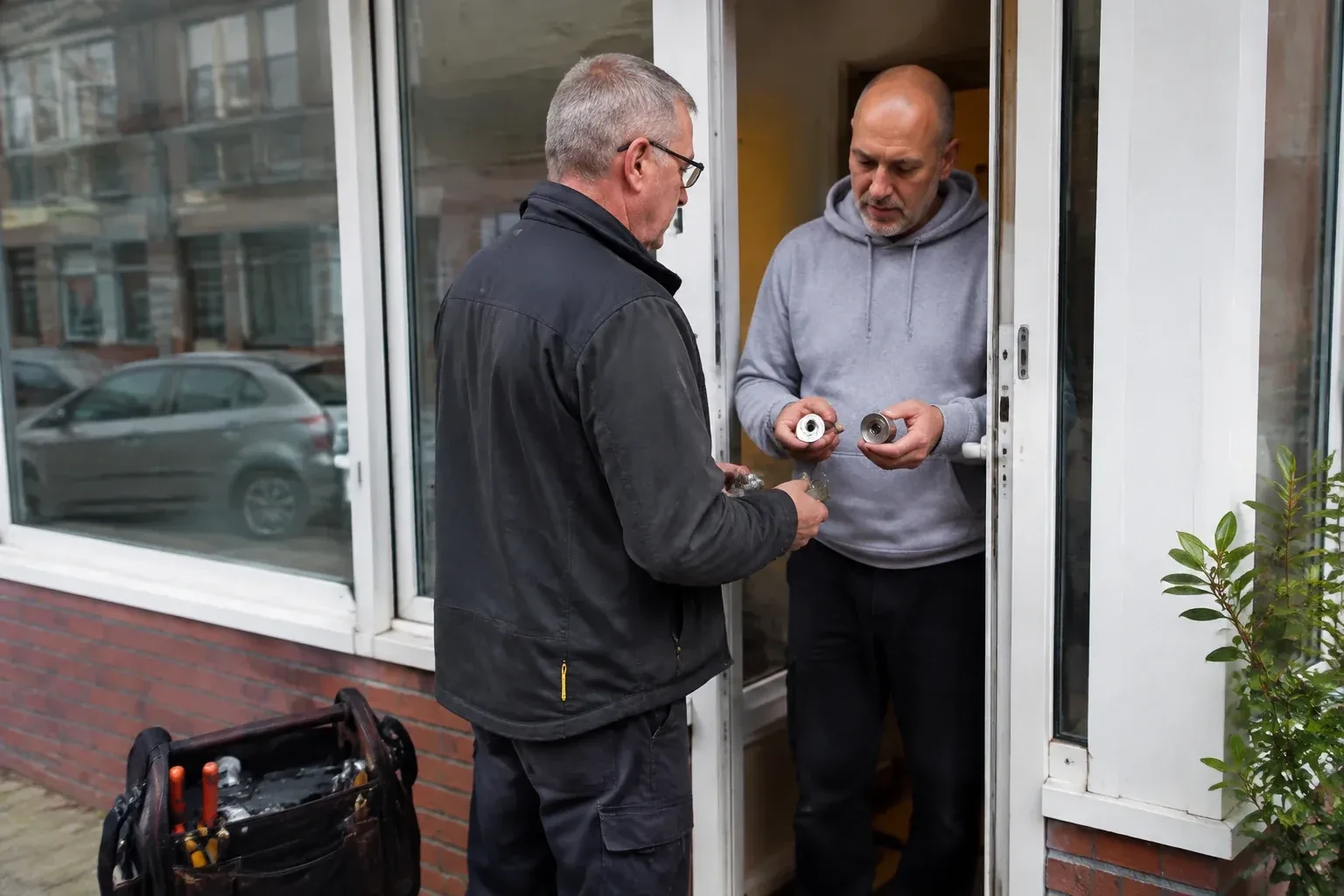
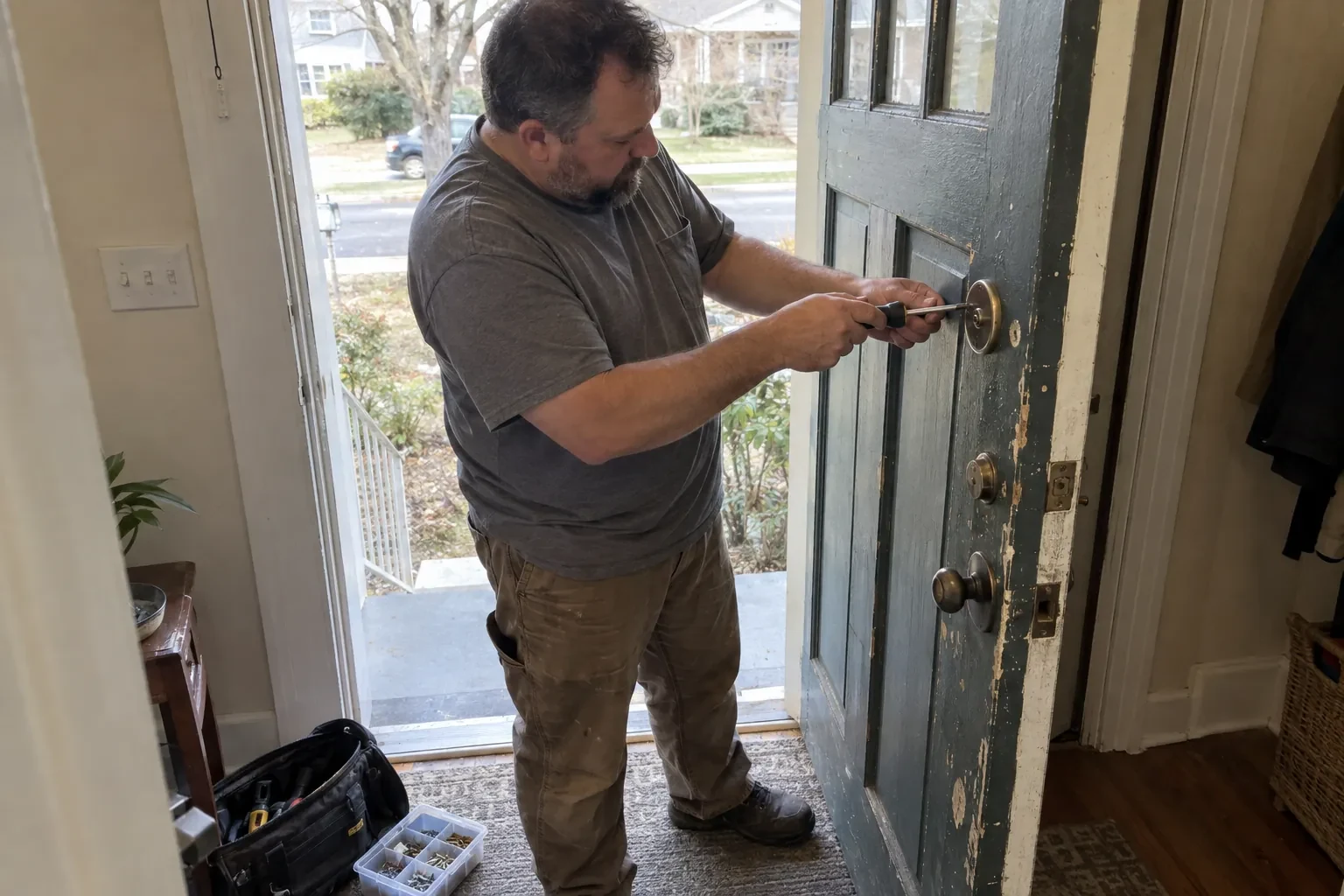
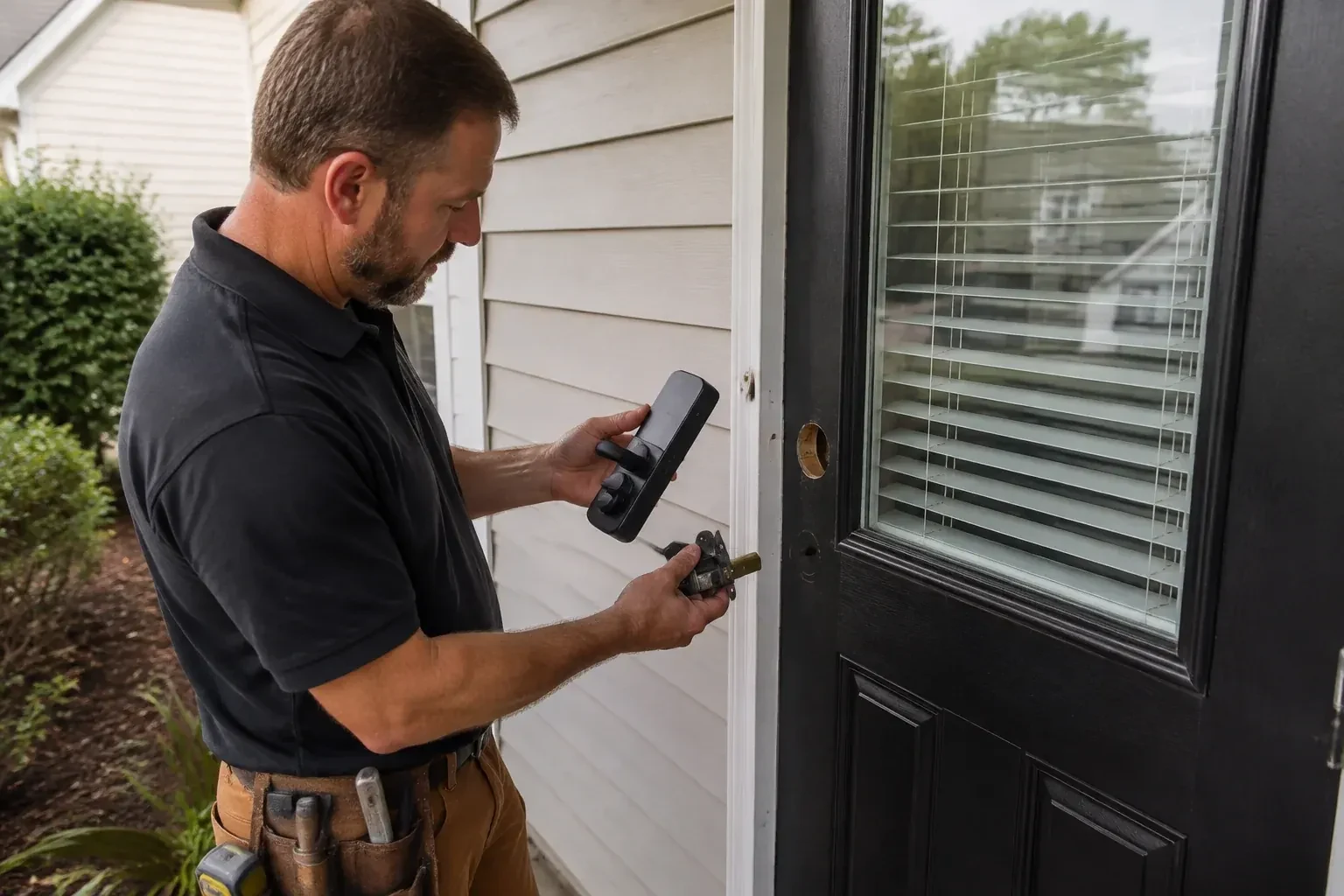
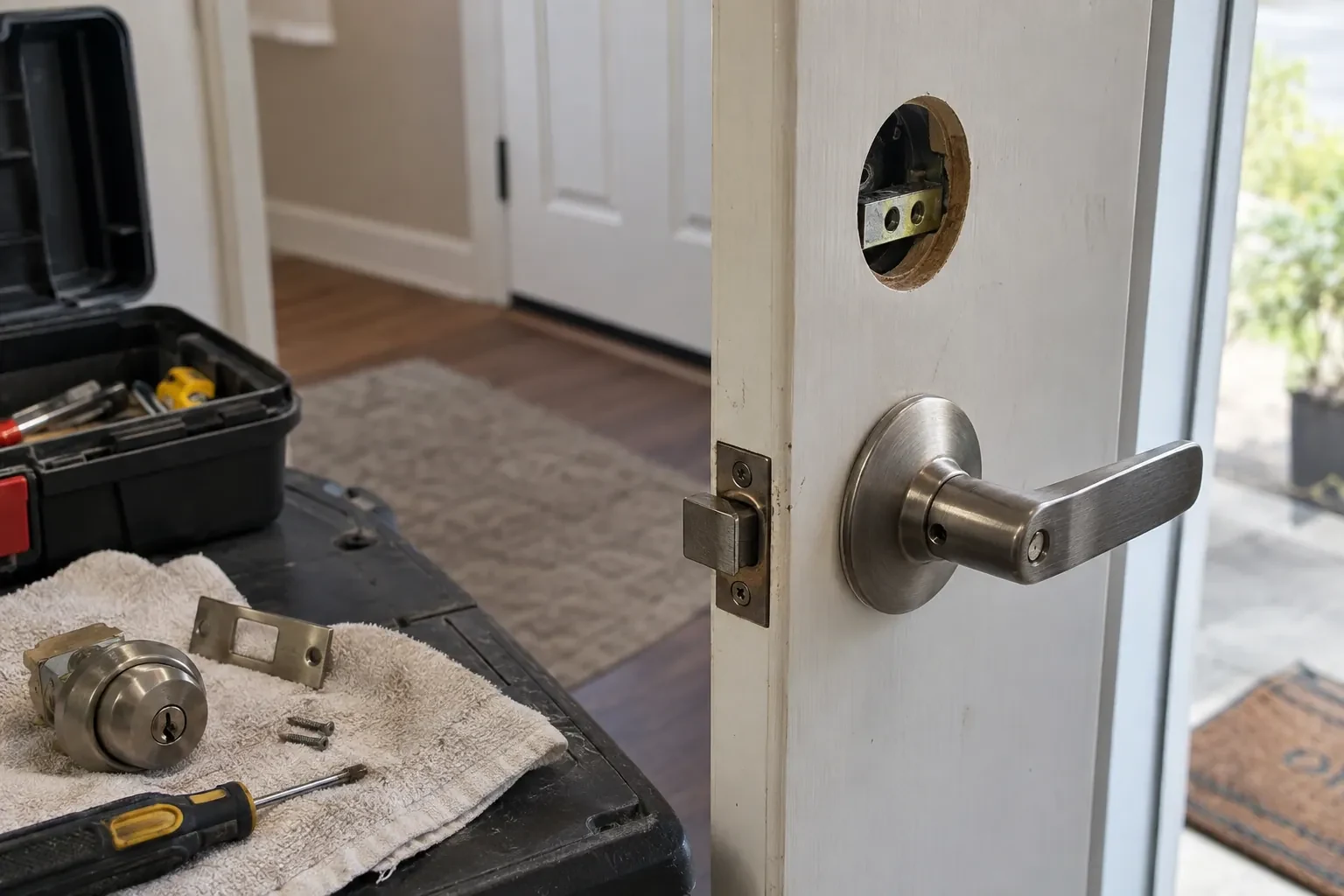
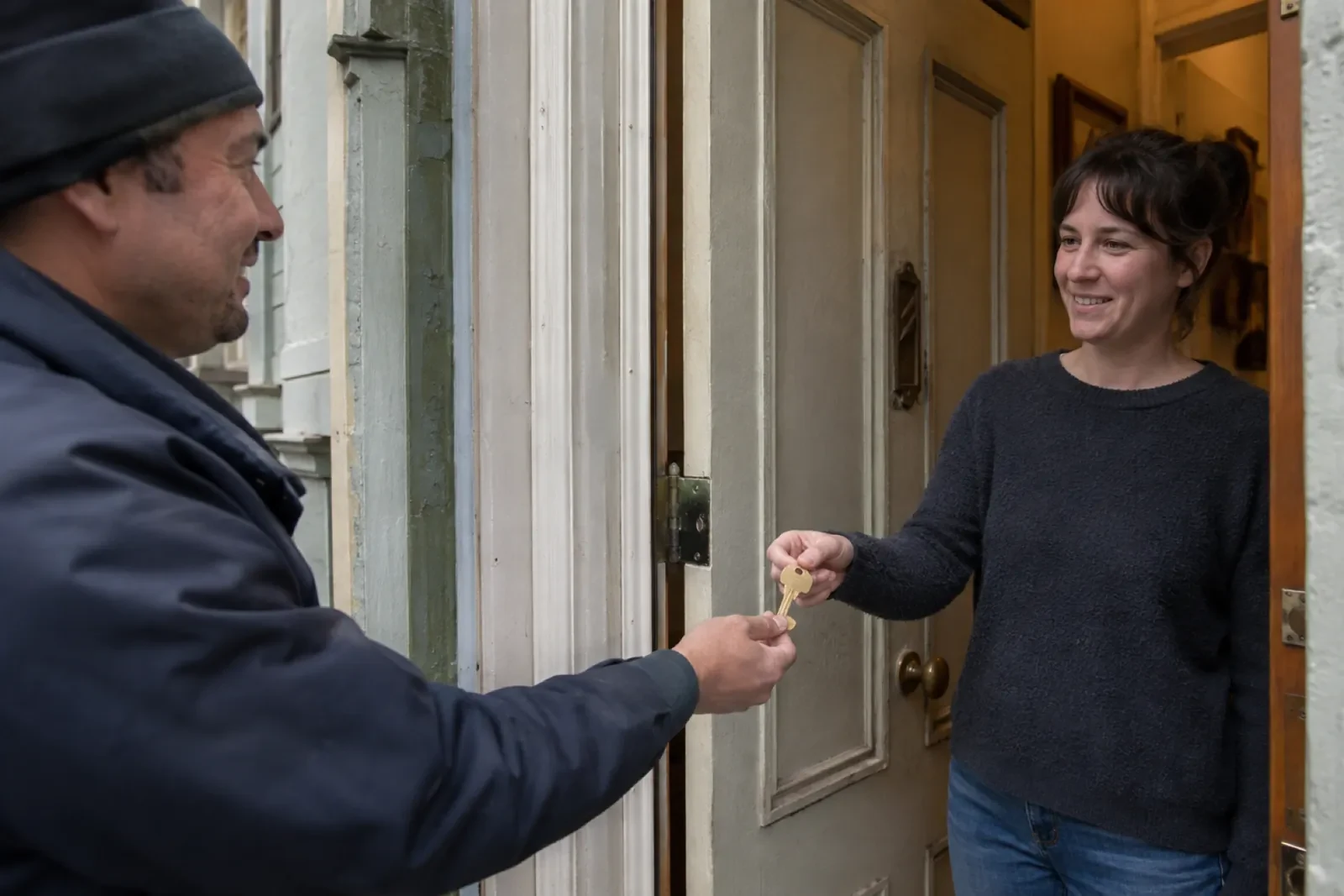
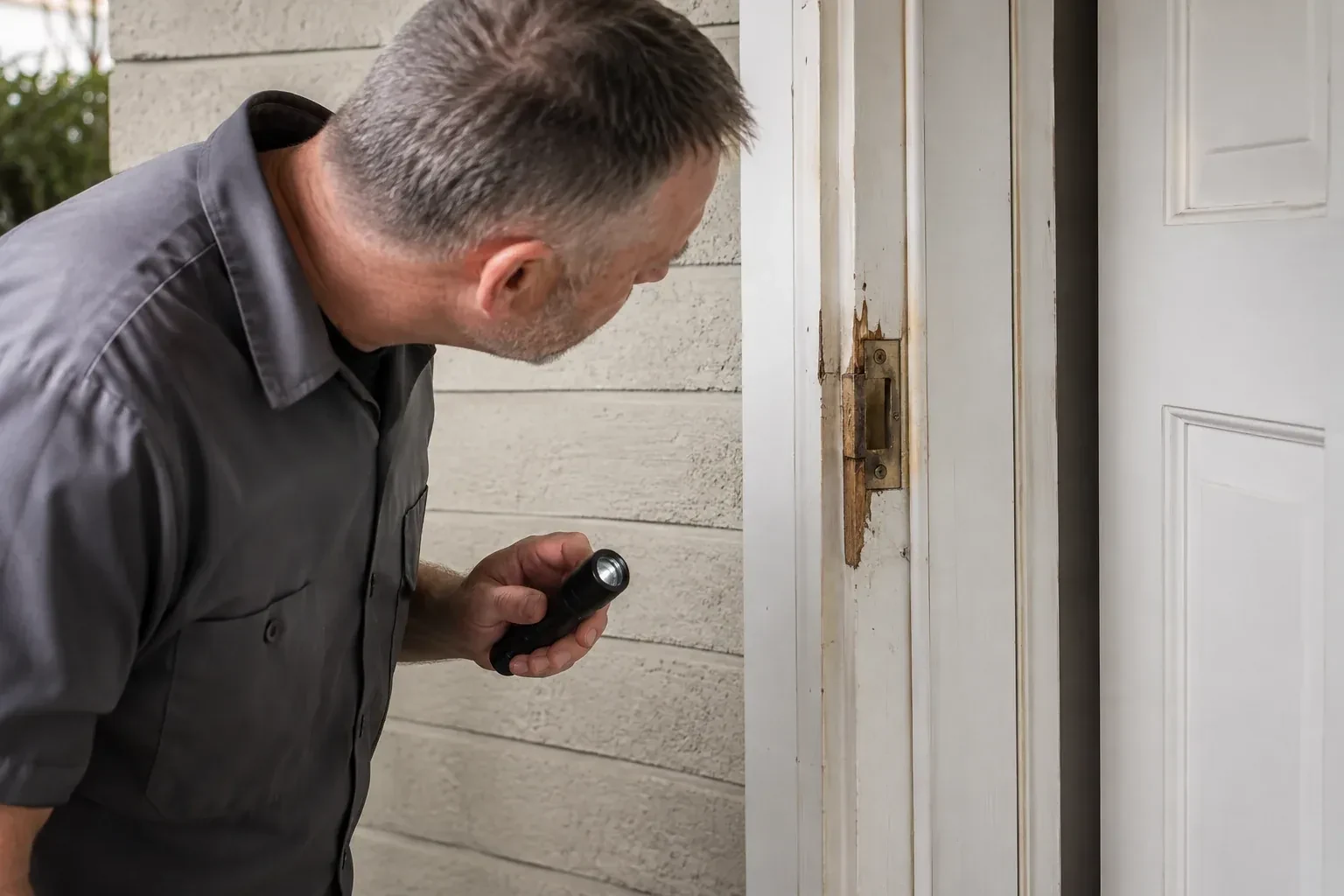
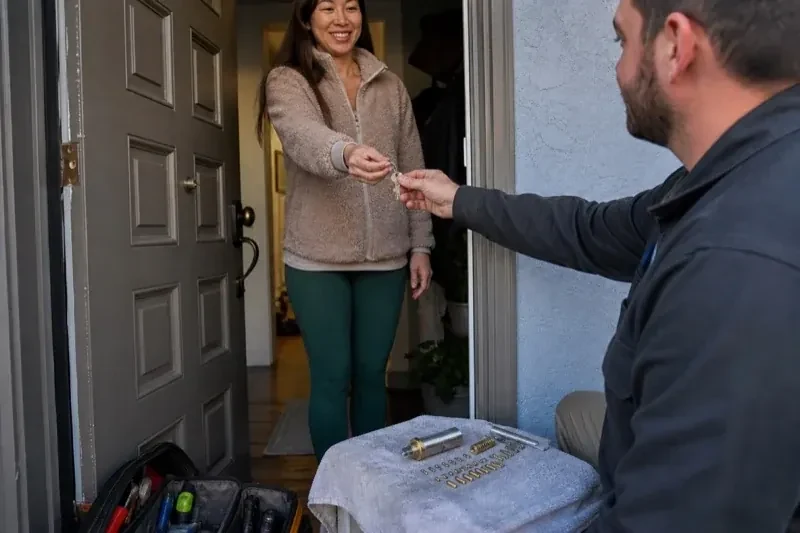
Every job in Appin starts with a proper look before anyone touches a tool. The locksmith checks the cylinder, the latch, the strike and the way the door sits in its frame, then tells you what he found and what he suggests. The price is given at the door once that look is done, so it reflects the actual hardware rather than a guess, and it is the same fee at any hour.
Panic hardware and exit devices in Appin businesses need to let people out easily while keeping the outside secure. We install and service them with attention to how the door actually closes, because a device that works on the bench but not on a sagging door has solved nothing. We explain the practical point of each part as we fit it.
29years in business
24/7open every day
You know what is happening. From the first look to the last turn of the key, we narrate the job in plain terms. You should never wonder what we are doing to your door.
Suggestions, not pressure. If we think an upgrade would help, we say so once and explain why. If you decline, that is the end of it.
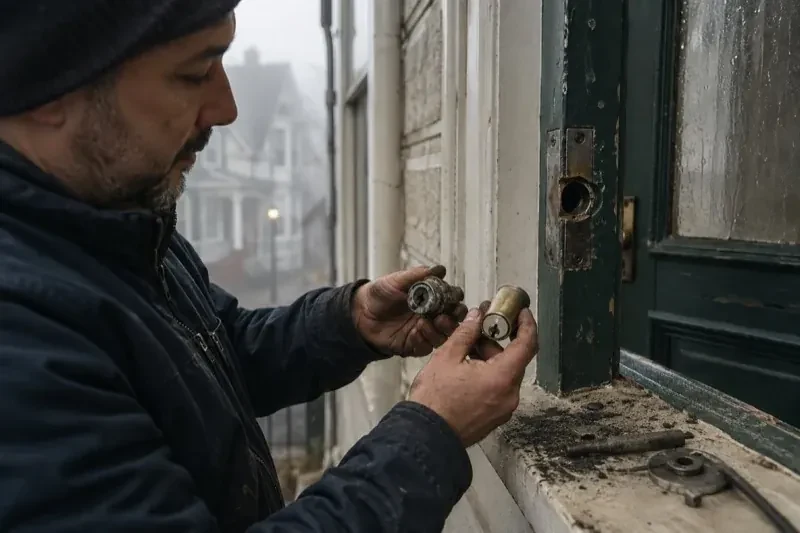
The old parts handled. Removed locks and keys are given to you or taken away as you prefer. Old keys that no longer work are worth destroying, and we will do that if you like.
The pages that follow describe the lock services offered in Appin one by one, without sales talk. Where a service has a simpler or less involved cousin, the page says so. Where a repair will do instead of a replacement, the page says that too. The aim is for you to choose well, not to choose more.
About 69% of homes in Southwest Middlesex were built in 1980 or earlier, according to the 2021 Census.
Older homes
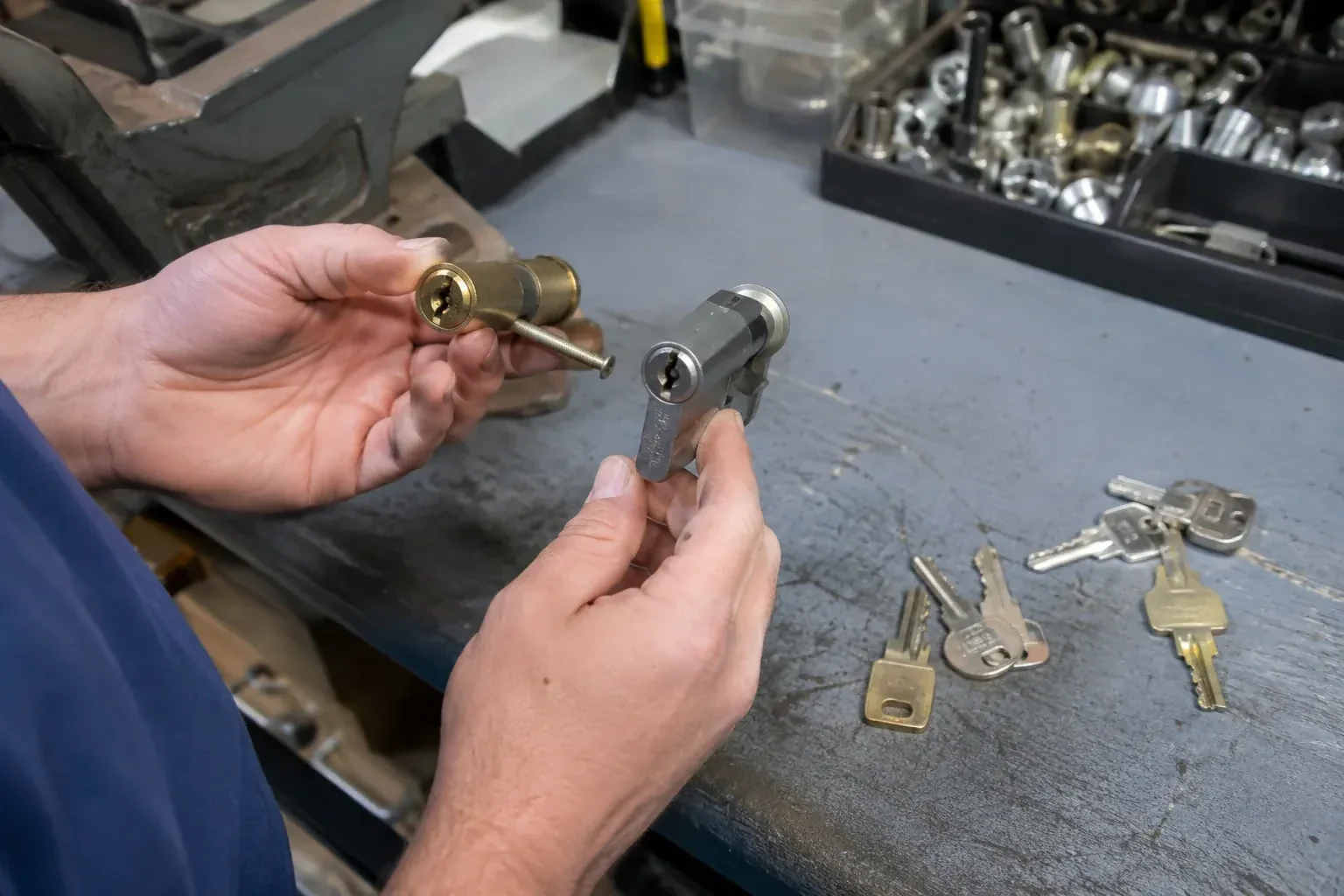
Old brass keys wear thin, and a key that has bent for years finally lets go in a cold cylinder. In older housing stock this is a regular call, so the locksmith is ready to extract the piece, check the cylinder and cut a new key from the code.
Single-detached houses make up about 87% of homes in Southwest Middlesex (2021 Census).
Mostly houses
Homeowners in houses often want a spare key that lives outside safely. A locksmith can fit a proper key safe or set up a keypad so a hidden key under a pot is no longer part of the plan.
Drill-resistant does not mean drill-proof, and pick-resistant does not mean unpickable. What high security hardware buys is time and noise, and time and noise are what make an intruder move on. We explain the ratings in those terms rather than in slogans.
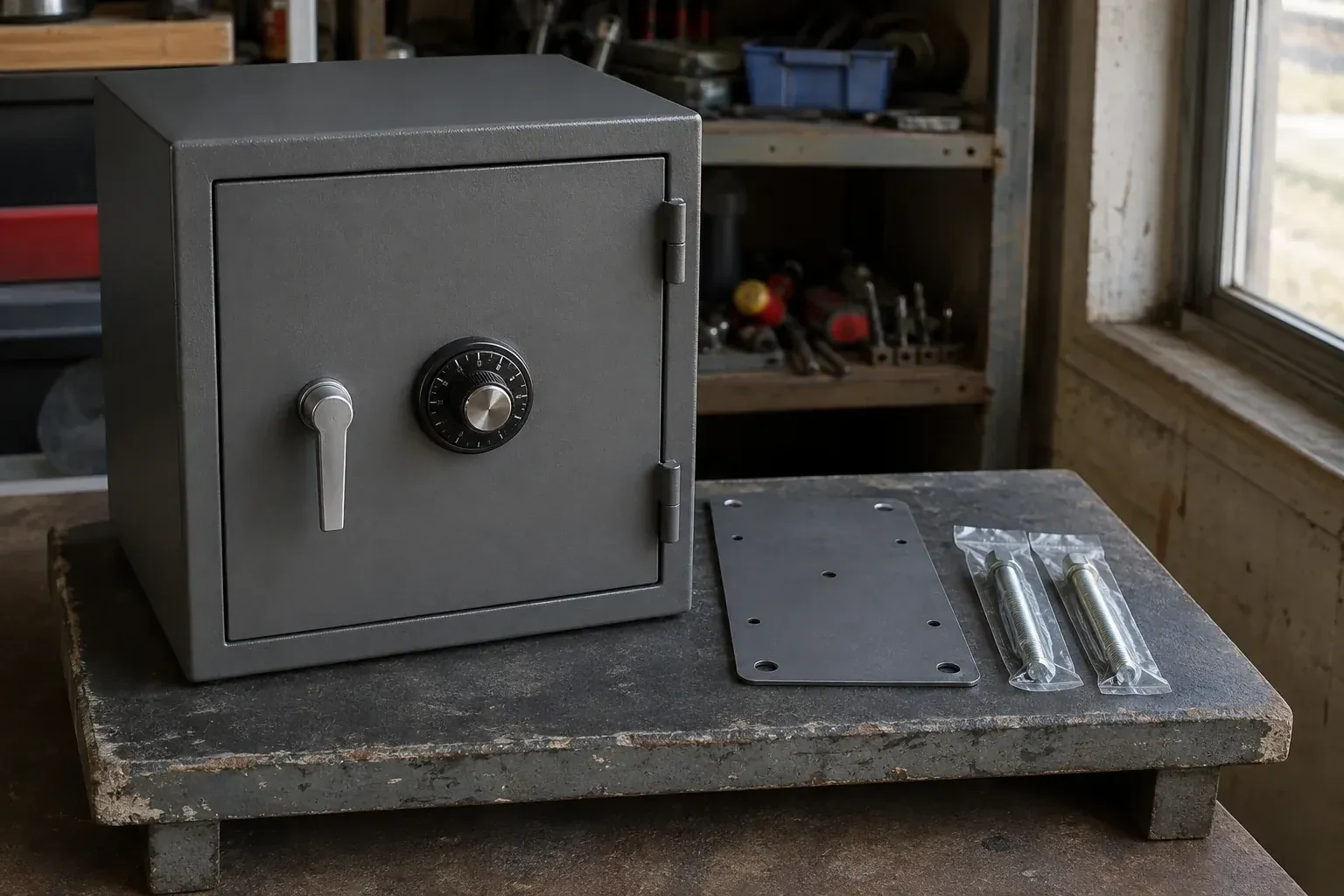
A safe sat in a late parent's basement for years, its combination known to nobody left in the family, and everyone would like to know what is actually inside it.
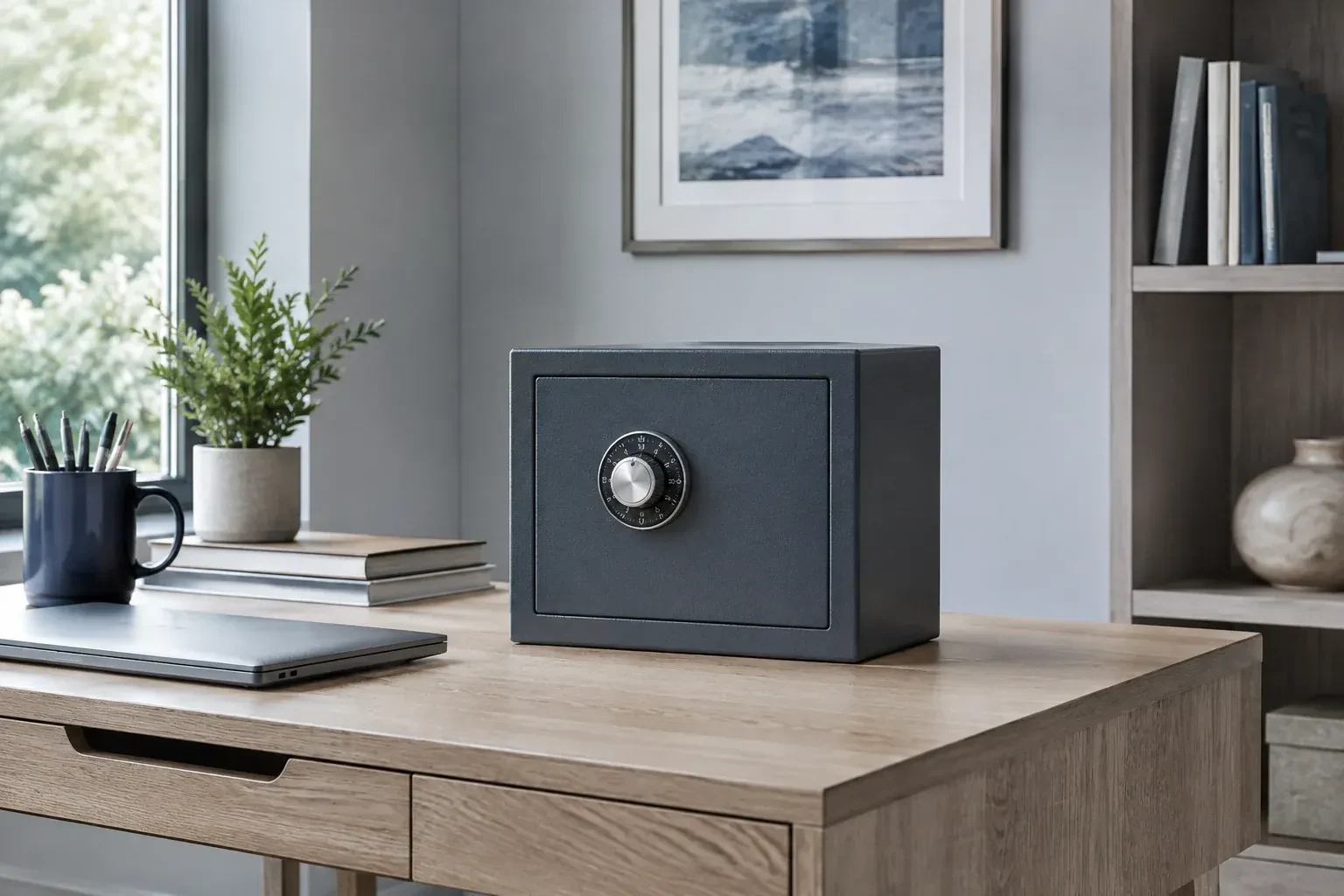
A homeowner inherited a heavy old dial safe from a parent's house, moved it into the new place, and has no idea whether the bolt-work still works, whether the lock is sound, or how it should be anchored.
Which fix fits?
The key went in stiffly, turned a quarter of the way, and came out in two pieces.
WhySome building entries add a buzzer, a keypad or an electric strike to the mechanical lock, and any one of those pieces can be the reason a door stops releasing on cue.
The key still turns, but lately it spins a half-circle further than it used to before the little door lets go, and some mornings it takes a second try.
WhyMoving into a new place is a common moment for this service, since a mailbox compartment rarely comes with a documented history of who was handed a key.
A dinner service ends with a stack of bills and a handful of credit slips, and right now they sit in an unlocked cash box on a shelf until morning, because nobody has gotten around to anything sturdier.
WhyTransponder-based immobilizers became mandatory equipment on new vehicles sold across the country from September 2007 onward, though many manufacturers had already been fitting them for years before that date.
How a visit goes
Describe the property, the hardware and what has changed, and the visit starts from what you have seen.
1
2
3
01
Verifying the caller
We ask for something that ties you to the premises: a lease, business card, or a call to the owner. Opening a shop for the wrong person is not a risk we take.
02
Getting the door open
Storefront and office locks vary, so we choose the approach that leaves the hardware intact wherever possible. If the lock itself has failed, we tell you before opening it.
03
Getting you back to trading
Once inside we check the lock, cut keys if needed and note anything that should be addressed later so your day can carry on.
Good days. Start with a turn.
1/9Business Lockout Service
The key went in stiffly, turned a quarter of the way, and came out in two pieces. Half of it is still inside the cylinder of the aluminium storefront door, and the deadbolt is hooked firmly into the frame.
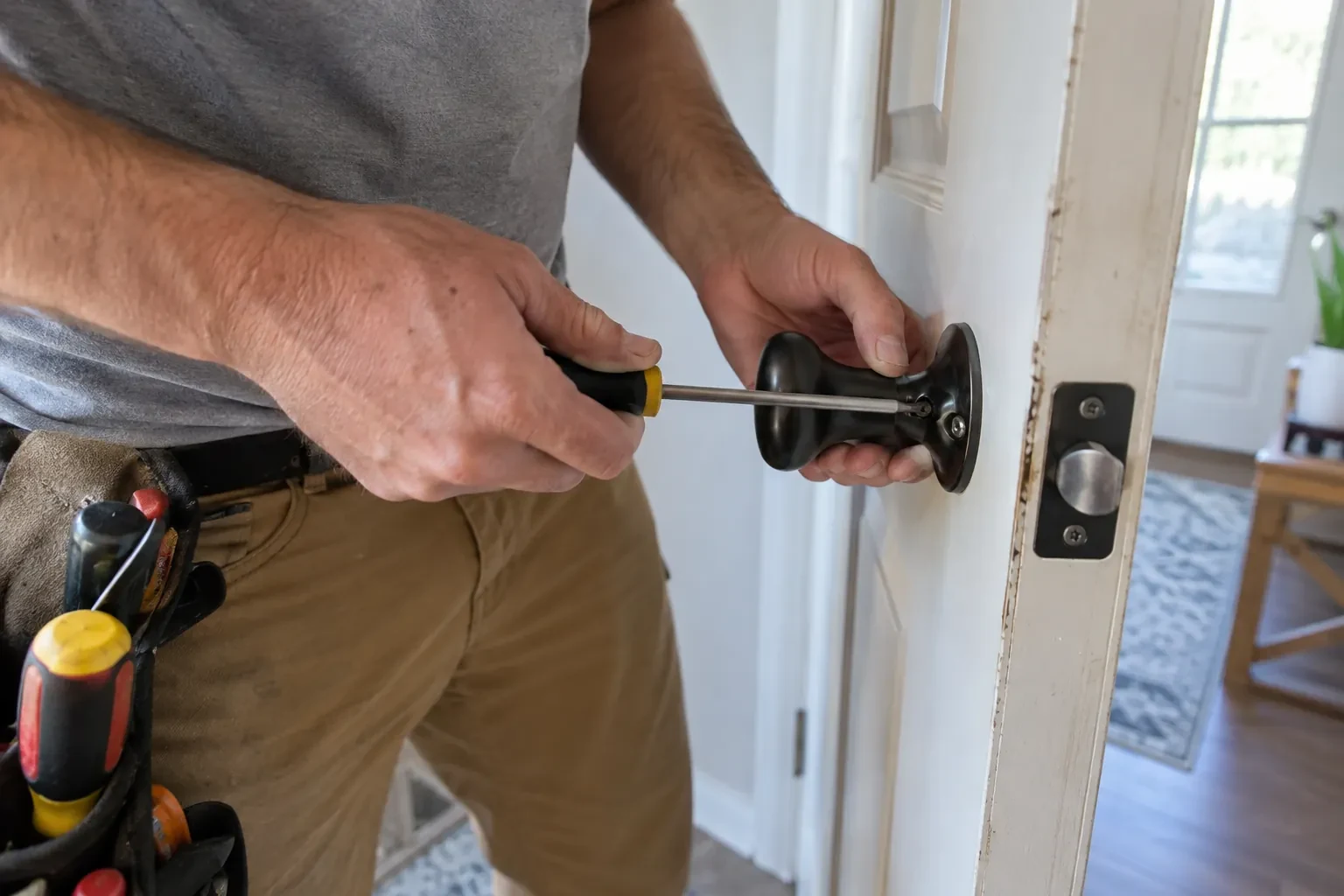
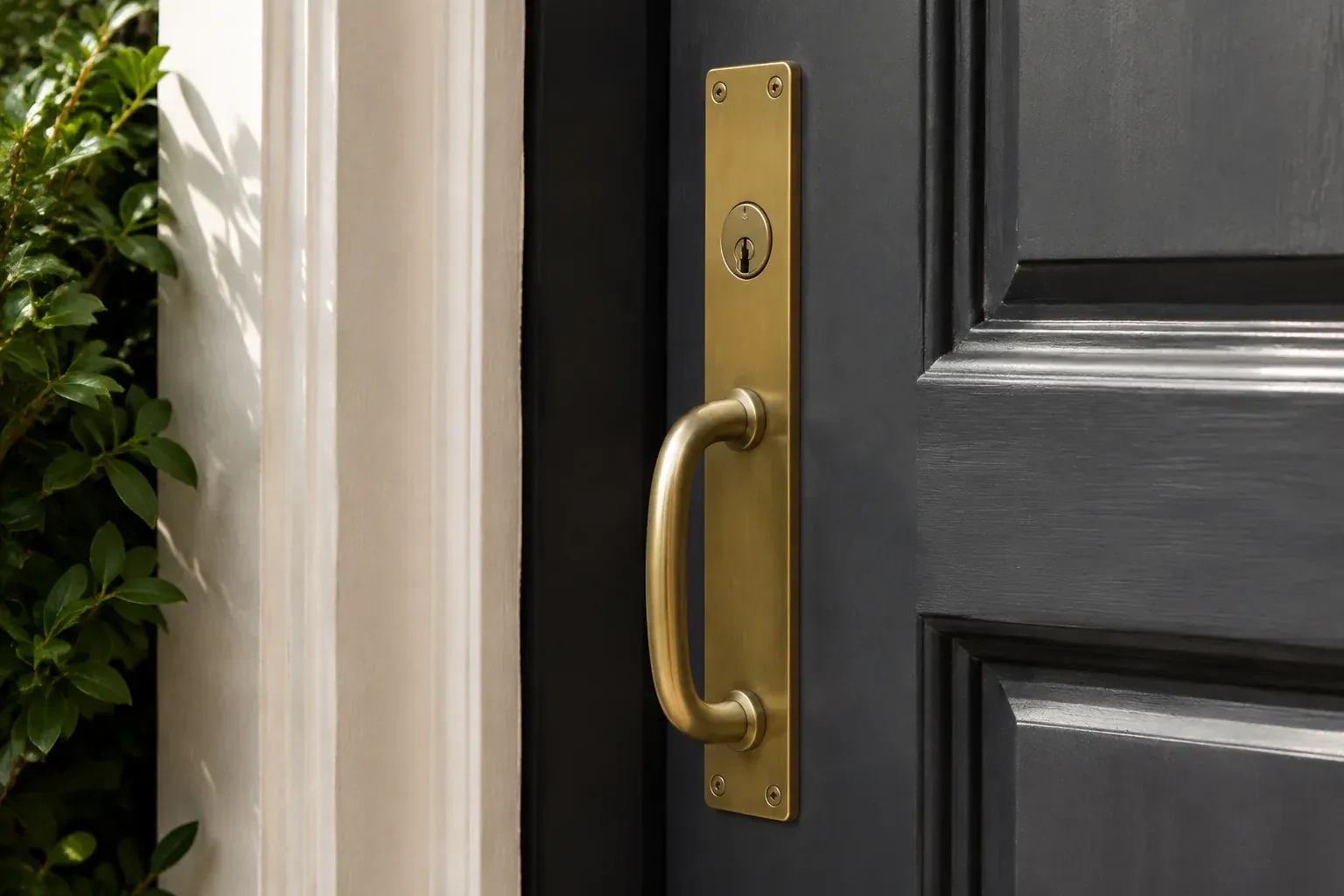
The back door has a deadbolt in name only: a short bolt, a thin brass strike held by two little screws, and a jamb you can flex with your palm. It was fine for a builder's showing. It is not fine for a laneway.
Every morning the front door key needs the same little dance: push in, lift, wiggle, turn. It has been getting worse for a year, and this week it took three tries in the cold before the deadbolt finally gave.
A neighbour mentions, in passing, that the key from three tenants ago still lets him into the building's front door. Nobody changed it after he moved out, and now the property manager wants to know exactly how many keys are still floating around out there.
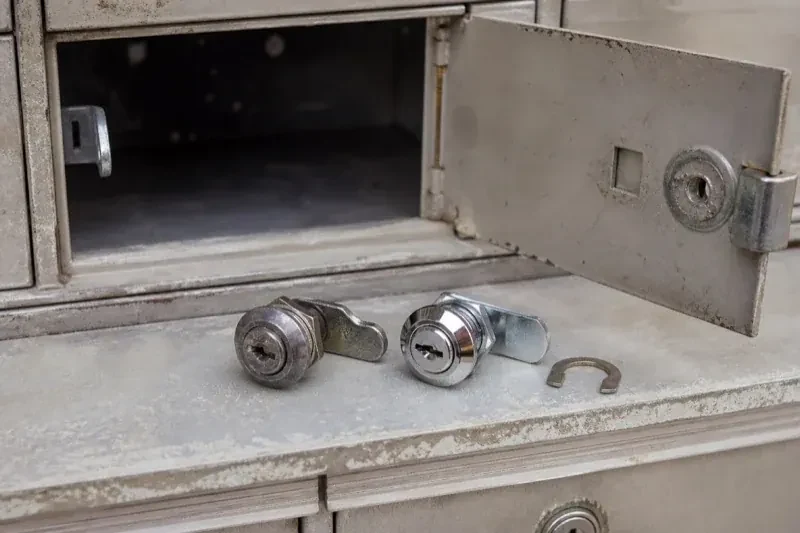
The key still turns, but lately it spins a half-circle further than it used to before the little door lets go, and some mornings it takes a second try. The small cam lock inside is simply worn out.
A dinner service ends with a stack of bills and a handful of credit slips, and right now they sit in an unlocked cash box on a shelf until morning, because nobody has gotten around to anything sturdier.
You run a home office with client files and equipment, and your insurer has asked what kind of lock is on the door. The honest answer is the builder's knob lock and a light deadbolt from when the house was new.
You stepped out at the pump to pay inside, the passenger locked their door out of habit, and the driver's door caught behind you. The engine is off, the keys are in the ignition, and the line of cars behind you is growing.
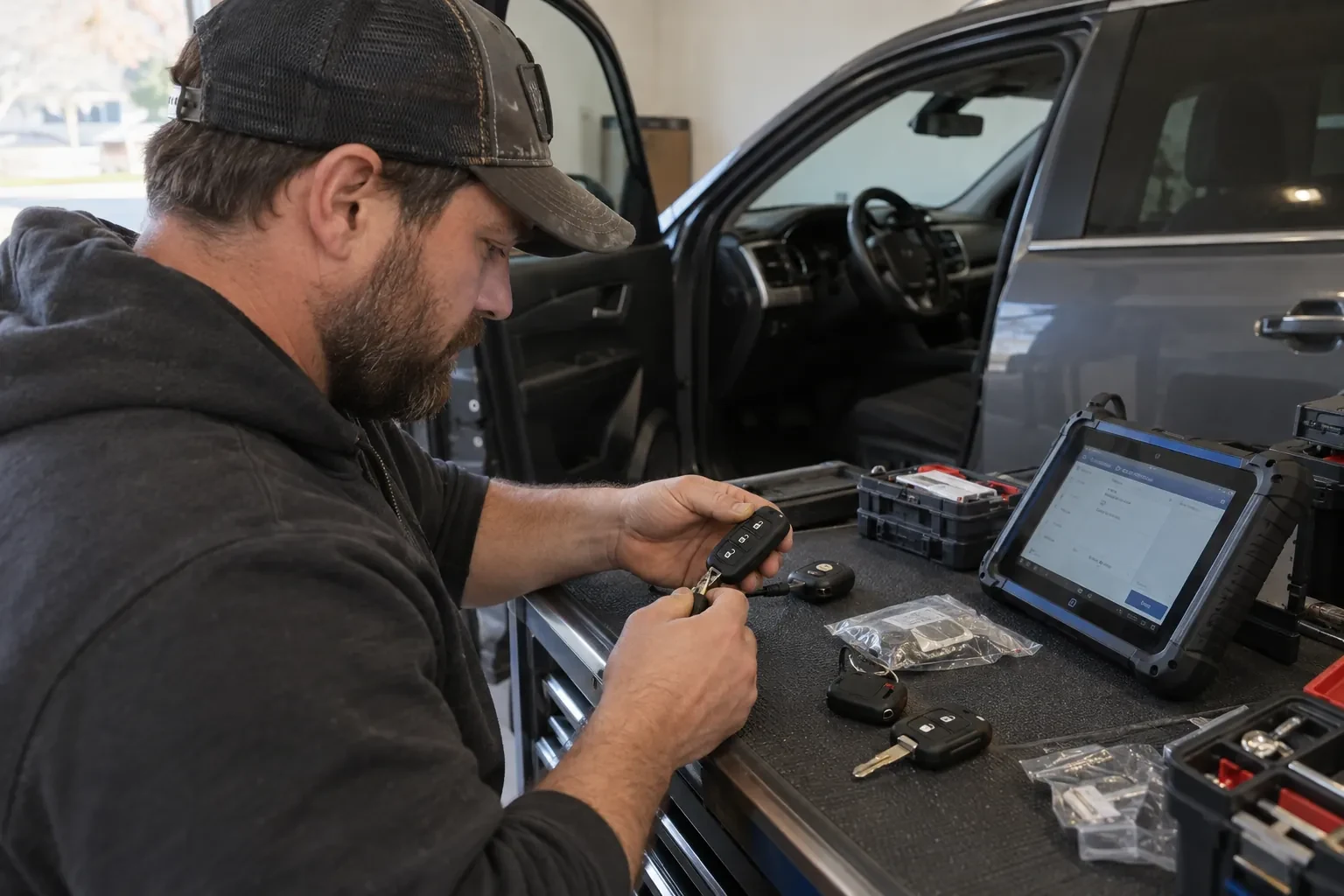
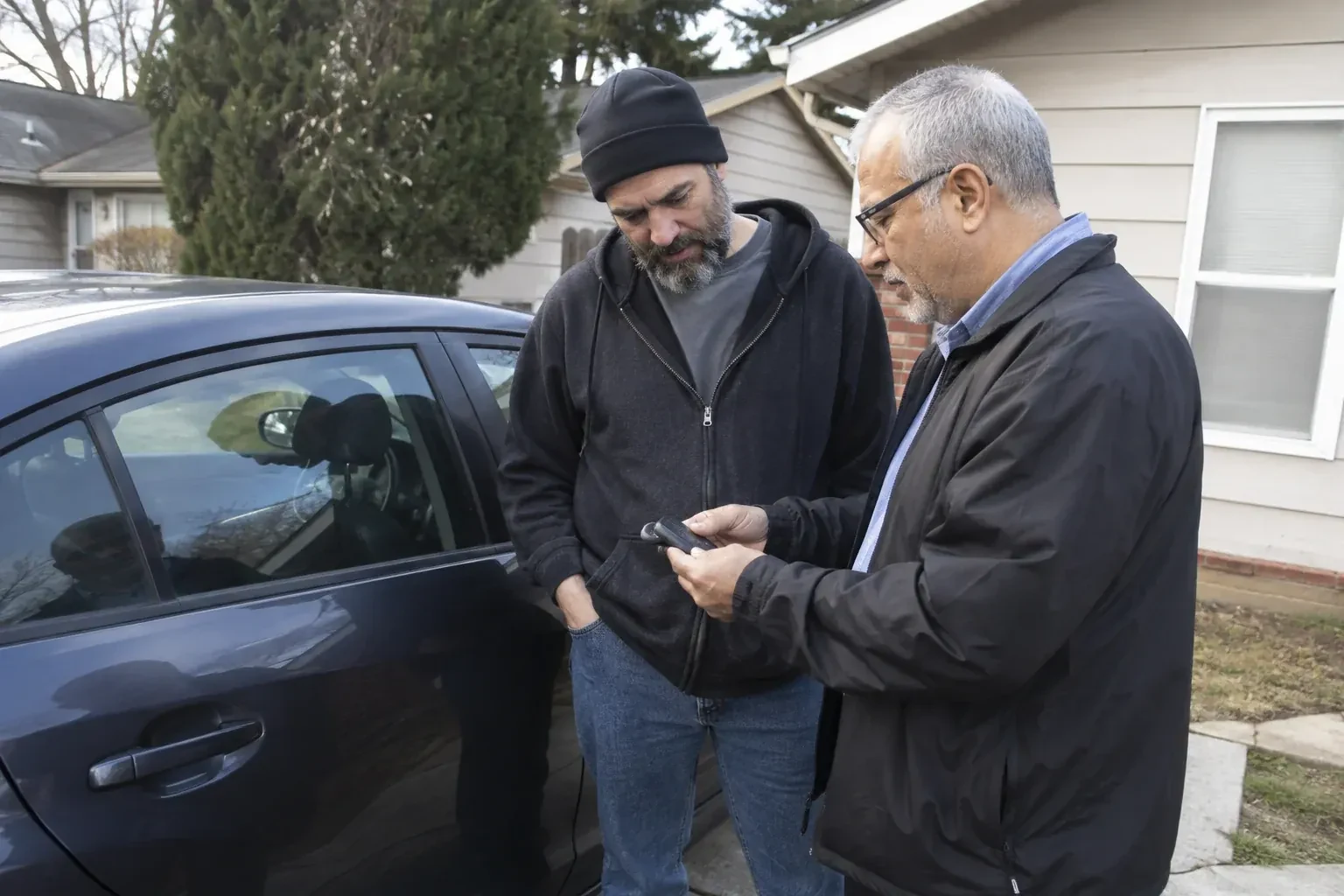
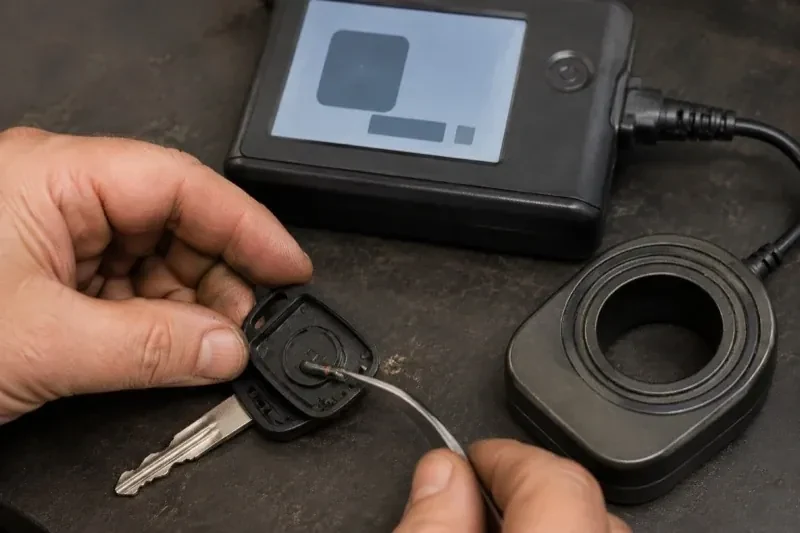
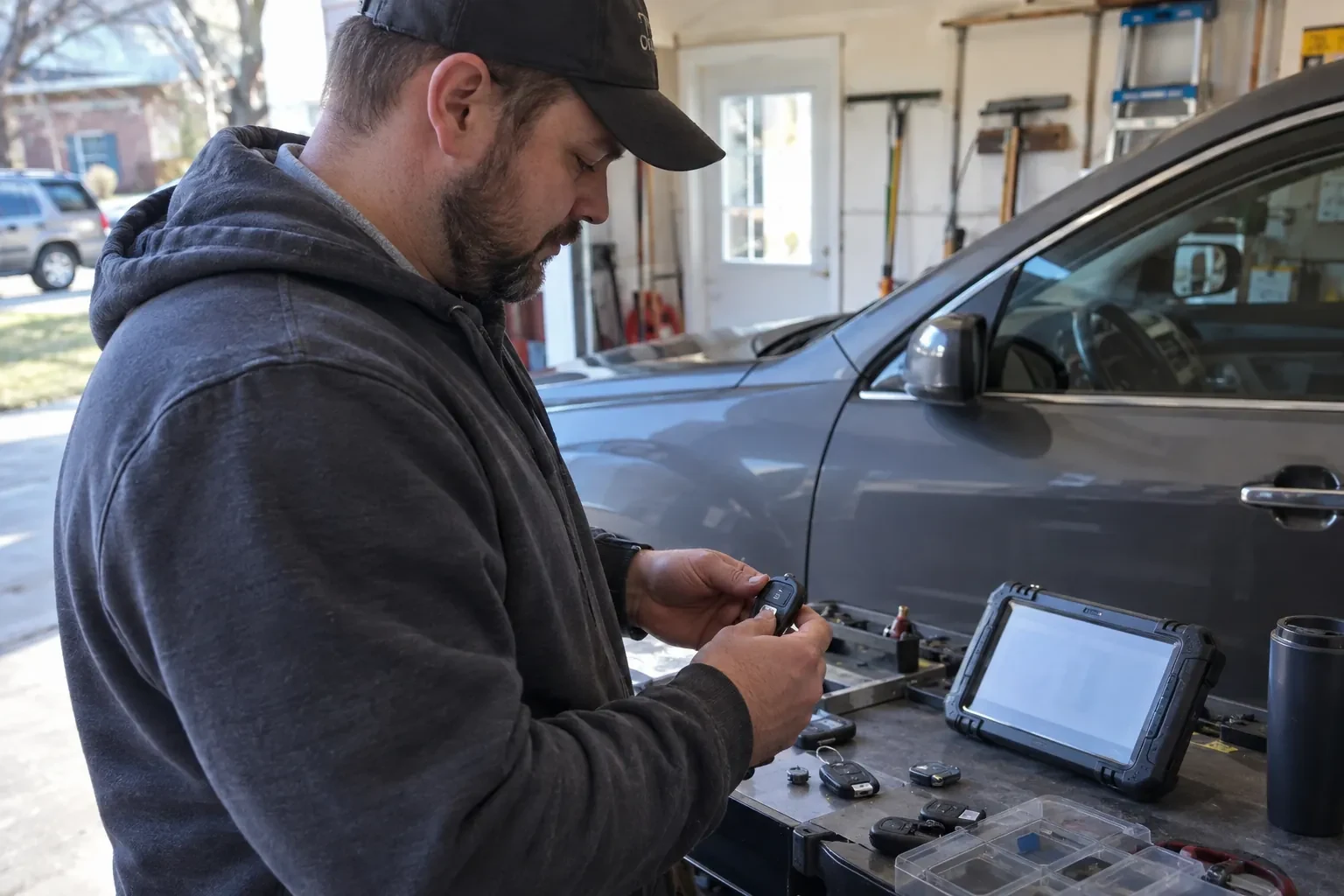
The new key slides into the ignition and turns exactly the way the old one did, but the engine only cranks. A dashboard light blinks near the fuel gauge, and no amount of turning the key gets the car past that cranking sound.
Can you also deal with the back door, the roll-up shutter and the gate?
Yes. A business lockout covers every opening the premises relies on: the rear service door with its exit device, a roll-up shutter and its padlock, the compound gate, a mailbox in the lobby and interior doors such as the cash office or server closet. Mention each one when you call so the right padlock shackles, cores and cylinders are in the van, and so cylinders that should share a key are handled together.
What about glass beside the door or a window in it?
Glass within reach of the lock is the one case where a plain thumb-turn deserves thought. Options include a captive thumb-turn that turns freely until you remove its small key, laminated glass or a tested security-film system with its specified frame attachment, or simply setting the bolt farther from the glass. Lock manufacturers describe sidelights as a weak point, so the locksmith measures the reach and lays out the choices rather than defaulting to a key on the inside.
Is it possible to upgrade just the exterior locks now and handle interior doors later?
Yes, and it is a common way to spread the work out. Exterior doors carry the security load, so starting there with a graded deadbolt and a reinforced strike covers the part that matters most first. Interior locks, passage sets, privacy locks on bathrooms and bedrooms, can be scheduled for a later visit without affecting anything already done, and the locksmith can note what was fitted so the second visit matches it.
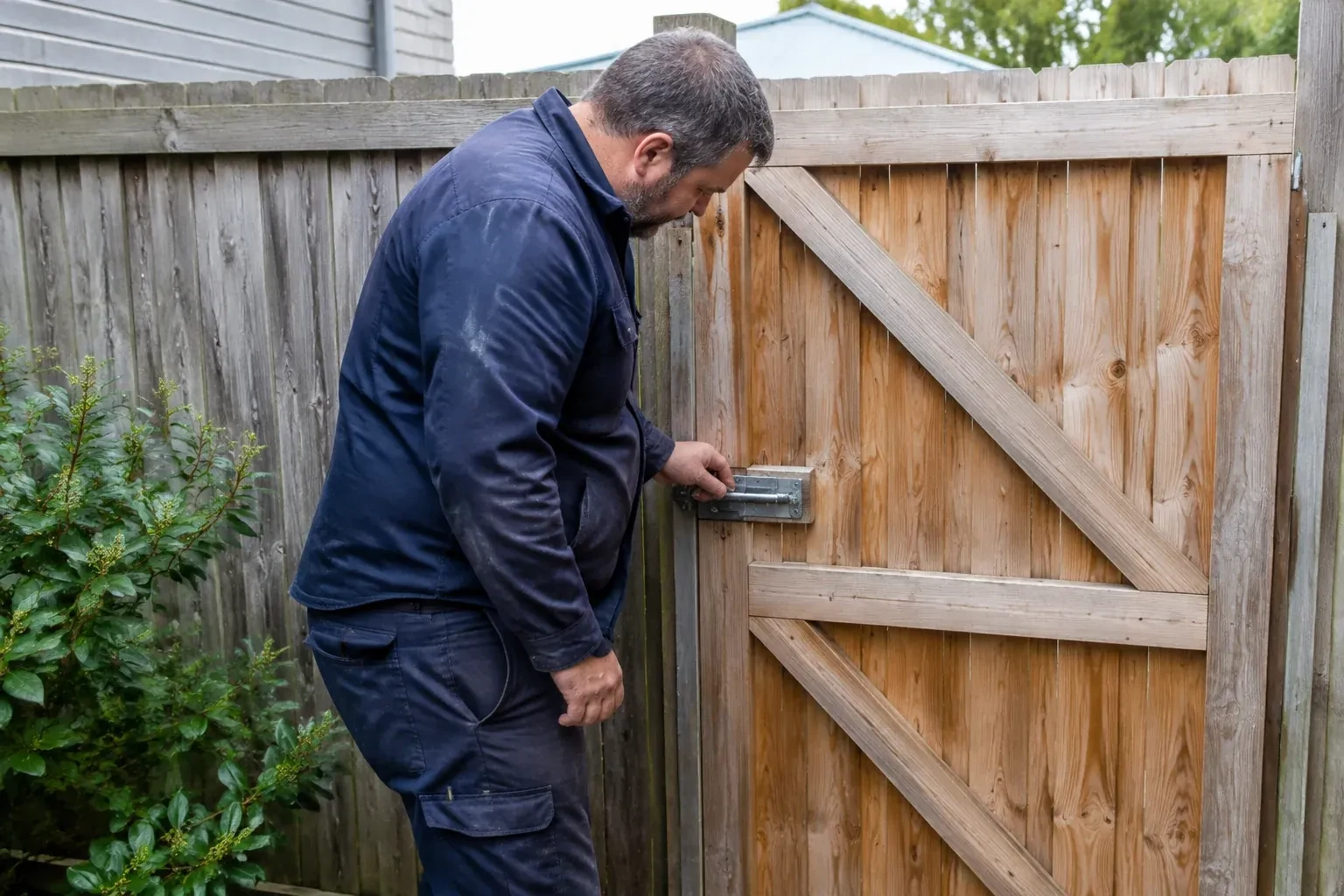
Someone tried to force our gate open. What happens now?
The locksmith first looks over the damage without disturbing it, noting pry marks, a bent strike or a cylinder that has been scored or spun, since that record is useful to have regardless of what else follows. Any hardware that was compromised is replaced rather than trusted, and a weak point the attempt exposed, such as an undersized hasp or a strike with too little bite, is addressed at the same time so the same approach would not work a second time.
Do neighbouring mailboxes in the panel get disturbed during the work?
No. The work is confined to the named compartment or compartments. Neighbouring doors keep their existing locks and keys, and the panel's frame, hinges, and shared structure are left as they are. Even during a larger job covering many compartments, each one is handled as its own small task rather than as one blanket change across the whole panel.
Can more than one person have their own code?
Yes, on an electronic keypad that supports multiple users, each person can be given a separate code rather than everyone sharing one, which also makes it simple to remove a single code later without resetting the whole lock. A mechanical dial lock, by contrast, has one combination for everyone who needs it, so a change in who has access there means changing that one combination.
Why does the locksmith care so much about the strike plate?
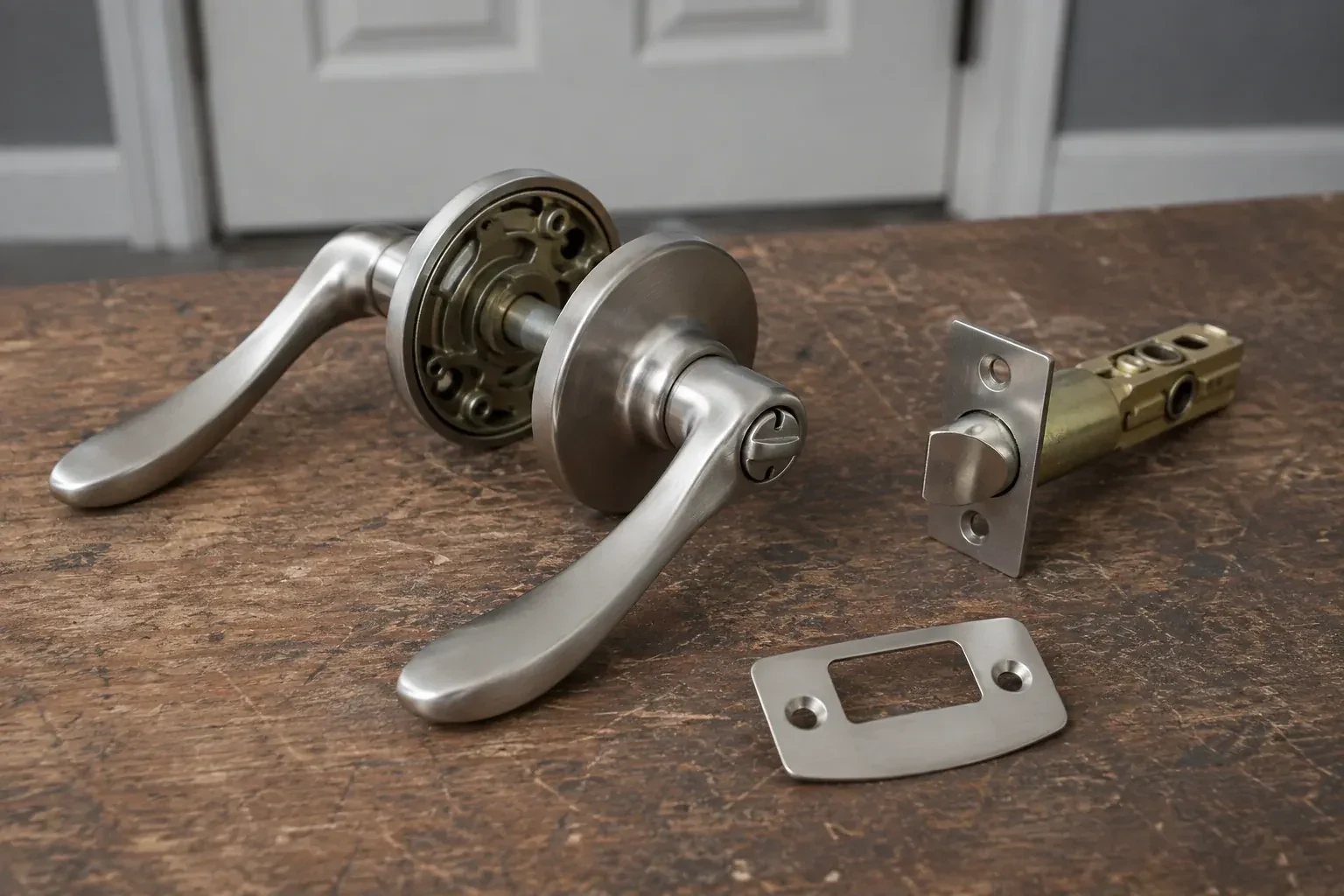
Because that is where a kicked door fails. The bolt is strong, but it sits in a pocket in the jamb held by a thin plate and short screws, and a boot splits the wood around it. A reinforced strike or box strike fastened with three-inch screws into the wall framing spreads the blow along the frame. It is the least visible part of the upgrade and often the one that does the most.
The lock is frozen and the door will not budge. What will you do?
Ice is handled gently. Lock de-icer and mild warmth free the cylinder so it turns without force, and a door stuck to its seal is released by pressing along the edge to crack the ice rather than pulling the handle, which can tear the rubber. Hot water is never used because it refreezes and can crack glass. Afterwards the cylinder is lubricated with whatever product the vehicle maker specifies and the seals are treated with silicone.
Can a push-button, proximity-style key be programmed the same way?
Yes, though there is usually more to pair afterward: the proximity functions that let the vehicle detect the key nearby, alongside the same immobilizer identity a traditional transponder key would carry. The visit still ends with the same test, confirming the engine starts and the vehicle recognizes the key at a normal walking distance.
Request a visit
Every job in Appin starts with a proper look before anyone touches a tool. The locksmith checks the cylinder, the latch, the strike and the way the door sits in its frame, then tells you what he found and what he suggests. The price is given at the door once that look is done, so it reflects the actual hardware rather than a guess, and it is the same fee at any hour.