Car keys · Strathroy-Caradoc
Transponder Key Programming in Strathroy-Caradoc
Since the remote starter was installed last month, the original key has started acting strangely, the car catches on the first turn some mornings and refuses outright on others.
In plain words
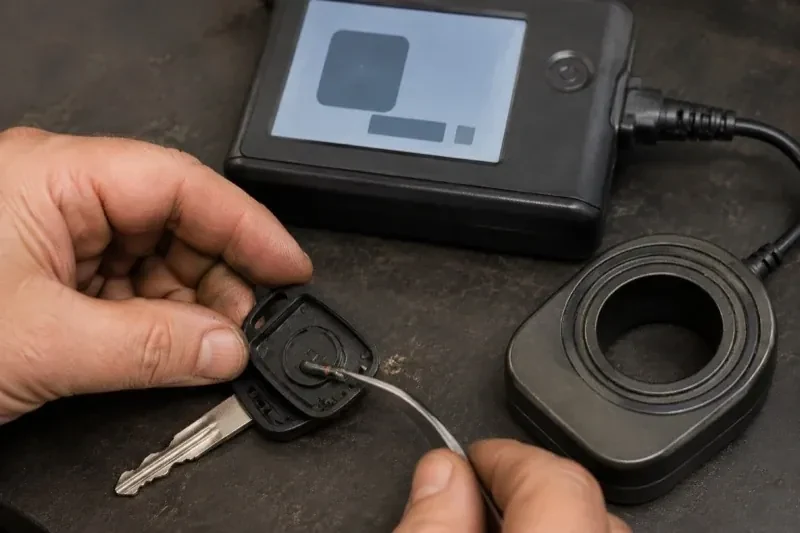
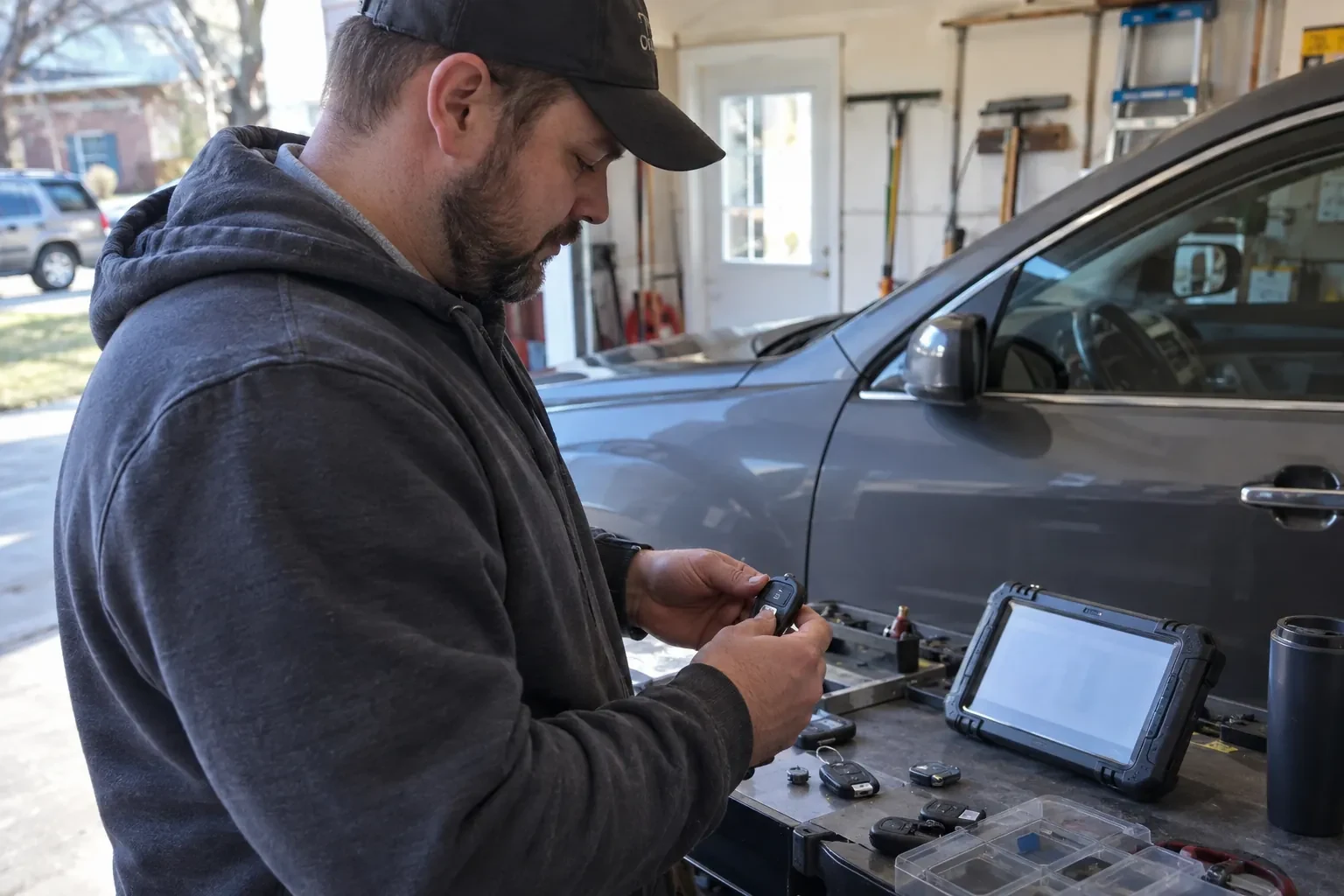
Transponder key programming is the step that teaches a vehicle's immobilizer to recognize a key's chip so the engine agrees to start, separate from cutting the metal blade that opens the door. A locksmith identifies the vehicle's own security system, connects programming equipment to it, and writes the new key's identity into its memory. Whether the job is a single spare, a replacement for a lost key, or every key gone at once, the visit ends the same way: the engine is started with the finished key, not just tested on a screen.
How the visit goesThe car came with a single key when the sale went through, and that key is the only thing standing between the household and being stranded. A second one has been on the list for weeks, quietly moved down every time something more urgent came up.
Transponder Key Programming
How the visit goes
How the vehicle's key list is reached
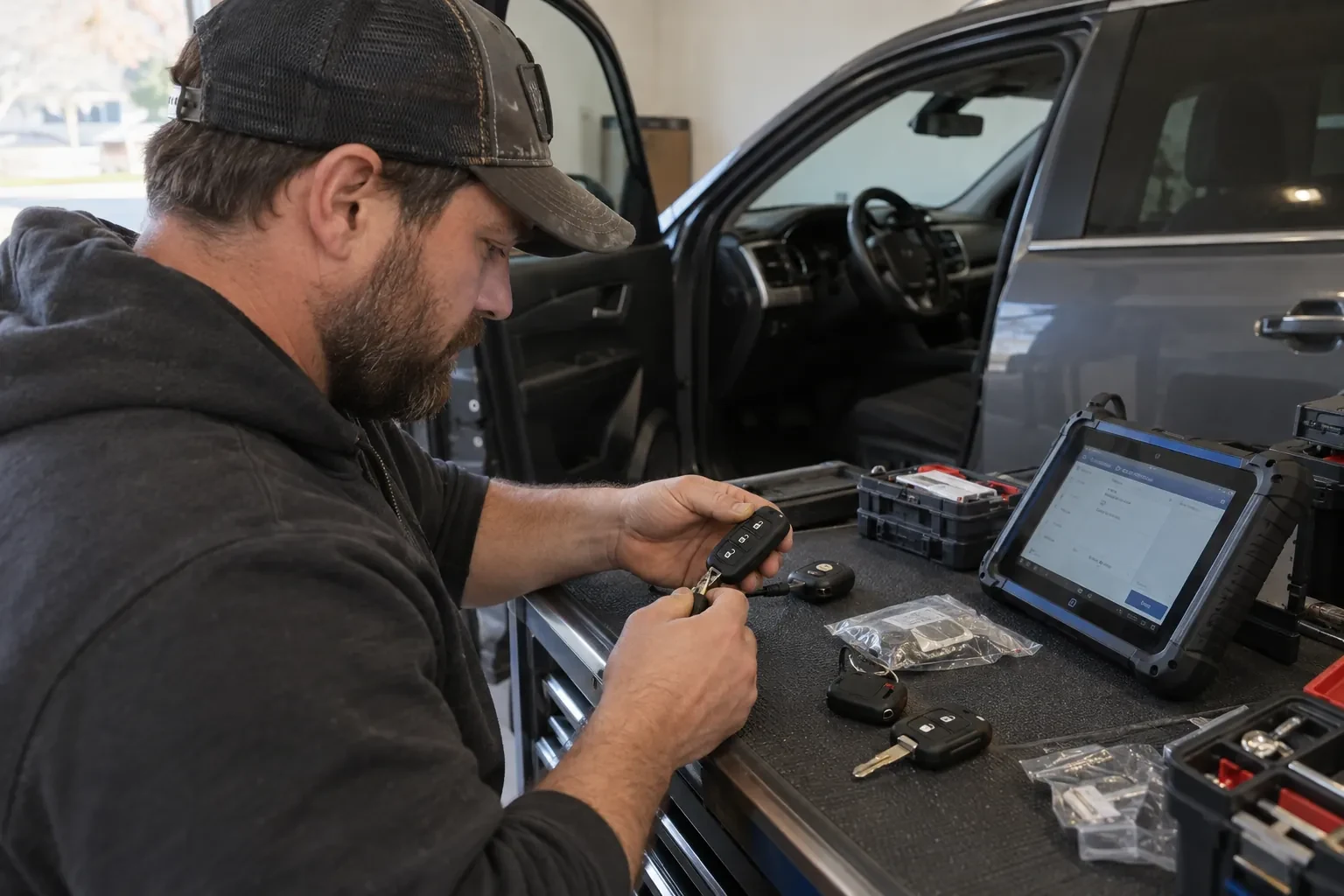
Some vehicles let a locksmith see and edit the key list directly once a diagnostic tool is connected to the onboard port. Others hide that list behind a manufacturer security session that has to be established first, particularly on newer models with more layers between the port and the immobilizer itself. Knowing which situation applies before starting sets the right expectation for how the visit will unfold, and for all-keys-lost work it decides whether the first step is reached directly or has to be built from nothing.
Starting over when every key is gone
All-keys-lost work follows a different path, because there is no working key left to prove the vehicle's trust to a new one. The locksmith first re-establishes secure access to the immobilizer's own module, sometimes through the vehicle's manufacturer network, before a fresh key list can be written at all. Once that access is confirmed, the new key or keys are added the same way any other key would be, and the process finishes with the same start-up test as a routine replacement.
Room for the next driver
Most vehicles can hold more than one or two keys in memory, so adding a second household member later is usually a smaller job than the first visit was, provided at least one working key remains to authorize the addition. Knowing that in advance changes how a household treats an existing key: less like the only copy in the world, more like the first of what could reasonably become several, each one traceable to the same visit that started the list.
Transponder Key Programming
In the van
Fob battery
Emergency insert blade
Replacement remote-head fob
Proximity smart key
VIN reference tool
Transponder Key Programming
What affects the quote
Any extra function added to the new key
Pairing remote entry, trunk release, or proximity walk-up functions onto a new key is additional work beyond the immobilizer chip alone, and each function is confirmed working before the visit is considered finished.
Vehicle make, model and year
The chip family, the immobilizer generation, and how reachable the vehicle's key list is all follow from the exact vehicle, so identifying it precisely early on shapes both the blank needed and how much of the visit is straightforward programming versus a more involved security session.
Fob battery or housing replacement
A fob with a failing battery, cracked buttons, or a worn housing may need that hardware replaced alongside the programming, which is identified during the initial check of the key rather than assumed either way.
What to have ready
- Has an aftermarket alarm or remote starter been installed?
- Where is the vehicle parked right now?
- How many working keys would you like when this is finished?
Transponder Key Programming: questions
QuestionsWhat information should I have ready before this visit?
The vehicle's year, make and model, and its VIN if it is easy to find, let the locksmith arrive with the right blank and chip already in hand. Knowing how many keys currently work, whether any were lost or stolen, and whether the vehicle uses a basic blade or a fob shapes the rest of the visit before a single tool comes out.
Can a push-button, proximity-style key be programmed the same way?
Yes, though there is usually more to pair afterward: the proximity functions that let the vehicle detect the key nearby, alongside the same immobilizer identity a traditional transponder key would carry. The visit still ends with the same test, confirming the engine starts and the vehicle recognizes the key at a normal walking distance.
Can a copy cut at a hardware counter ever start my car?
A general-purpose key-cutting kiosk can shape a blade that turns the door lock, and a few kiosks can also copy certain transponder chip types. Most cannot handle what a modern immobilizer needs, though, so the usual result is a key that opens the car and even turns the ignition while the engine just cranks without starting. Even where a kiosk manages the chip, a separately programmed key can still turn out to be needed.
Related services
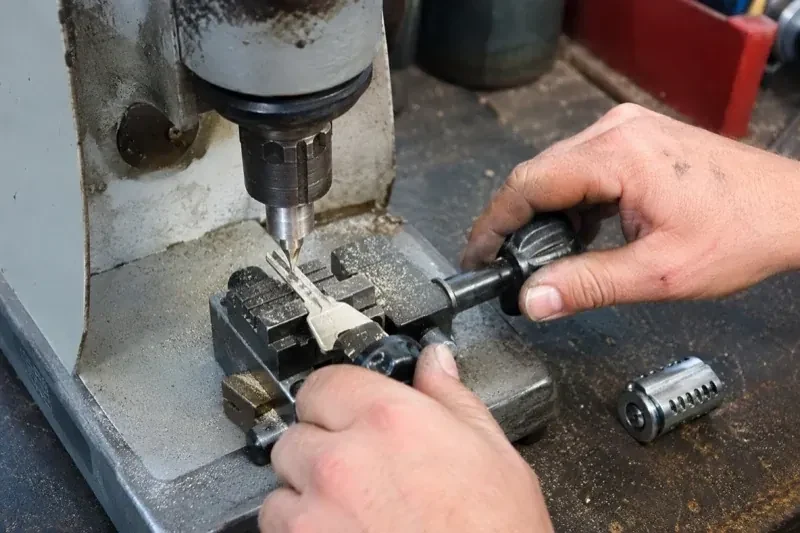
- Car Key ReplacementThe engine cranks, catches for a second and dies, and a small key-shaped light keeps blinking on the dash.
- Spare Car Key DuplicationA lockout last month ended with a locksmith opening the door and going home, and the same single key has been carried ever since with nothing behind it.
- Key Fob ProgrammingA cracked case or a spin through the wash left the fob unresponsive, and opening it up reveals a slightly corroded board where the buttons used to sit.