Lockouts · Southwest Middlesex
Break-In Damage Lock Repair in Southwest Middlesex
There is a hole where the cylinder used to be.
In plain words
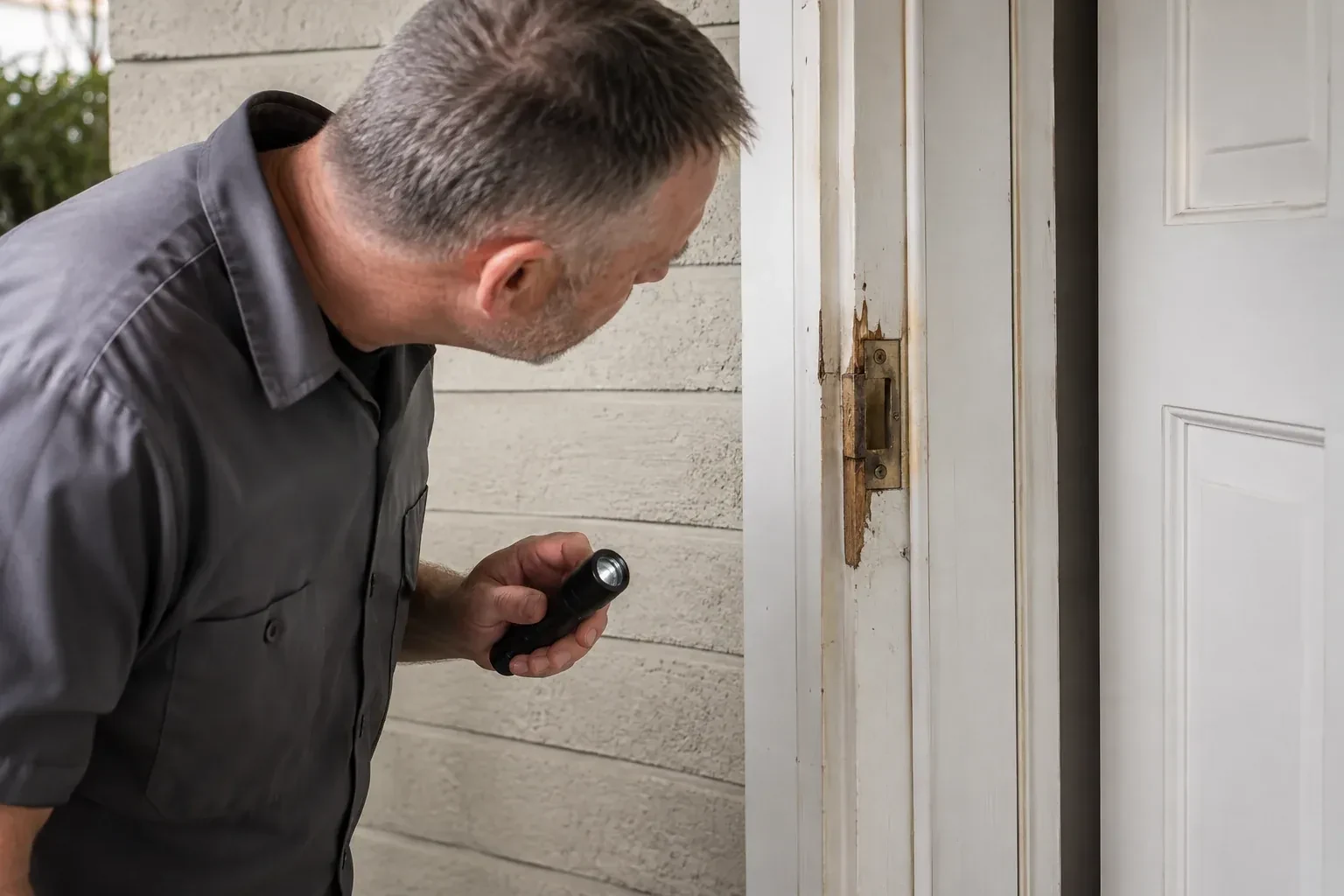
Most forced doors fail at the frame, not the lock. A standard strike plate is held by two short screws in a softwood jamb, and a kick transfers the whole force of a body to those screws. The bolt usually survives; the wood around it does not. Swapping the deadbolt for a heavier one leaves the weak point untouched, so a proper break-in repair rebuilds the strike side with a boxed strike, a pocket cut to full depth and three-inch screws that pass through the jamb and the shim space into the stud behind. The lock is replaced too, but the frame is where security returns.
How the visit goesSomeone smashed the little window beside the door, reached in and turned the thumb-turn. The lock itself is fine, but there is glass on the mat, a hole in the sidelight and a deadbolt anyone can reach.
Break-In Damage Lock Repair
How the visit goes
What is behind the jamb
Long screws only help if there is something solid to bite into, so the locksmith looks at how the frame is built. Most house doors have a wood jamb, a shim space and then a stud, and three-inch screws reach through all three. A door beside a sidelight has glass where the stud would be, so fasteners are chosen for that construction instead. A jamb fixed to a masonry return, a steel frame in a commercial building, or a fire-rated suite door in an apartment corridor each call for their own hardware and fixing method. Knowing the wall before choosing the screws is what makes the reinforcement real.
Securing the opening for the night
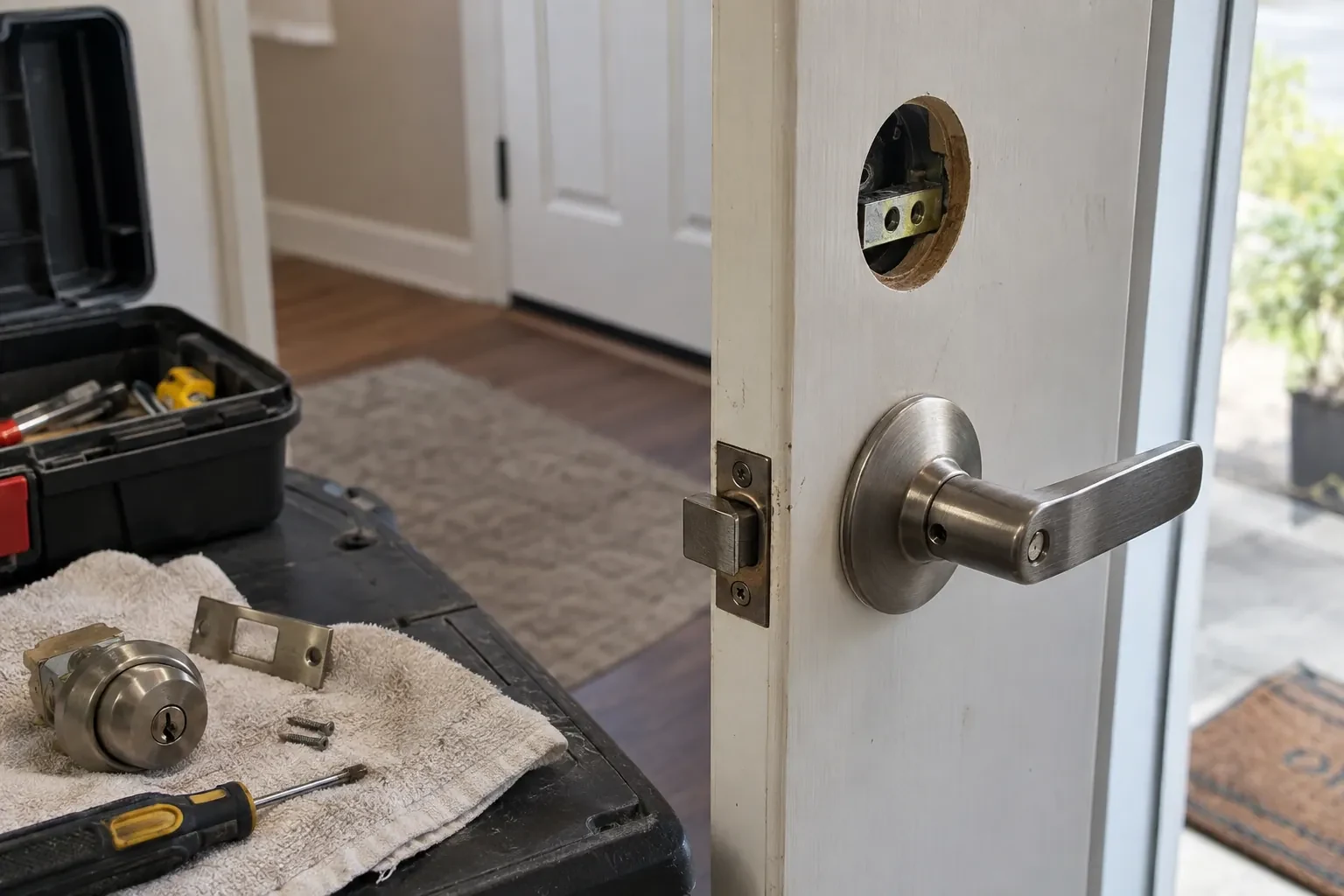
Before anything permanent, the door has to close and lock. Where the slab and frame are sound, a new deadbolt or cylinder goes straight in and the job moves on to reinforcement. Where the jamb is split, a steel repair plate is screwed over the break to hold the wood together and give the strike something to bite, or the strike is boxed and screwed into the stud behind the damage. Where the frame or door is too broken for hardware, plywood is fitted across the opening with cleats from inside, arranged so the household can still get out without a key. You know before the locksmith leaves exactly how the door is being held.
Glass and the reach-in problem
When entry came through glass beside the door, the lock was never the weakness, and the follow-up is about the glass. A tested security-film system, applied with its specified frame attachment, can slow an arm from passing through the sidelight, or the pane is replaced with laminated glass by a glazier. Where the layout allows, the deadbolt is repositioned beyond arm's reach of the glass. A thumb-turn stays on the inside, because it lets everyone leave without hunting for a key, and a keyed inside cylinder trades one risk for a worse one if there is ever a fire. The result keeps the intruder out and the way out clear.
Break-In Damage Lock Repair
In the van
Grade 1 deadbolt with one-inch throw
Security strike box
Hinge reinforcement plate
Replacement cylinder or core
Three-inch strike and hinge screws
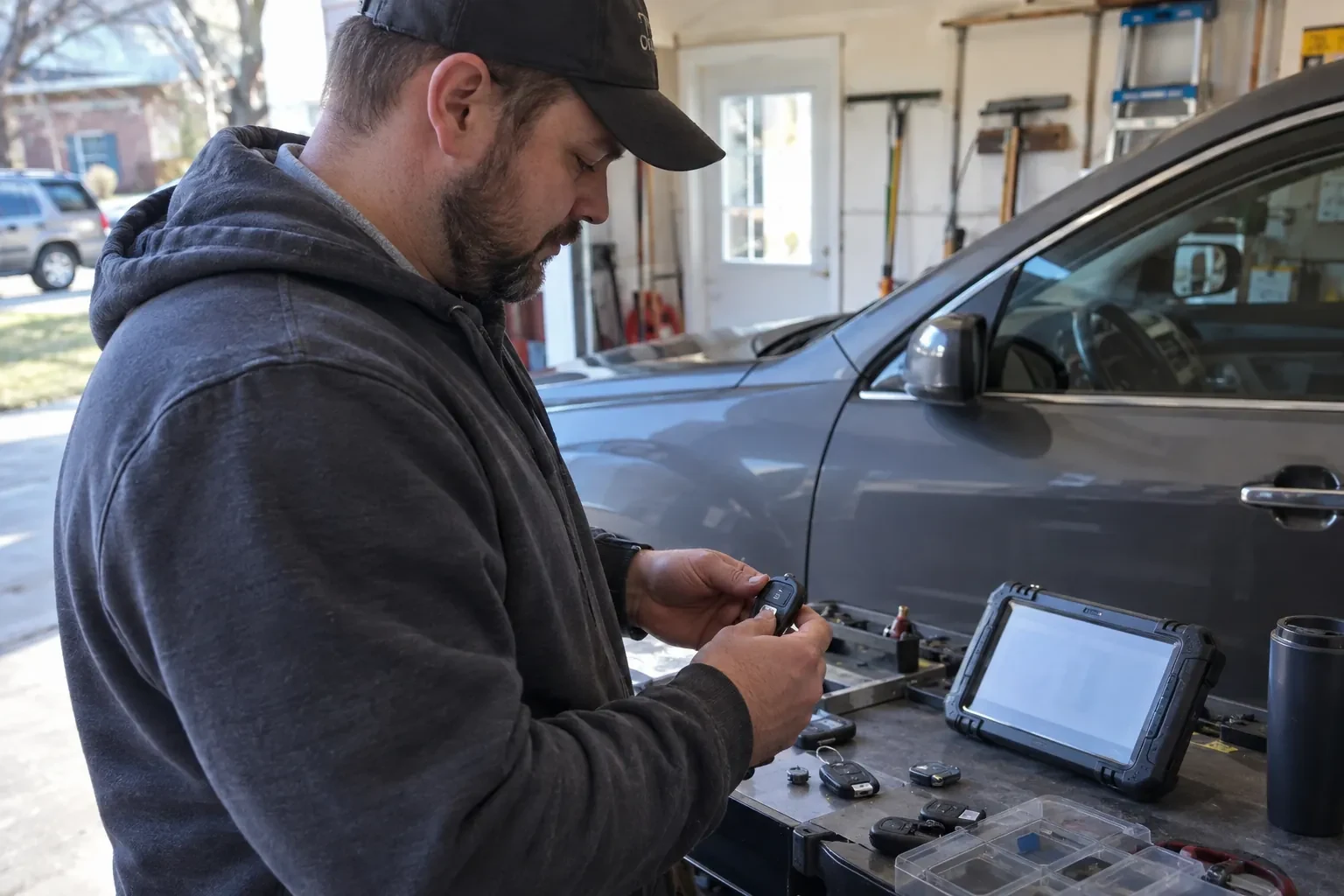
Break-In Damage Lock Repair
What affects the quote
Door edge reinforcement
A wrap-around edge reinforcer is added when the wood around the bore is crushed or split. It is a separate part, chosen to suit the door thickness and the hardware going into it.
Number of cylinders rekeyed
Every lock a taken key fits is rekeyed individually, so a house with four exterior doors, a mailbox and two padlocks is more work than one front door. Bringing them all onto a single key is part of the count.
Work referred to another trade
A shattered frame, a broken door slab or smashed glass is listed as needing a carpenter, door installer or glazier, and that work is quoted by those trades rather than by the locksmith.
What to have ready
- Do you own the property, rent it or manage it for someone else?
- Are there other doors or a garage entry on the same key?
- Would you like stronger hardware fitted while the door is being repaired?
Break-In Damage Lock Repair: questions
QuestionsI rent. Who arranges the repair, and can I change the lock myself?
Tell your landlord or property manager as soon as the police have been called; provincial tenancy law makes the landlord responsible for repairs to the unit, and most will arrange the locksmith. A tenant may not change locks without the landlord's agreement, and a landlord who changes them must give the tenant keys, so the visit is coordinated between you. If you arrange securing yourself in an emergency, keep the receipt and the record of what was done for both sides.
Someone reached through the sidelight to turn the thumb-turn. Should I fit a deadbolt keyed on both sides?
It is tempting, but a thumb-turn lets everyone in the household leave by that door without hunting for a key, special device or special knowledge, so a keyed inside cylinder is the wrong fix. Better answers are a tested security-film system or laminated glass in the sidelight to slow an arm from passing, moving the deadbolt beyond arm's reach of the glass where the door allows, and a glass-break sensor if you have an alarm.
Why did the frame break instead of the lock?
Because that is where the weak point was. A standard strike plate is held by two short screws in a soft wood jamb, and the deadbolt only reaches into a shallow pocket behind it. A kick delivers the full weight of a body to those screws, and the wood around them splits along the grain. The bolt itself is rarely the failure. That is why the repair concentrates on the strike side: a boxed strike, a full-depth pocket and long screws into the stud.
Related services
- Business Lockout ServiceAfter last night's power flicker the card reader beside the clinic door shows nothing.
- Broken Key ExtractionThe apartment key snapped mid-turn, leaving the cylinder twisted halfway between locked and open.
- Seized & Jammed Lock OpeningThe shop's lever handle goes down as usual, but the latch inside the mortise case never pulls back.