Car keys · North Middlesex
Car Lockout Service in North Middlesex
You dropped the duffel bag in the trunk, closed the lid with your elbow, and heard the keys land inside a heartbeat too late.
In plain words
Most car lockouts end with nothing to show that anyone was ever there. Purpose-made tools do the work a key or a finger would do from inside: an inflatable wedge opens a small gap at the top of the door frame, a padded reach tool presses the unlock button or lifts the handle, and door-edge guards keep paint and seals clean. Where a door cylinder exists, a pick-and-decoder made for that keyway turns it without marks. Coat hangers, screwdrivers and forced windows have no place in the process, and breaking glass is reserved for genuine emergencies where a life is at stake and responders are already on the way.
How the visit goesThe rental van came with one key. It went into the door lock, turned partway, and snapped, leaving half the blade in the cylinder and the other half in your hand. The delivery is due, the van is locked, and the rental desk is an hour away.
Car Lockout Service
How the visit goes
Where the keys actually are
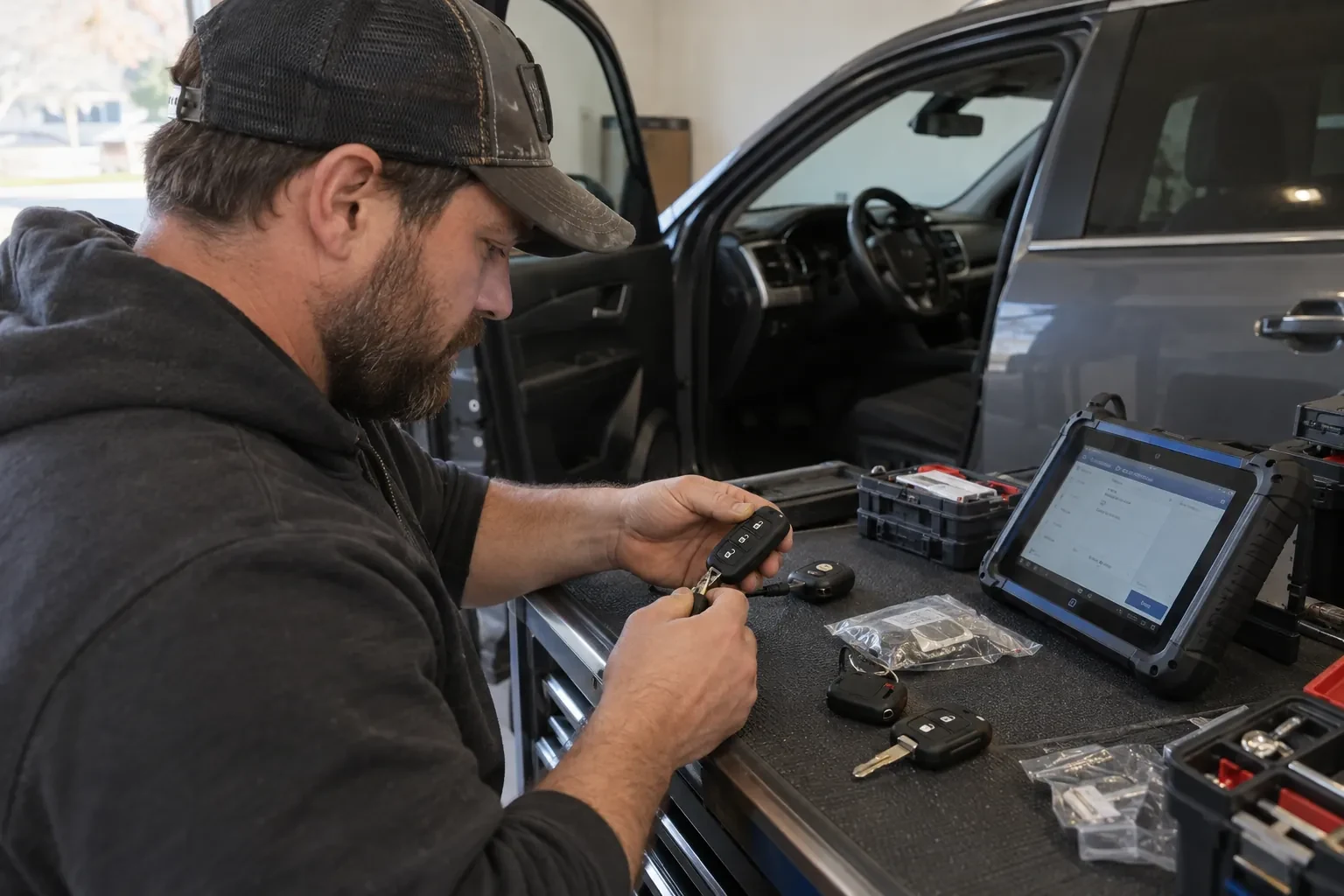
The second question decides the shape of the visit. Keys on the seat or in the ignition mean a cabin opening only. Keys in the trunk mean the cabin is tried first where a usable release exists, and the trunk cylinder itself is decoded where it does not. A silent fob may mean a flat coin battery, a dead car battery, or a fob left inside a car that locked anyway. Keys lost on a trail, in the snow or with a stolen bag mean that entry is the start and a new key is the finish. A few honest sentences about the last time you saw the keys tell the locksmith what to bring to the door.
Keys in a closed trunk
A trunk with the keys inside is almost never opened at the trunk lock. Where the cabin has a usable path, it is opened first and the trunk released from there: a release button by the driver's seat, or a fold-down rear seat that gives a hand through to the trunk; the glowing emergency handle inside the trunk itself is for a trapped occupant, not a cabin control, and some vehicles disable the cabin release entirely. Where a car has a valet lock that isolates the trunk from the cabin, the trunk cylinder is decoded and turned in the same way as a door. The keys come out, the trunk latch is checked, and nothing on the lid is marked.
Door, glass and seals checked over
A careful opening leaves nothing to repair, and the last look confirms it. The door edge is inspected where the guards sat, the top of the frame is checked for the faintest bow, the window is run up and down to make sure it tracks cleanly, and the seal is examined for any lift or tear. Anything that was already there before the visit was pointed out at the start and is confirmed now. If a bystander's earlier attempt left a stretched seal or a scuff, the locksmith tells you plainly what it is and what would put it right, so you can decide about it without any pressure.
Car Lockout Service
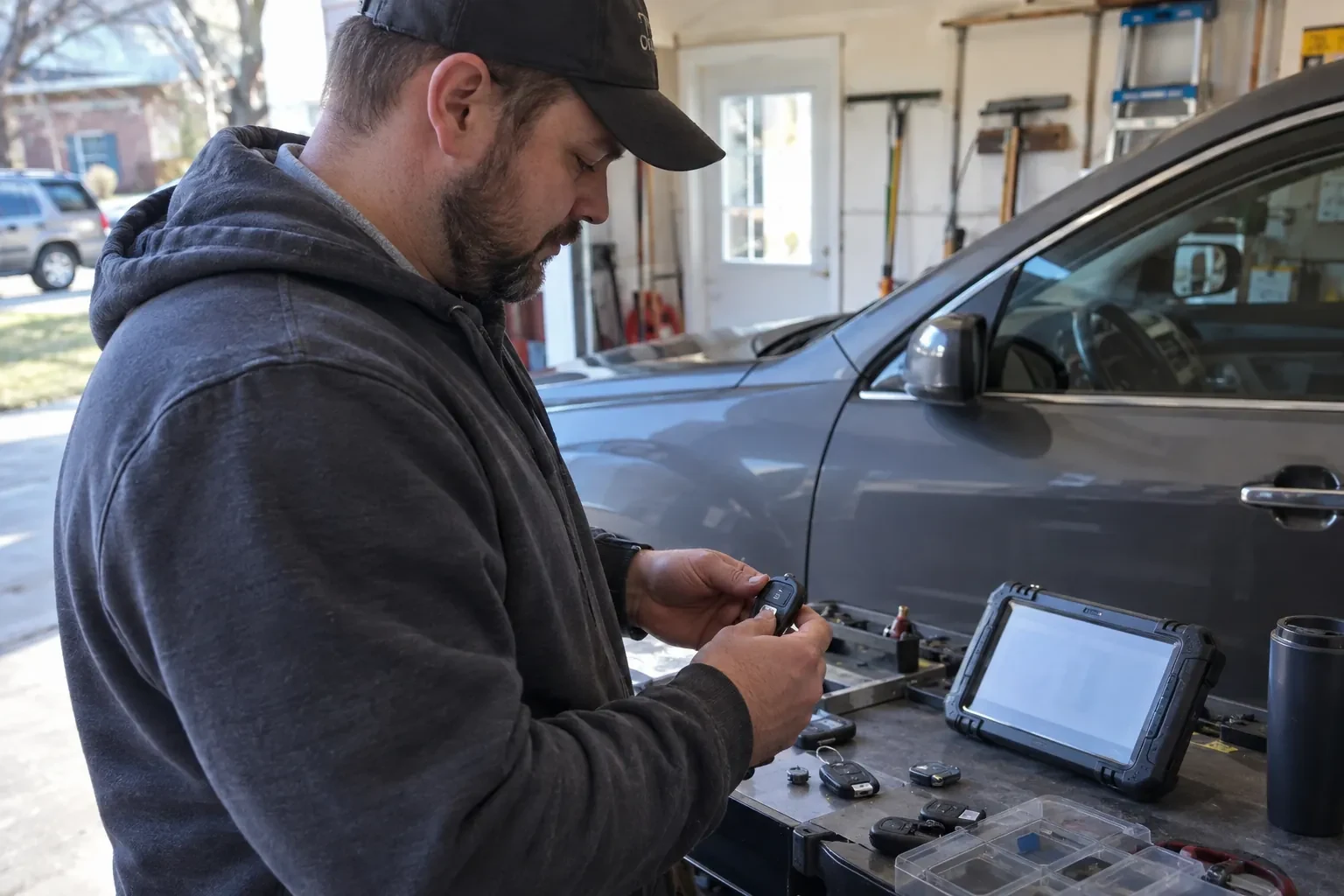
In the van
Key programmer
Twelve-volt jump pack
Silicone spray for door seals
Transponder key blanks
Broken key extractors
Car Lockout Service
What affects the quote
Dead fob or dead car battery
Replacing a fob coin cell is a small item. Jump-starting a flat twelve-volt battery so the immobiliser wakes is another, and each is named on the quote rather than folded in.
Number of keys made
One replacement gets you home; a second cut and programmed at the same time saves a future call. Each key is counted into the quote individually, so say how many you want.
Time of the call
An evening, weekend or holiday call costs the same amount as a weekday afternoon one for a car lockout. The locksmith looks at the vehicle and the type of key or fob at the roadside and confirms the exact figure there, in person.
What to have ready
- Is the car showing any signs of life, such as interior lights or a horn?
- Does the car use a keyless fob or push-button start?
- Do you have photo identification with you, or is it inside the car?
Car Lockout Service: questions
QuestionsWhy not just use a coat hanger or a slim jim?
Those tools suited cars from decades ago with simple rods inside the door. A modern door is packed with wiring, window regulators, speaker leads and side-airbag sensors, and a blind tool fishing among them can cut a harness or set off a fault. Coat hangers also tear seals and scratch glass. Purpose-made wedges, padded reach tools and keyway-specific picks do the job from outside the door's workings, which is why locksmiths carry them instead.
The lock is frozen and the door will not budge. What will you do?
Ice is handled gently. Lock de-icer and mild warmth free the cylinder so it turns without force, and a door stuck to its seal is released by pressing along the edge to crack the ice rather than pulling the handle, which can tear the rubber. Hot water is never used because it refreezes and can crack glass. Afterwards the cylinder is lubricated with whatever product the vehicle maker specifies and the seals are treated with silicone.
Will you need to see identification before opening my car?
Yes, and it is the part of the visit that protects you most. Photo identification matched against the vehicle permit, the insurance card or a rental agreement shows the car is yours to open. The permit carries the owner's name and plate number, so the match is straightforward. Roadside clubs ask their locksmiths for the same check, and every car owner benefits from a trade that asks before it opens.
Related services
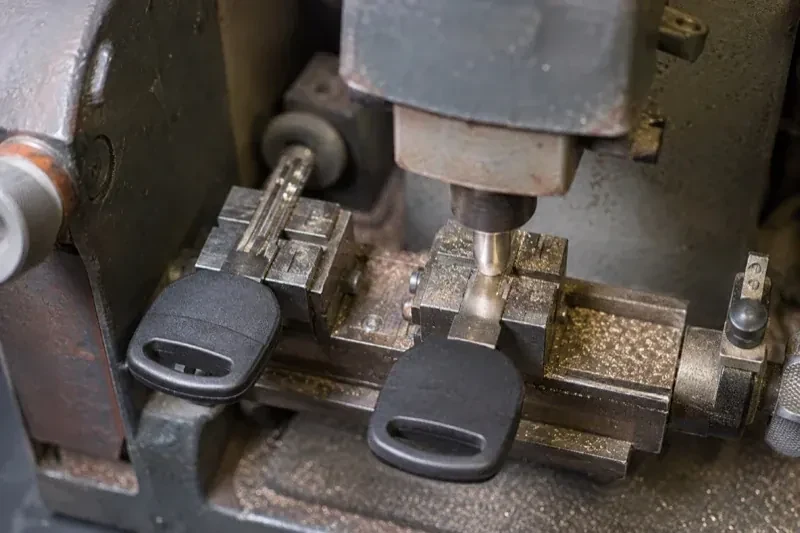
- Spare Car Key DuplicationA lockout last month ended with a locksmith opening the door and going home, and the same single key has been carried ever since with nothing behind it.
- Key Fob ProgrammingA cracked case or a spin through the wash left the fob unresponsive, and opening it up reveals a slightly corroded board where the buttons used to sit.
- Transponder Key ProgrammingSince the remote starter was installed last month, the original key has started acting strangely, the car catches on the first turn some mornings and refuses outright on others.