Lockouts · North Middlesex
Business Lockout Service in North Middlesex
After last night's power flicker the card reader beside the clinic door shows nothing.
In plain words
Businesses are locked out by people as often as by hardware. A keyholder is away, a former employee still has a key, a master key has gone missing, or the only spare lives in a drawer behind the locked door. A business lockout deals with the door in front of it and then with the pattern behind it. Cylinders can be rekeyed or removable cores swapped so an unreturned key becomes useless, new keys are cut and recorded against named holders, and a second keyholder or a lockbox is set up so that one absence never again closes the business for a morning.
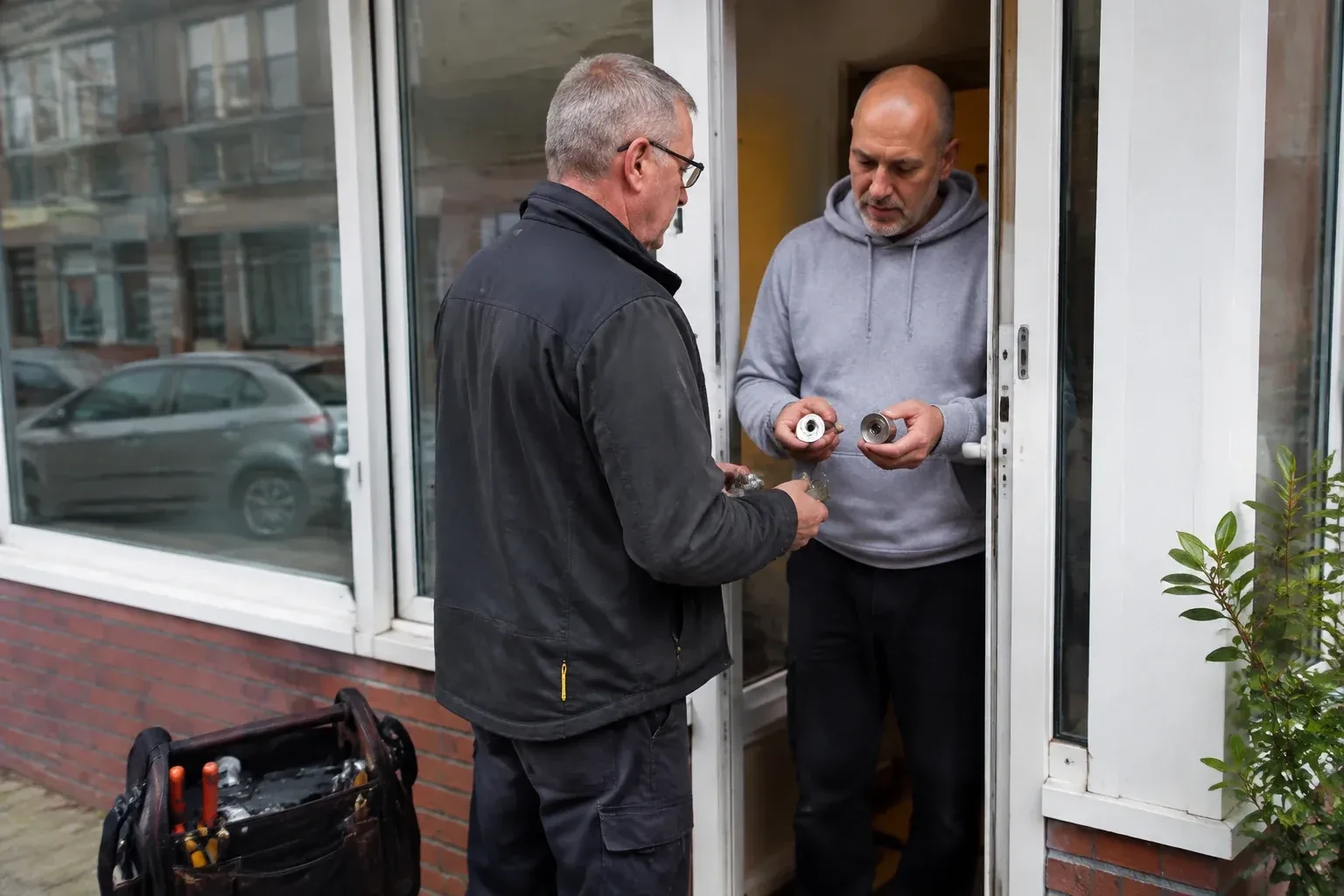
How the visit goesYou signed the lease on the unit last week and the landlord handed over possession, but the previous tenant's locks are still on both doors and no keys came with them. Your fixtures arrive tomorrow and the doors will not open.
Business Lockout Service
How the visit goes
How the door hangs and closes
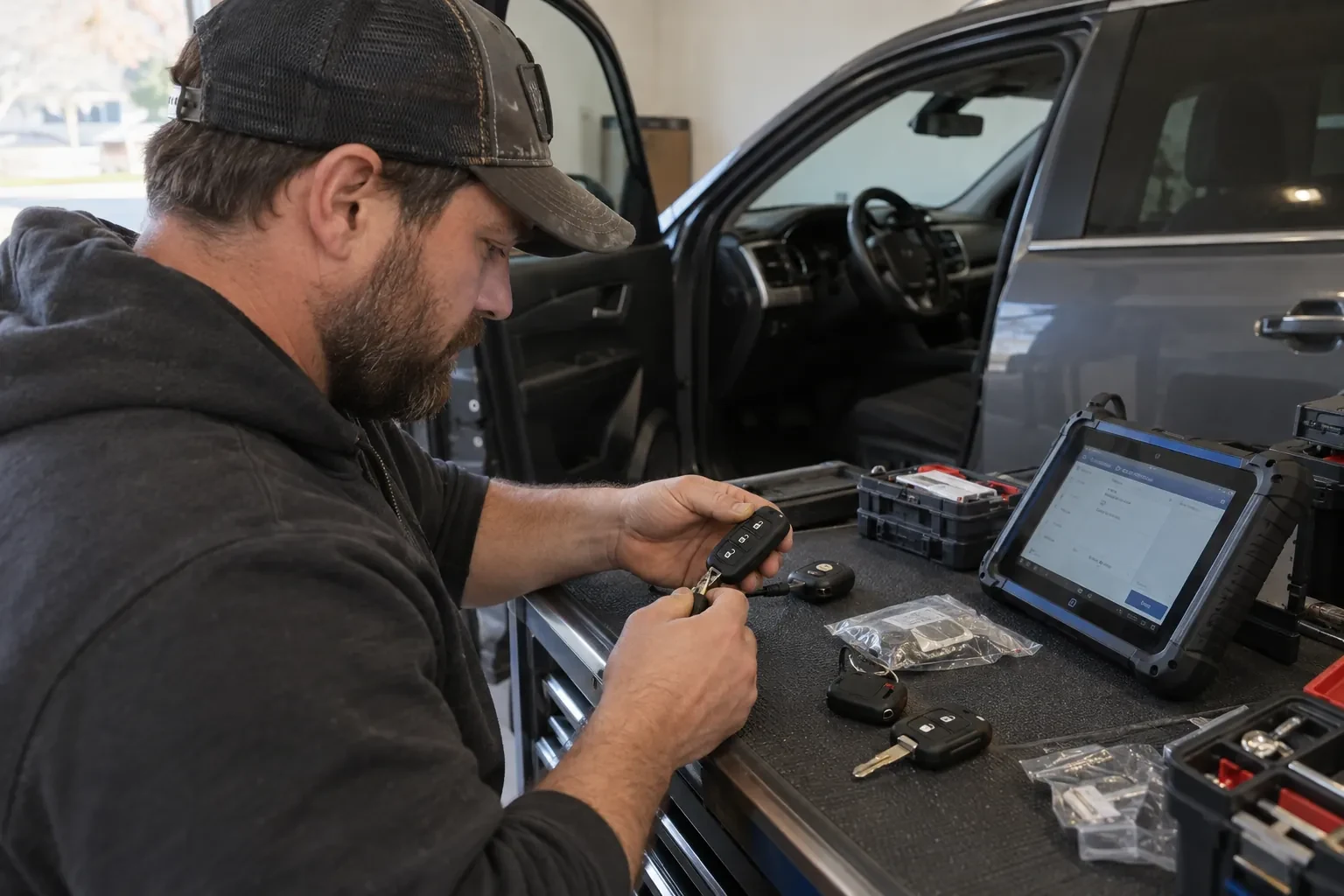
Commercial doors are heavy and busy, so the locksmith reads the door as carefully as the lock. A glass door is checked at its pivots or continuous hinge for drop and play, and at the threshold for scrape marks that show it has sagged. The closer is checked for a slow or stiff sweep that leaves the door short of the strike. The gap along the lock edge tells whether the bolt is entering its pocket square or catching its lip. A hand on the door while the key is turned often reveals that the bolt is bound rather than the cylinder failed, which changes the fix from lock work to lifting and adjusting the door.
Getting past a dead reader or strike
Electrified doors are opened by restoring what they lost rather than defeating them. The locksmith checks the power supply, breaker and battery backup for the controller, and a dead strike or reader often comes back with a fresh fuse or a charged battery. Where the hardware has a mechanical override, that cylinder is picked or decoded like any other. A magnetic lock that stays energised is released through its own controller or by the access-control provider remotely, never by cutting a wire, so fail-safe and fail-secure behaviour stay as the system designer intended. Once inside, credentials are re-enrolled, schedules confirmed and the alarm monitoring company told the entry is complete.
A door that swings, closes and latches properly
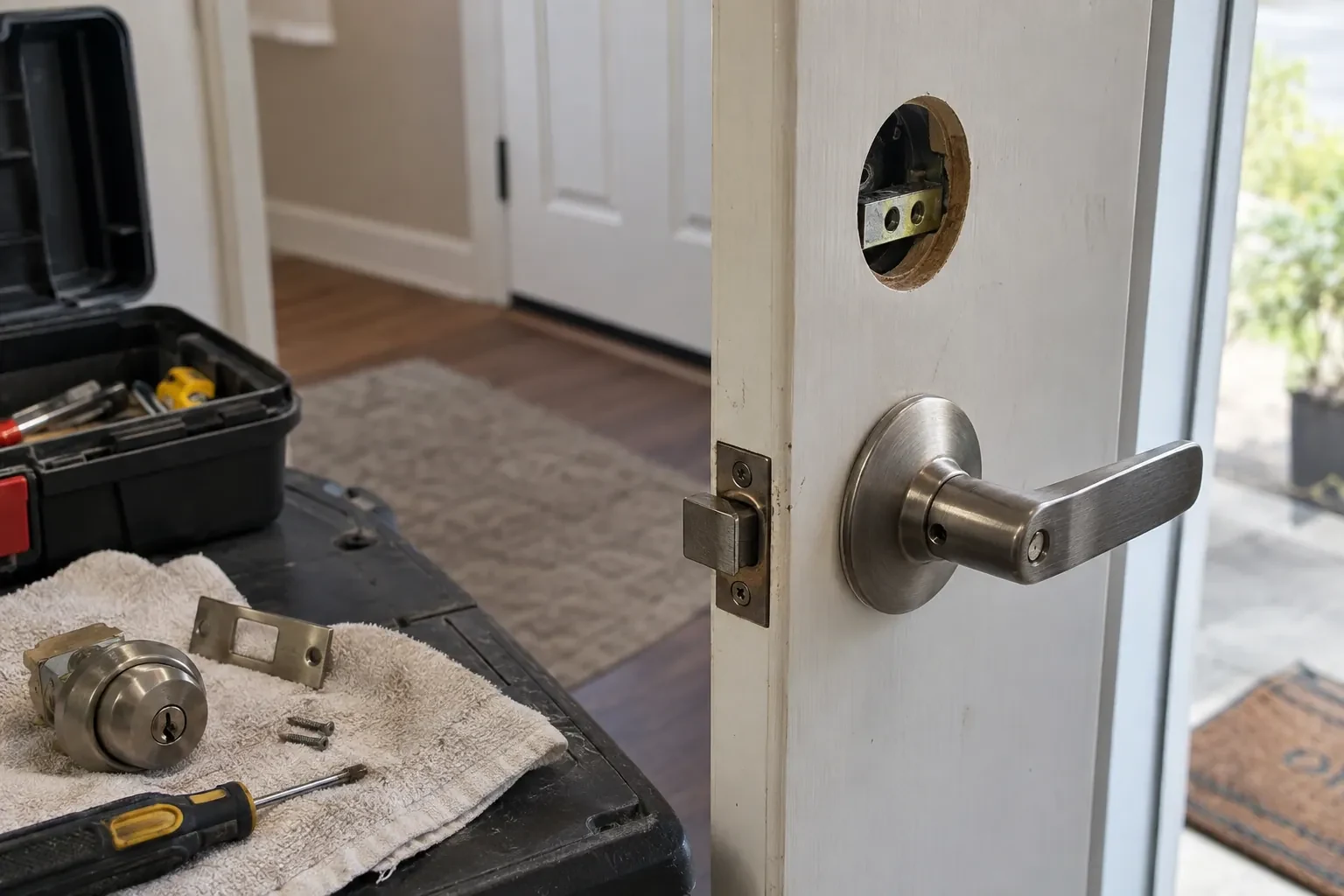
If the lockout began with a dropped door or a tired closer, the door itself is left in better shape than it was found. Pivots or the continuous hinge have been adjusted so the door hangs square, the strike has been dressed or repositioned so the bolt enters cleanly, and the closer's sweep and latching speeds have been reset so the door shuts and catches on its own without slamming. Heavy traffic doors drift again over time, so a glance at the threshold for fresh scrape marks and a listen for the latch catching each evening are worth building into the closing routine. Catching drift early keeps a lock from being blamed for a door.
Business Lockout Service
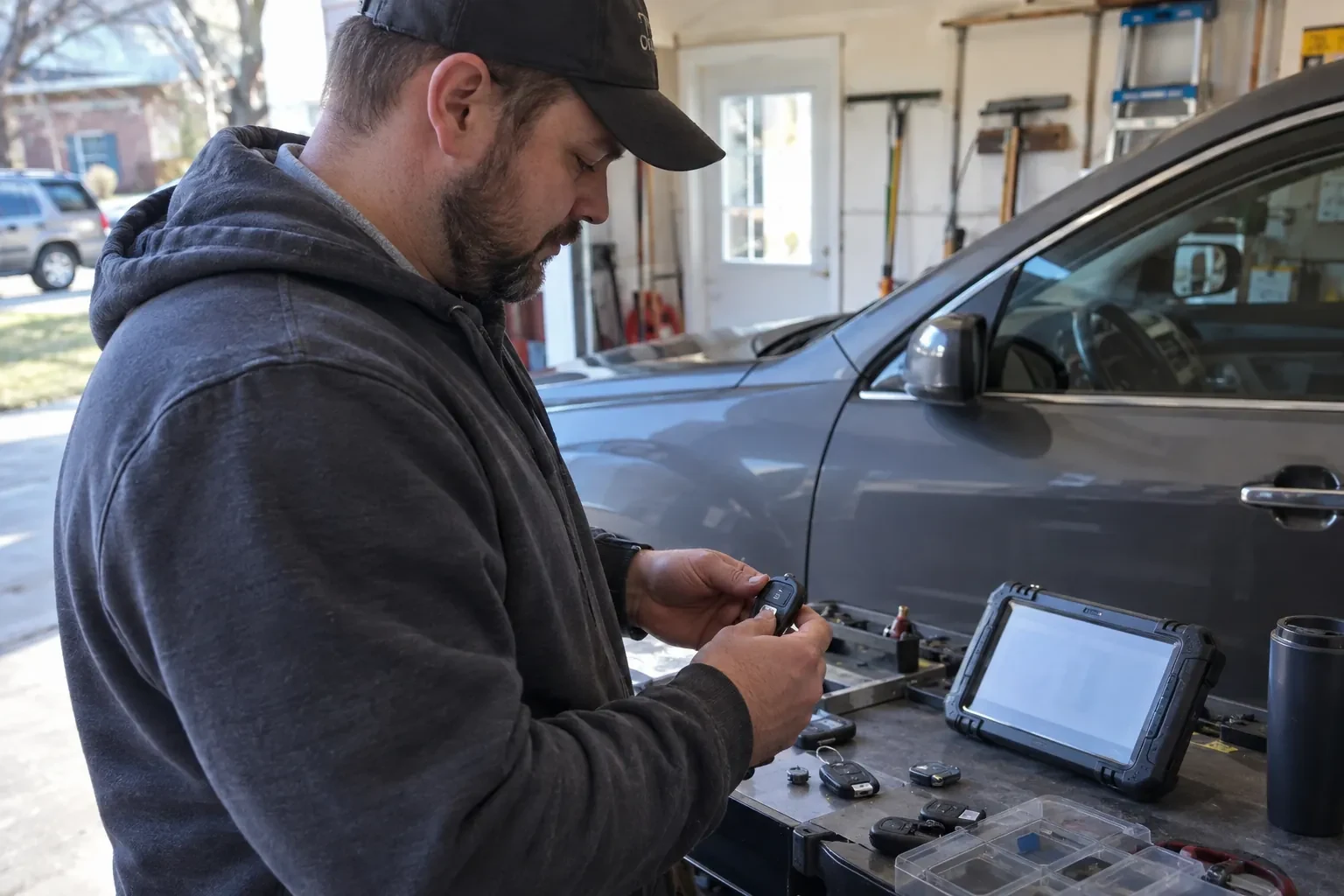
In the van
Exit device trim cylinders and dogging keys
Strikes, pivot shims and closer adjustment tools
Key blanks and code cutter
Control keys and core-removal tools
Storefront deadlock and deadlatch bodies
Business Lockout Service
What affects the quote
Broken key extraction and cylinder service
Removing a snapped key, cleaning and lubricating the cylinder and replacing a worn cam or tailpiece are added to the opening when that is what caused it, and a new key cut from code follows.
Damage from earlier attempts
A paddle bent by a pry bar, a stile scratched by a screwdriver or a cylinder wrenched by pliers may need repair as well as opening, and the locksmith points out what was already there before quoting it.
How many doors are involved
One front door is the simplest visit. A front door, a rear exit device, a roll-up padlock and a cash office add hardware to open and, often, cylinders to key alike afterwards.
What to have ready
- Is anyone able to reach the owner, head office or property manager to confirm the request?
- Where are the keys: with an absent keyholder, lost, broken in the lock, or turning without effect?
- Can you send a photo of the lock face and the edge of the door?
Business Lockout Service: questions
QuestionsWill we get something in writing afterwards?
Yes. The visit closes with a written account of which door was opened and how, the condition the hardware was in, anything replaced, the number of keys cut and who received them. Landlords ask for it when locks on a unit change, insurers after a loss, and franchise head offices as a matter of course. Keep it with the lease; it also tells the next locksmith exactly what is on your doors.
Can you also deal with the back door, the roll-up shutter and the gate?
Yes. A business lockout covers every opening the premises relies on: the rear service door with its exit device, a roll-up shutter and its padlock, the compound gate, a mailbox in the lobby and interior doors such as the cash office or server closet. Mention each one when you call so the right padlock shackles, cores and cylinders are in the van, and so cylinders that should share a key are handled together.
We have lost a master key. Is that different from losing an ordinary key?
Yes, because a master key opens every lock in its group, so one missing key touches many doors. The response is planned rather than rushed: the locksmith maps which cylinders the key operated, works with the property manager if the system is building-wide, and re-pins or swaps cores across the group so a new master takes over. Manufacturers' guidance on key control treats retrieving and tracking master keys as the foundation of the whole system.
Related services
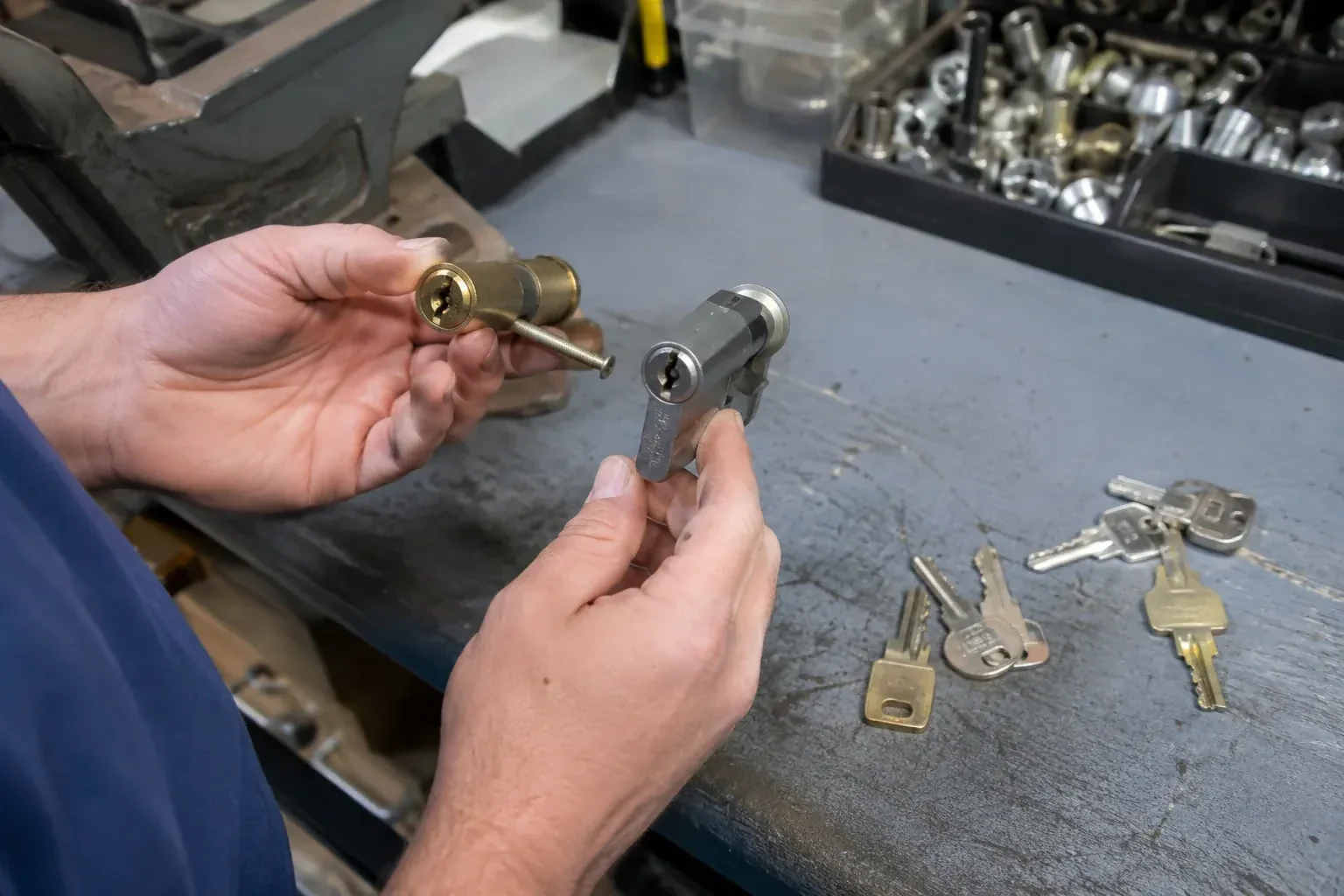
- Broken Key ExtractionThe apartment key snapped mid-turn, leaving the cylinder twisted halfway between locked and open.
- Break-In Damage Lock RepairThere is a hole where the cylinder used to be.
- Seized & Jammed Lock OpeningThe shop's lever handle goes down as usual, but the latch inside the mortise case never pulls back.