Commercial · North Middlesex
Panic & Exit Hardware in North Middlesex
The new access-control reader at the staff entrance works fine going in, but nobody has sorted out the door's exit side, and right now a card reader and a pushbar exist as two separate ideas.
In plain words
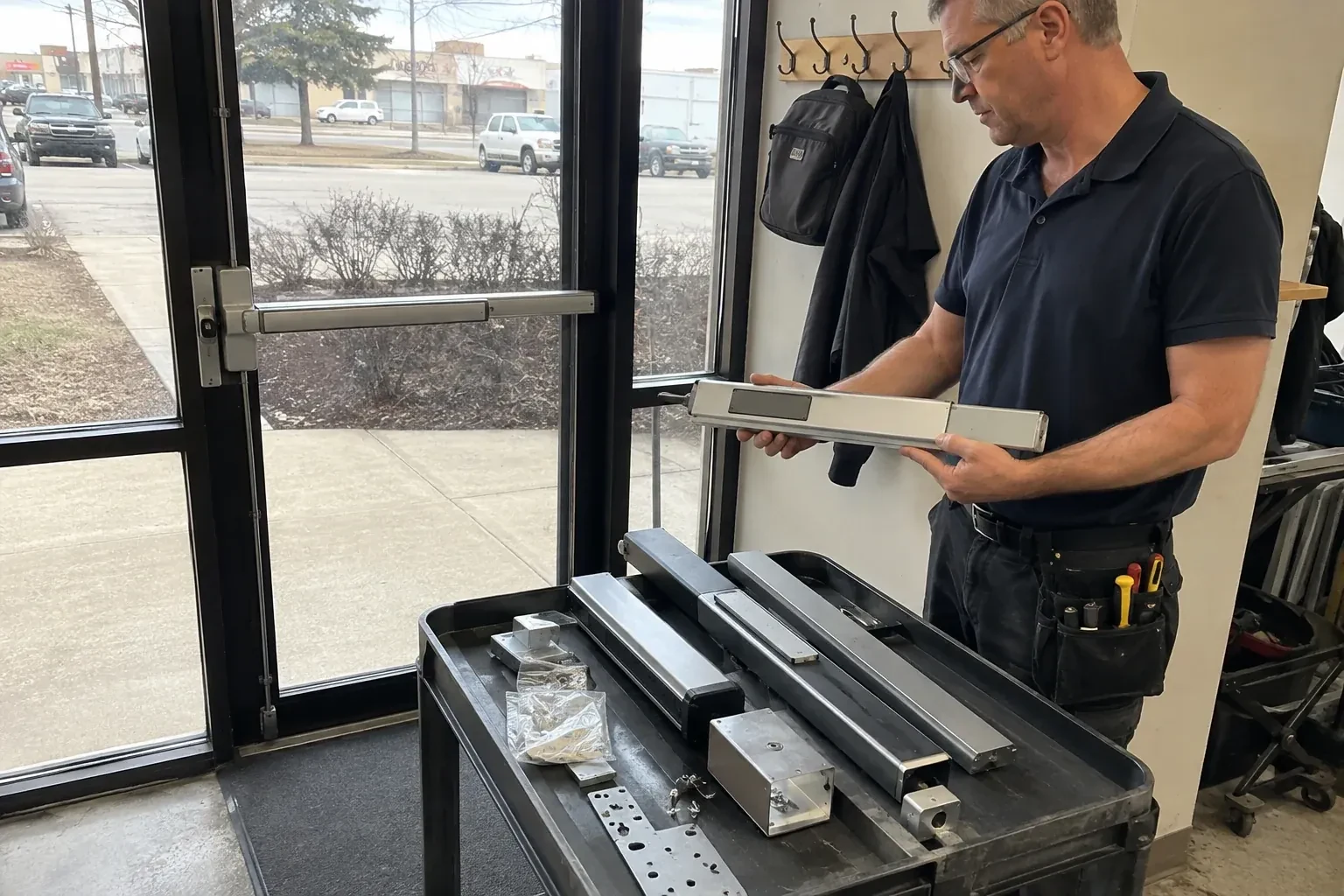
Panic and exit hardware installation fits a commercial door with a device that releases the latch the moment someone pushes on it from the inside, so the room's occupants are never asked to find a key to leave. The locksmith works from the room's occupancy and the door's fire rating first, then chooses a rim, mortise or vertical-rod device to suit the opening, pairs it with outside trim that still controls entry, and tests the release force and the latch before handing the door back. Any electrified addition, such as an alarm or a link to access control, is fitted once that basic function is confirmed.
How the visit goesA padlock went on the stockroom's back door years ago for security and nobody has thought about it since, until the walkthrough this week pointed out that the same door is the room's only other way out.
Panic & Exit Hardware
How the visit goes
Occupancy, fire rating and the authority reviewing the space
The assessment records the occupancy type and calculated occupant load for the room the door serves, whether the door sits in a fire separation, and who the authority having jurisdiction is likely to be, whether that is a fire inspector, a building official or an insurer. These facts, not the door's appearance or its width alone, are what decide whether a releasing device is required, whether it must also be fire-rated exit hardware, and what documentation the finished installation should carry.
Choosing the device for the opening
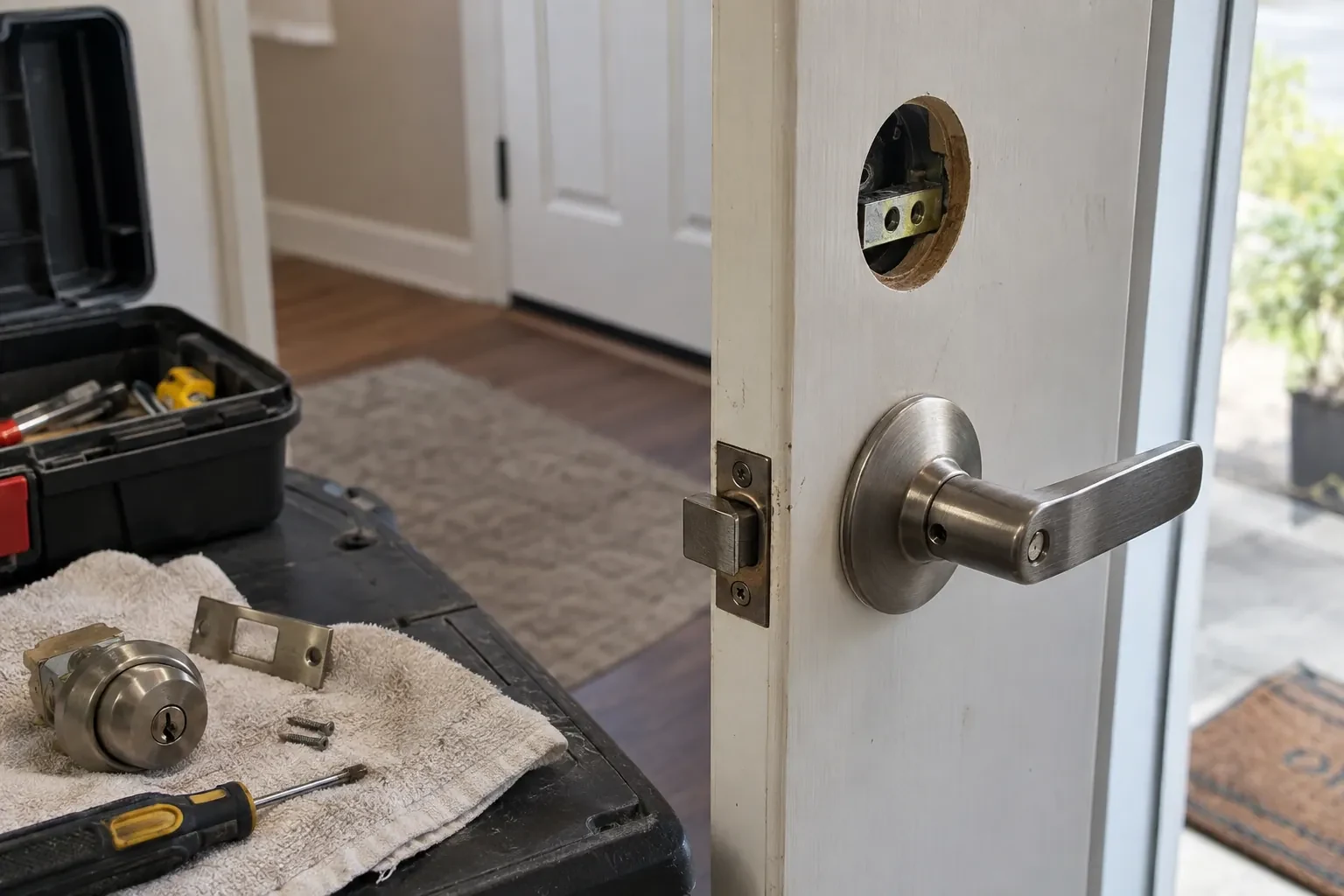
With the assessment done, the locksmith matches a device family to the door: a rim exit device for most single doors, a mortise device where a heavier-duty case suits the opening, or a vertical-rod device where latching is needed at both the top and bottom of the frame. Fire-rated openings take fire exit hardware specifically listed for that duty, never a standard panic device pressed into a role it was not built for, and listed rim fire-exit hardware covers a wide range of those openings on its own. The chosen device is matched to the door's width, handing and existing preparation before it is ordered.
Entry that stays separate from exit, permanently
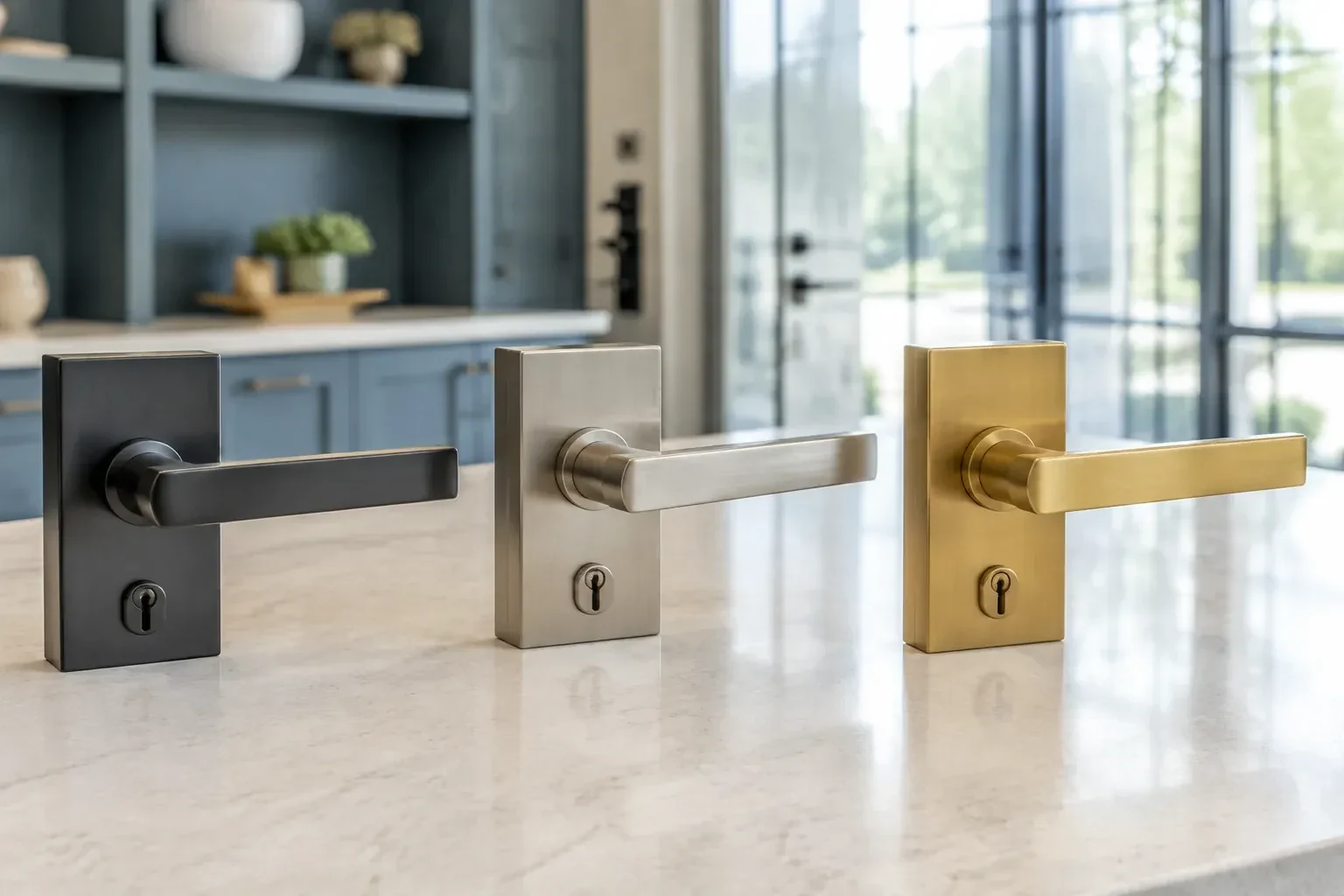
The building keeps full control over who enters through the trim on the outside of the door, independent of what happens on the inside. A lost key, a staff change or a new access-control card affects only the entry side; the exit side keeps working exactly as it did on installation day. That separation is the point of the whole installation, and it is worth remembering when any future change is proposed for that door, so entry security is never solved by touching the inside crossbar.
Panic & Exit Hardware
In the van
Outside trim (pull, lever or cylinder)
Force gauge
Request-to-exit switch
Signage and labels
Through-fixings and mounting hardware
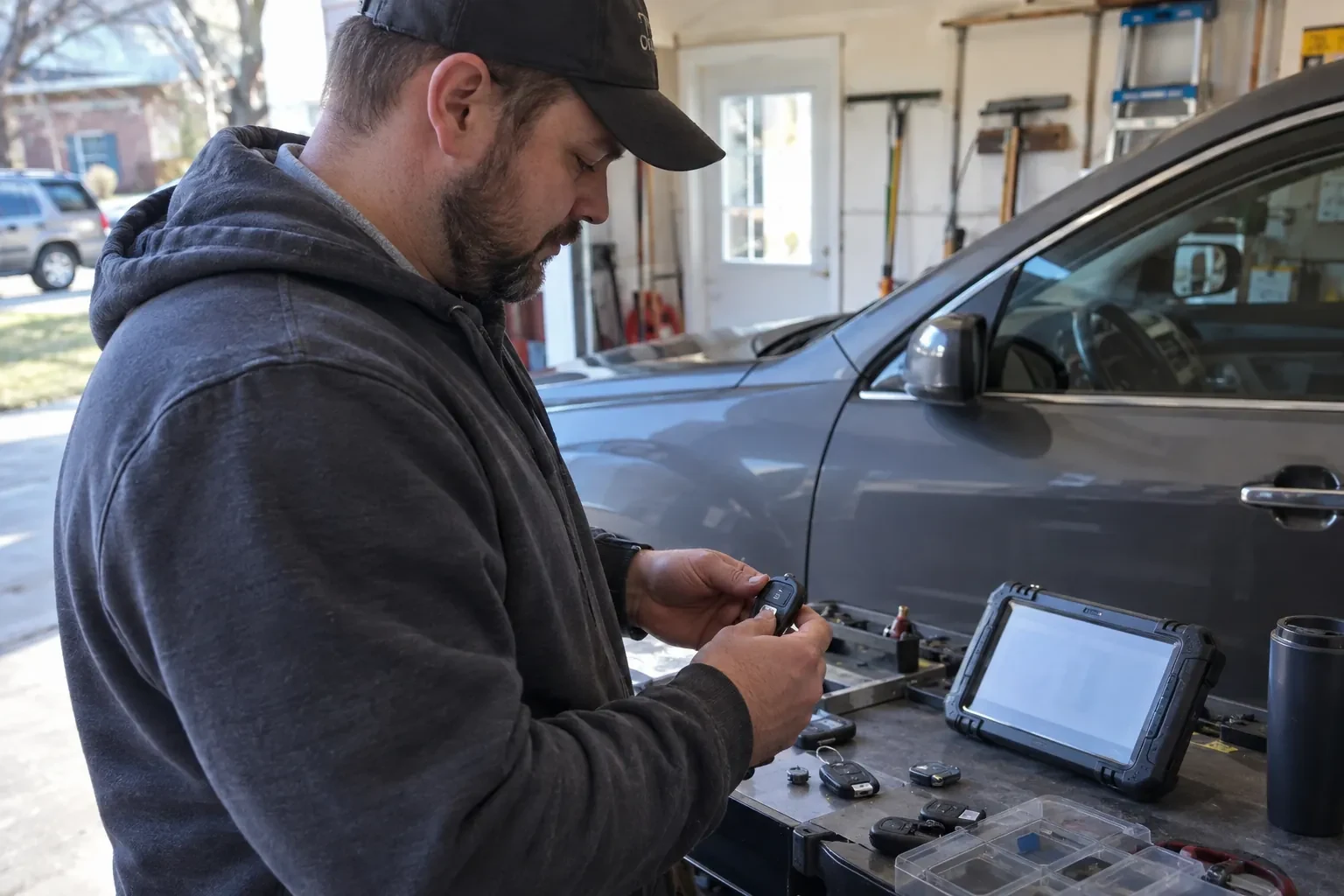
Panic & Exit Hardware
What affects the quote
Fire-rated versus non-rated opening
A fire-rated door needs hardware specifically listed for that assembly and installed to keep the rating intact, which is more involved than fitting a standard device to a non-rated door.
Access to the opening
A ground-floor commercial door is straightforward to reach. An opening behind scaffolding, up a stairwell with no elevator, or in a space still under active construction takes longer to work at.
Electrified functions added
A request-to-exit switch or electric latch retraction adds wiring, a power source and coordination with the building's other systems, while a standalone alarm module can run on its own battery; each is priced alongside the mechanical installation itself.
What to have ready
- Is access control or an alarm system planned for any of these doors?
- Has a fire inspector or building official already flagged a specific door?
- What is the room's intended use and approximate occupant load?
Panic & Exit Hardware: questions
QuestionsCan one visit cover several doors in the same building?
Yes, and it is common. A building rarely has only one exit affected by an occupant-load or fire-rating question; stairway doors, assembly-room exits and any doors altered together during a renovation are usually assessed and fitted in the same visit, with one written record covering every device installed across the building.
Who is responsible for keeping the hardware compliant?
The building owner or the party the owner assigns, often a facilities manager, is responsible for keeping exit hardware in working order and for the fire door assembly testing that goes with it. A locksmith installs and services the hardware and can keep records on the owner's behalf, but the ongoing duty to maintain the assembly sits with whoever holds the building.
Can I add a request-to-exit switch for my access-control system?
Yes. A request-to-exit switch is wired to signal the access-control panel that the pushpad or crossbar was actuated. Telling that apart from a forced or propped door usually means pairing it with a door-position contact and the panel's own logic, since the switch on its own only reports that the hardware was used. It sits alongside the mechanical device without changing how the crossbar or touchpad works, so the door still releases under a push even if the access-control system loses power.
Related services
- Master Key System DesignA dental office wants the front desk to lock up at night without ever holding a key to the room where patient records and controlled supplies are stored.
- Access Control InstallationSomething went missing from the storeroom over a weekend, and when you ask who was in the building, the honest answer is anyone with a key.
- Commercial-Grade Lock ReplacementOvernight someone forced the back door, and the cylinder face is scarred, the metal around the strike has pulled loose from the frame, and the latch no longer sits flush.