Lockouts · North Middlesex
Seized & Jammed Lock Opening in North Middlesex
The shop's lever handle goes down as usual, but the latch inside the mortise case never pulls back.
In plain words
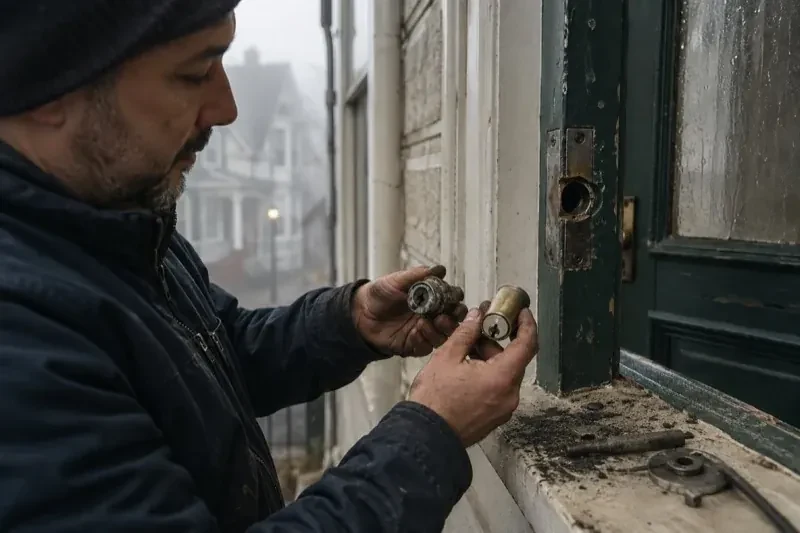
A jammed lock looks like one problem from outside and is usually one of three inside. The cylinder itself may have seized, packed with grit, corrosion or old grease. The link between cylinder and bolt, the tailpiece or cam, may have broken, which is why a key can spin without doing anything. Or the lock may be healthy and the bolt simply pinned against the strike by a door that has moved. Seized and jammed lock opening starts by telling those apart, because the right answer for one would damage the hardware in another. Once the culprit is known, the door is opened and the cause is repaired.
How the visit goesIt is the coldest morning of the winter and the key goes halfway into the side door and stops. There is frost on the face of the cylinder, and the door on the shaded side of the house has done this before.
Seized & Jammed Lock Opening
How the visit goes
Strike plate, bolt pocket and seal
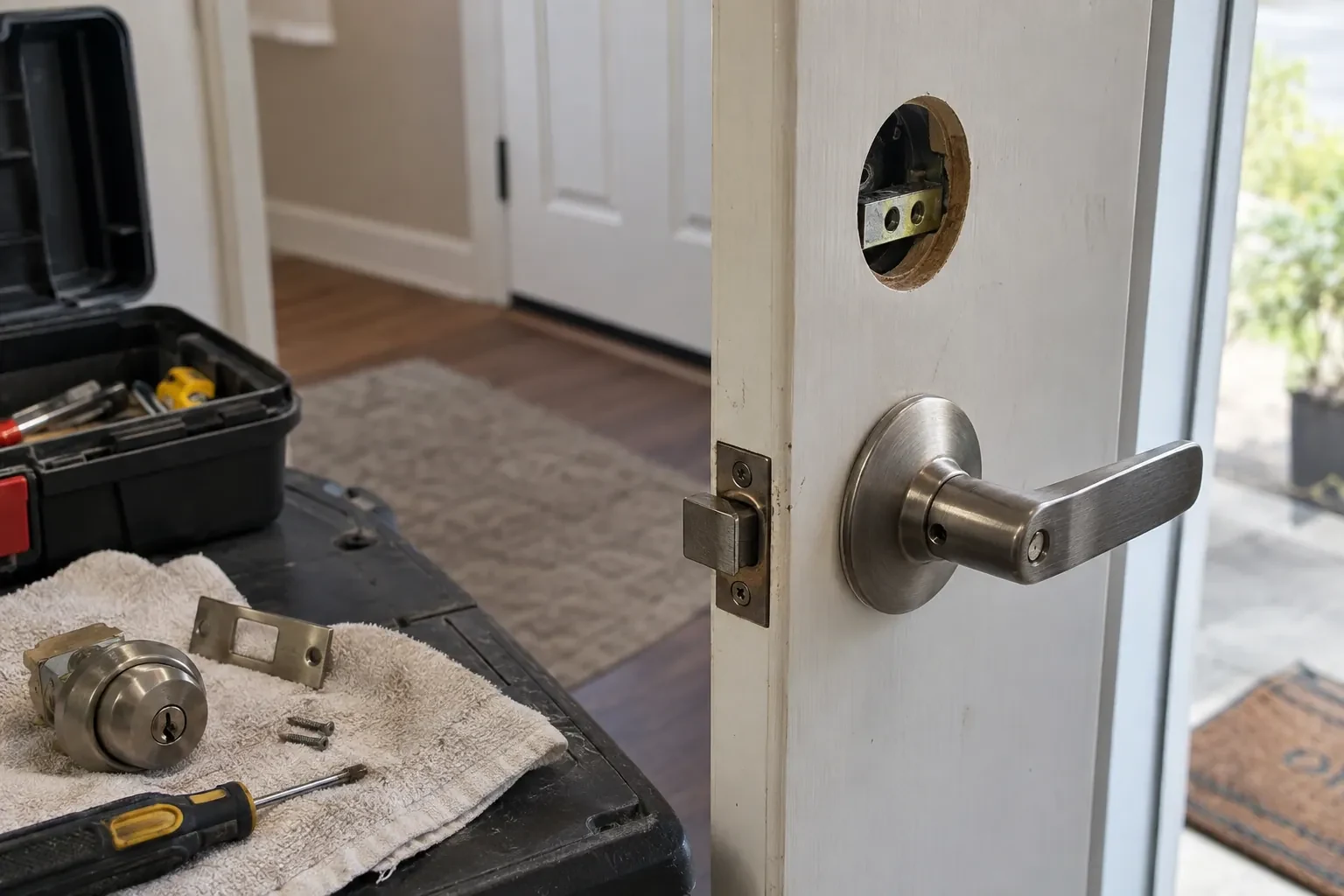
The frame side gets as much attention as the door side. The locksmith looks at where the bolt meets the strike plate: scuff marks on the plate's edge, a bolt pocket shallower than the roughly twenty-five millimetres a deadbolt needs, paint or filler that has crept into the pocket, and weatherstripping thick enough to hold the door proud of the frame. A dab of chalk on the bolt end shows exactly where it lands. These findings explain a lock that works with the door open and jams when it is shut, and they point to a chisel, a screwdriver and a strike adjustment rather than to anything inside the cylinder.
Taking the load off a bound bolt
When the door is the cause, the opening is a matter of leverage rather than tools. The locksmith lifts, pushes or pulls the door to bring the bolt back into line with its pocket while the key turns, and the bolt slides home. With the door open, the reason is dealt with: hinge screws tightened or replaced with longer ones that reach the framing, a hinge shimmed to raise a dropped door, the strike plate moved or its edge dressed with a file, the bolt pocket deepened with a sharp chisel, or a weatherstrip trimmed. The lock is then thrown and retracted with the door closed until it moves without any pressure on the door.
For a business: a door the staff can rely on
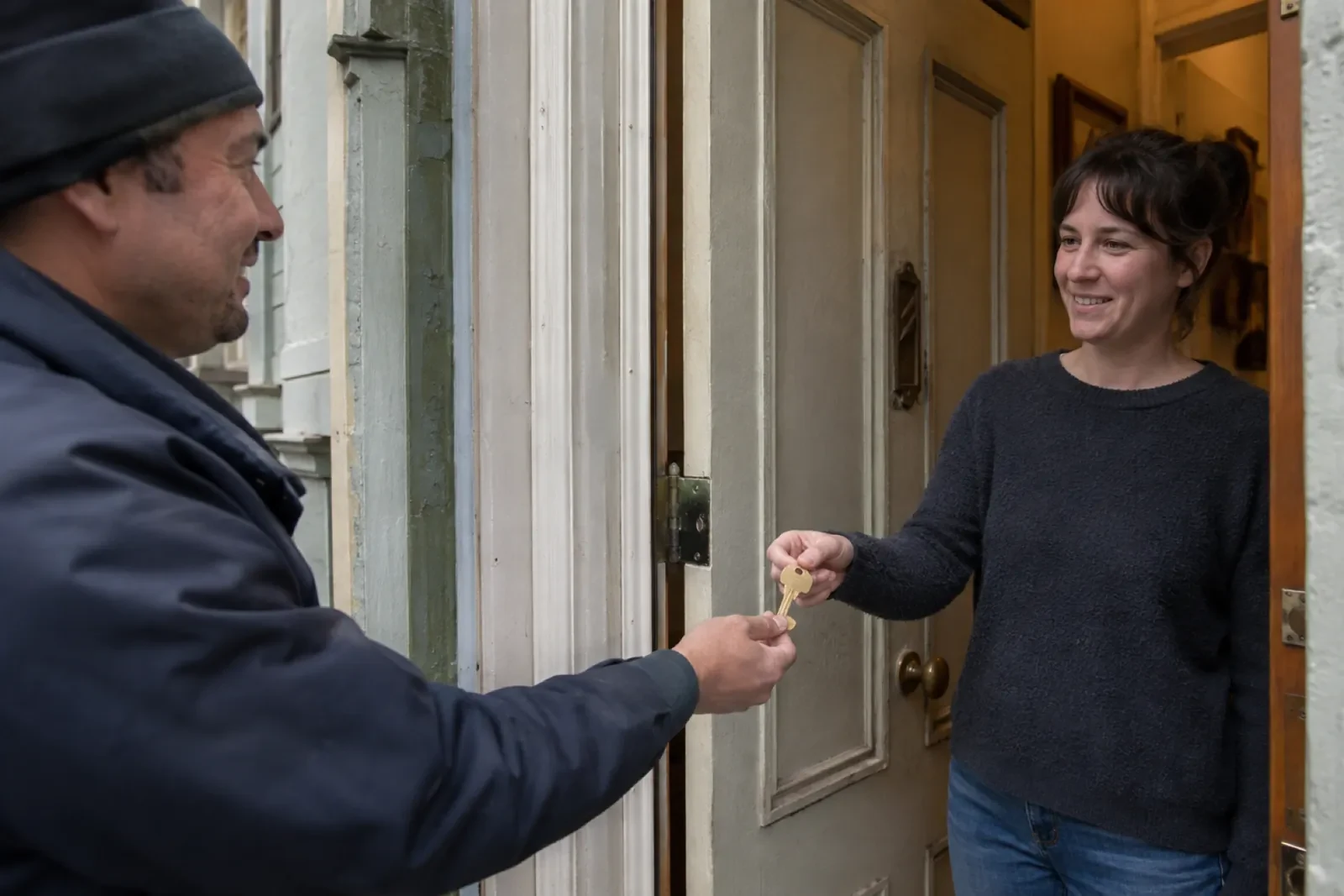
On a commercial door the handover includes the people who use it. Whoever opens in the morning is shown how the lever, key and cylinder now behave, and the exit side is demonstrated so everyone knows the door opens from inside with one motion. If the mortise case was serviced, the parts that were replaced are named so a future locksmith knows what is in there. A note of which keys were tested and who holds them supports whatever key control the business runs. Spare keys are checked in the lock before they go back in the safe.
Seized & Jammed Lock Opening
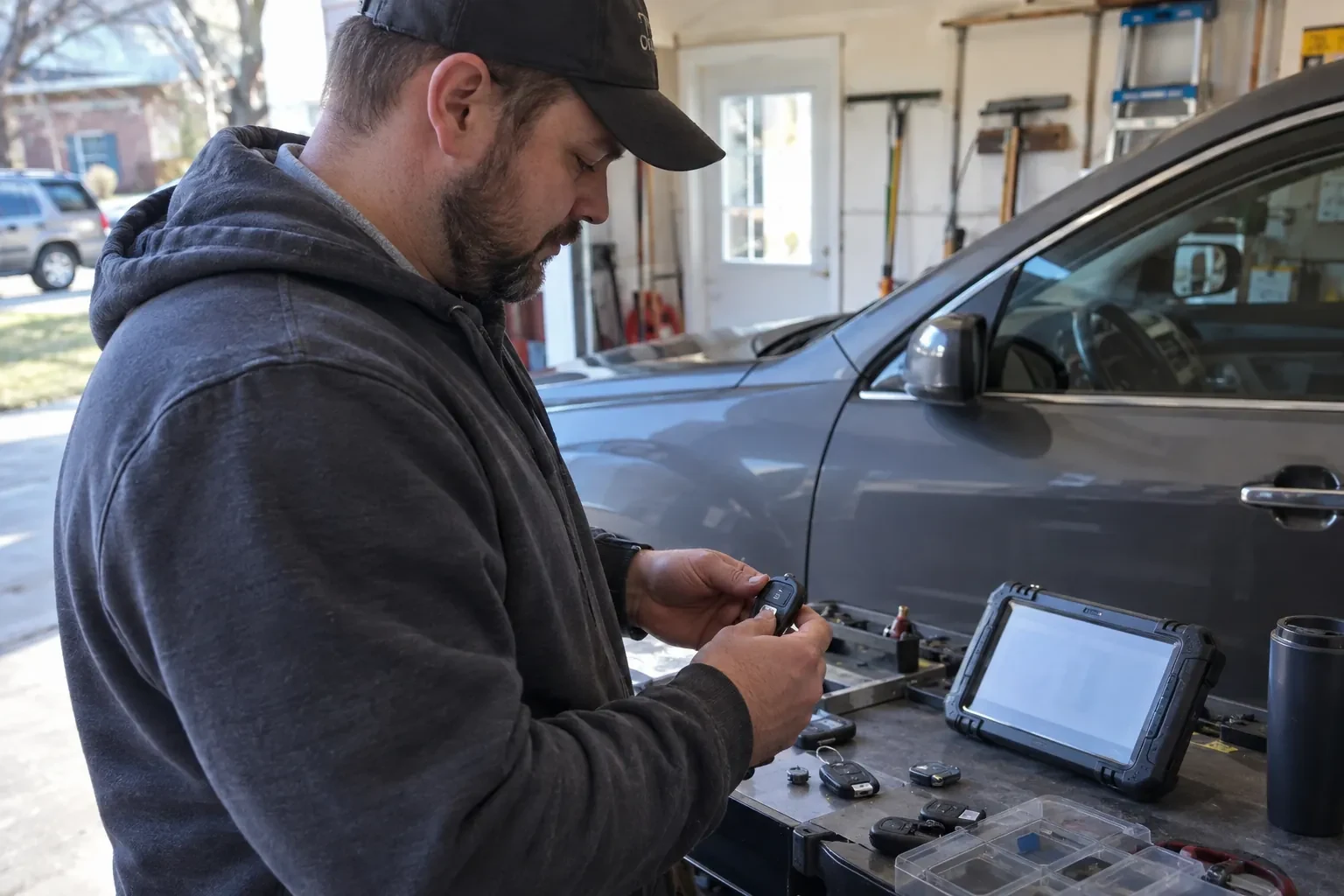
In the van
Key blanks and code cutter
Long hinge screws
Lock de-icer
Strike plate and hinge shims
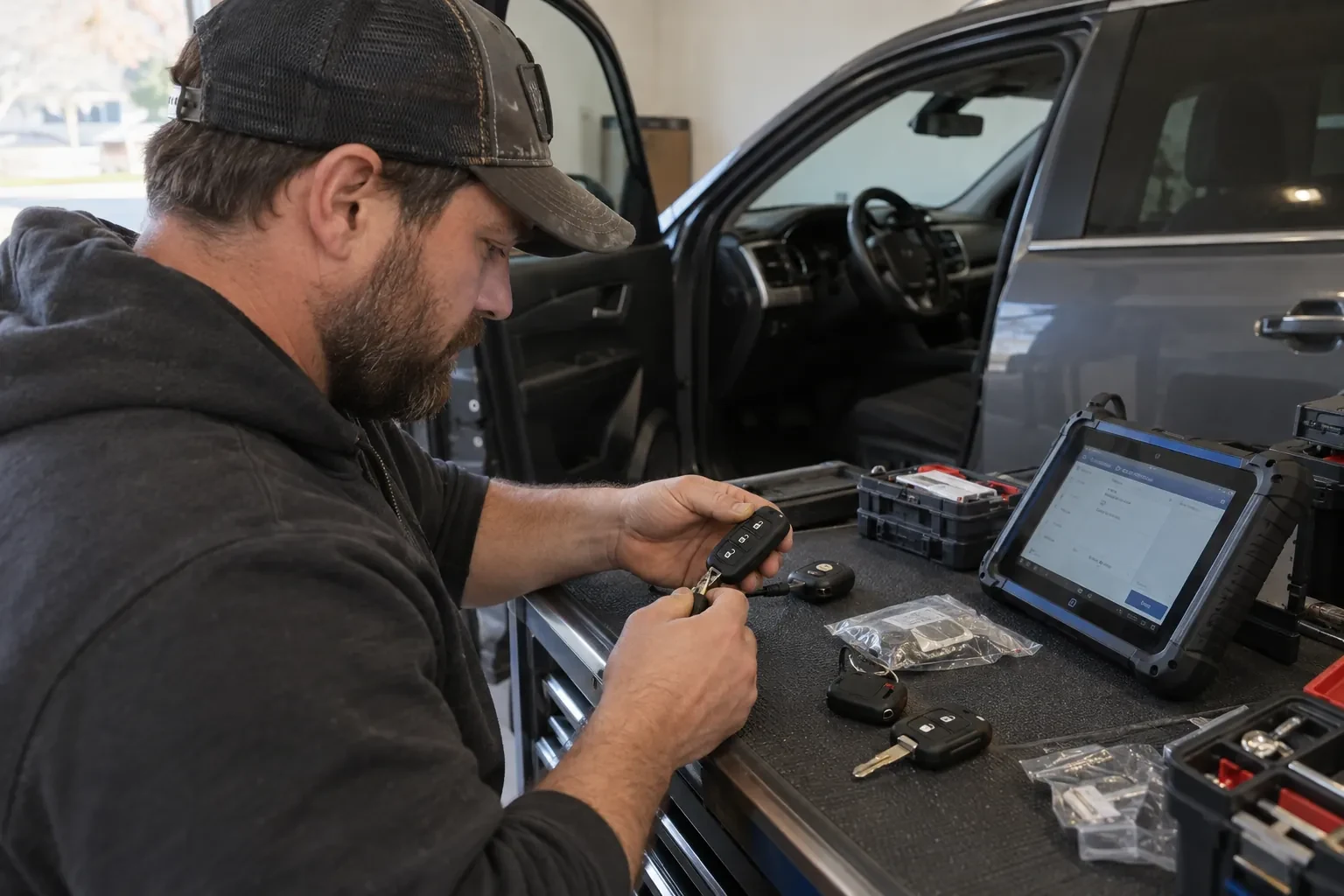
Replacement tailpiece or cam
Seized & Jammed Lock Opening
What affects the quote
Small parts behind the cylinder
Tailpieces, cams, springs, cylinder caps and pins are minor items, but each one used is named on the quote so you can see what went into the lock.
Signs of an earlier struggle
A key snapped in the plug, a twisted cylinder or a bent latch from a screwdriver adds an extraction or a repair to the opening, and the locksmith points that out before quoting it.
When the call comes in
An evening, weekend or holiday call for a jammed lock costs the same amount as a weekday one. The locksmith looks at what is actually jammed once on site, and the exact figure follows from that, not from the clock.
What to have ready
- Has anyone sprayed oil or another product into the keyway?
- Do you have identification, a lease or a management contact for the property?
- Do you have a spare or original key you could try?
Seized & Jammed Lock Opening: questions
QuestionsCan an old mortise lock in a century home be serviced rather than replaced?
Often, and keeping the original hardware is usually worth trying first, since it fits the door and suits the house, though condition and the availability of matching parts decide whether a repair is realistic. The case comes out of the door edge, the decades of dust and hardened grease are cleaned away, a broken spring or worn hub is replaced with a matching part, and the contact surfaces get fresh grease. If a bit key or a cylinder has worn, a new key is cut or the cylinder rebuilt.
Does road salt affect door locks?
Yes, especially on side doors near a treated driveway or walkway. Salt spray dries into a crust inside the keyway and around the plug, and each thaw dissolves and re-deposits it deeper. Over a few winters it pits brass and makes the pins drag. The remedy is a flush with contact cleaner, a thorough drying, and a dry lubricant that sheds moisture, followed by rinsing the hardware when the weather allows.
What is a tailpiece, and why does it matter here?
The tailpiece is the flat bar that sticks out of the back of a deadbolt cylinder and turns the bolt mechanism when the key turns; on a knob or lever set the equivalent part is a cam or spindle. It carries all the twisting effort, so a bent, worn or broken one is the reason a key can turn without anything happening. It is a small part to replace, it comes in several lengths, and the right length matters.
Related services
- Business Lockout ServiceAfter last night's power flicker the card reader beside the clinic door shows nothing.
- Broken Key ExtractionThe apartment key snapped mid-turn, leaving the cylinder twisted halfway between locked and open.
- Break-In Damage Lock RepairThere is a hole where the cylinder used to be.