High security · North Middlesex
Safe Opening & Combination Change in North Middlesex
A safe sat in a late parent's basement for years, its combination known to nobody left in the family, and everyone would like to know what is actually inside it.
In plain words
A safe built to protect firearms is opened with the same care as any other, but the aftermath gets one extra look: once the door is open, the storage arrangement inside is checked against what the applicable federal rules for secure firearms storage expect, since a business handling those items answers to those rules whether or not the lock itself needed attention. The combination is then reset the same way it would be for any commercial safe.
How the visit goesThe pharmacy's drop safe has a keypad that finally lost power for good, and the little override key that was supposed to live behind the counter cannot be found anywhere.
Safe Opening & Combination Change
How the visit goes
Reading the safe before touching it
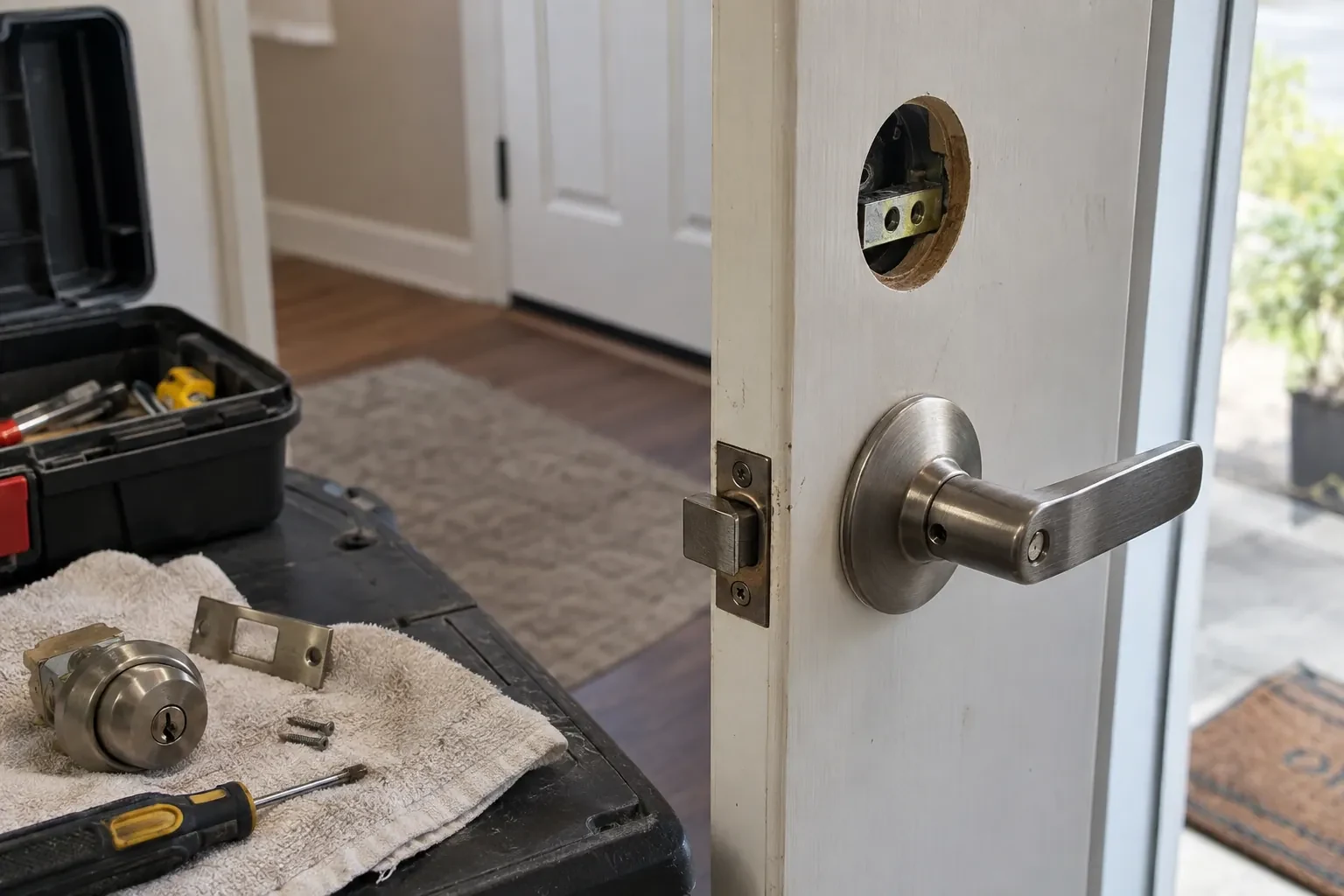
Every safe carries clues about what is inside its lock. A manufacturer's data plate, usually on the door or inside the frame, often names the brand, model and sometimes the lock's own security rating. The dial style, the keypad's shape and buttons, and whether a key cylinder sits alongside the combination lock all narrow down the lock family before a single tool is used. Older safes without a legible plate are identified from the case shape, the handle style and the dial ring instead. Getting this identification right decides which manipulation technique, which reset procedure or which manufacturer tool applies, and it is the difference between a clean opening and a guess.
Least invasive first, on every safe
Opening a safe is planned around the specific lock, its condition and what recovery options it actually has: manipulation or decoding for a mechanical dial, a manufacturer reset or override path for an electronic keypad where one exists, and drilling where the gentler routes are unavailable or exhausted. This order exists because a safe's lock, dial ring and case finish are the hardest parts to replace cleanly, so any method that leaves them intact is worth the extra time it takes. Working through the ladder in order, rather than jumping to the most direct option, is what keeps the great majority of safes leaving the visit with their original lock still in place.
A little care keeps the lock reliable
A mechanical dial benefits from being turned through a full combination cycle occasionally even when the safe is not otherwise in use, since a dial left untouched for years is more likely to develop the stiffness that led to this visit. An electronic keypad benefits from a battery change on a set schedule rather than waiting for a low-battery warning to appear, since a dead battery at an inconvenient moment is the more common failure than the lock itself. Wiping the keypad and dial face of dust occasionally, without any liquid cleaner, keeps both types responding the way they should.
Safe Opening & Combination Change
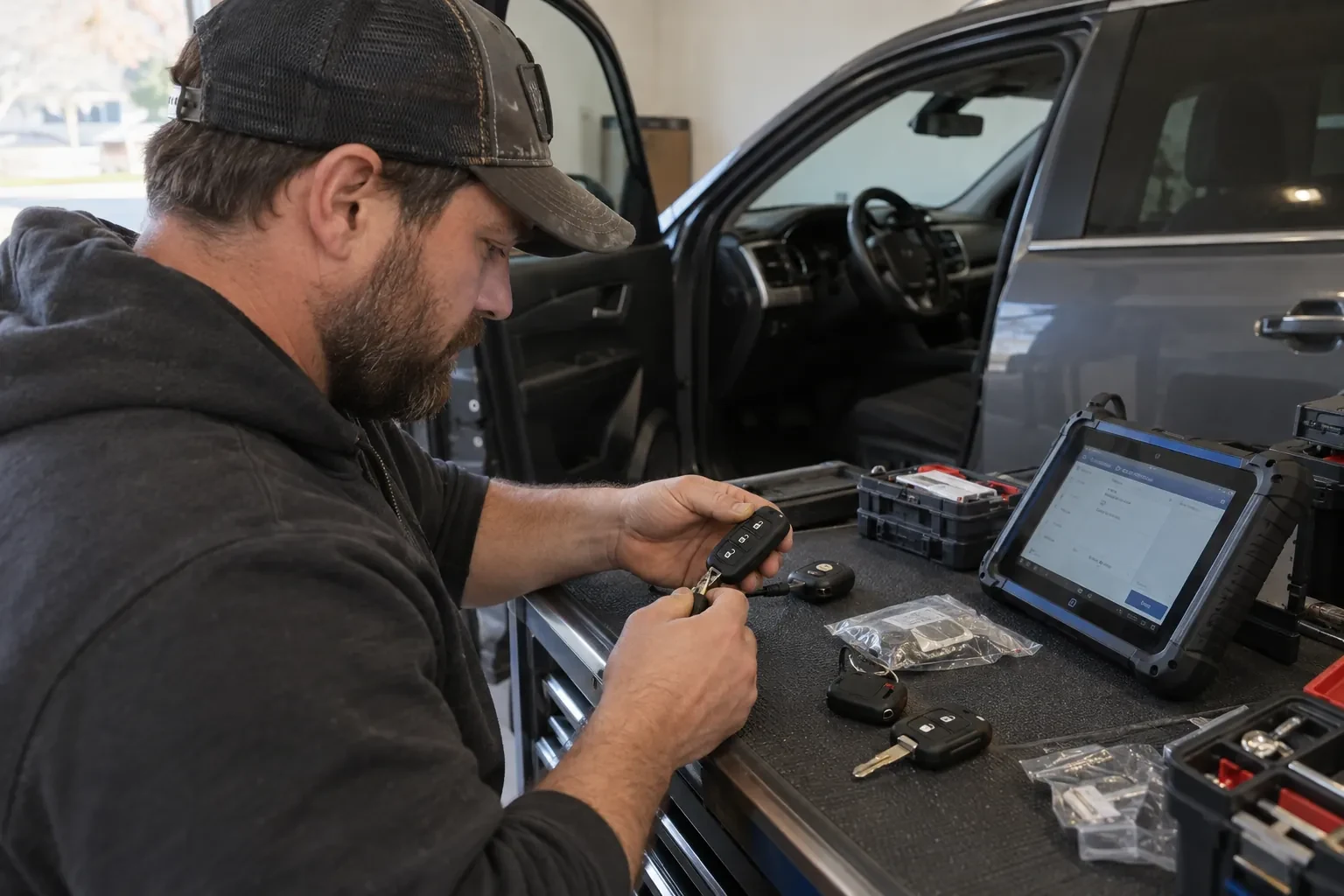
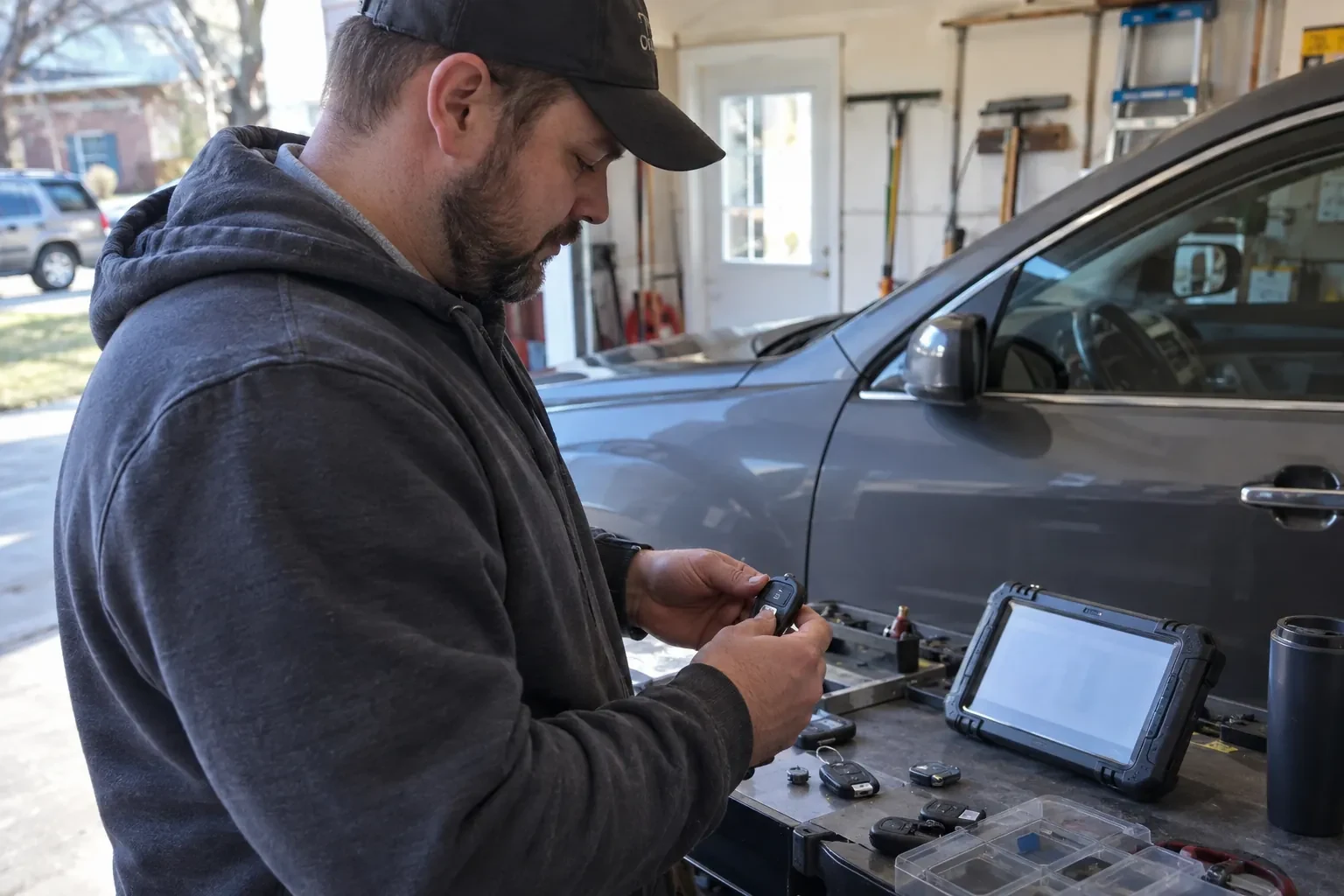
In the van
Replacement wheel pack
Manufacturer reset tool
Borescope for internal viewing
Electronic keypad input unit
Nine-volt and lithium batteries
Safe Opening & Combination Change
What affects the quote
Bolt work or handle repair beyond the lock itself
A jammed bolt, corroded linkage or broken handle found during the assessment is quoted as its own item alongside whatever combination or lock work was originally requested.
Distance to the safe's location
Travel time to the site is part of every call-out, and a location further from the locksmith's usual service area is reflected in the quote alongside the work itself.
Age and condition of the safe
An older lock with visible wear, a stiff dial, or a keypad with worn buttons often needs more careful handling than a newer unit in good working order.
What to have ready
- Has the safe been through a fire, flood or break-in attempt?
- Roughly how old is the safe, if you had to guess?
- Who besides you should have the new combination afterward?
Safe Opening & Combination Change: questions
QuestionsCan a safe be repaired instead of replaced after drilling?
Often, yes, particularly for a mechanical lock, where a worn wheel pack, drive cam or spindle can be replaced individually within the existing lock body. An electronic lock's circuit board and keypad are less often repairable in place and are more commonly swapped for a comparable or higher-rated replacement unit that fits the same cutout.
Is a mechanical dial or an electronic keypad the better choice for a business safe?
Each suits a different way of working. A mechanical dial has no battery to fail and a long service life, but only ever holds one combination at a time. An electronic keypad allows separate codes for different staff and an audit trail on some models, at the cost of needing battery changes. Either can be fitted with a genuinely high security rating; the choice usually comes down to how many people need independent access.
When does a locksmith decide to drill a safe instead of opening it another way?
Drilling is chosen when the gentler options for that specific lock, manipulation and decoding on a mechanical dial, or a manufacturer reset or override on an electronic one, are unavailable or have not worked, rather than following one fixed order on every safe. It is also the answer when the lock has genuinely failed, such as a seized wheel pack or a dead circuit board with no working override. The decision is explained before drilling starts, not discovered afterward.