Change or rekey · Newbury
Gate & Building Entry Locks in Newbury
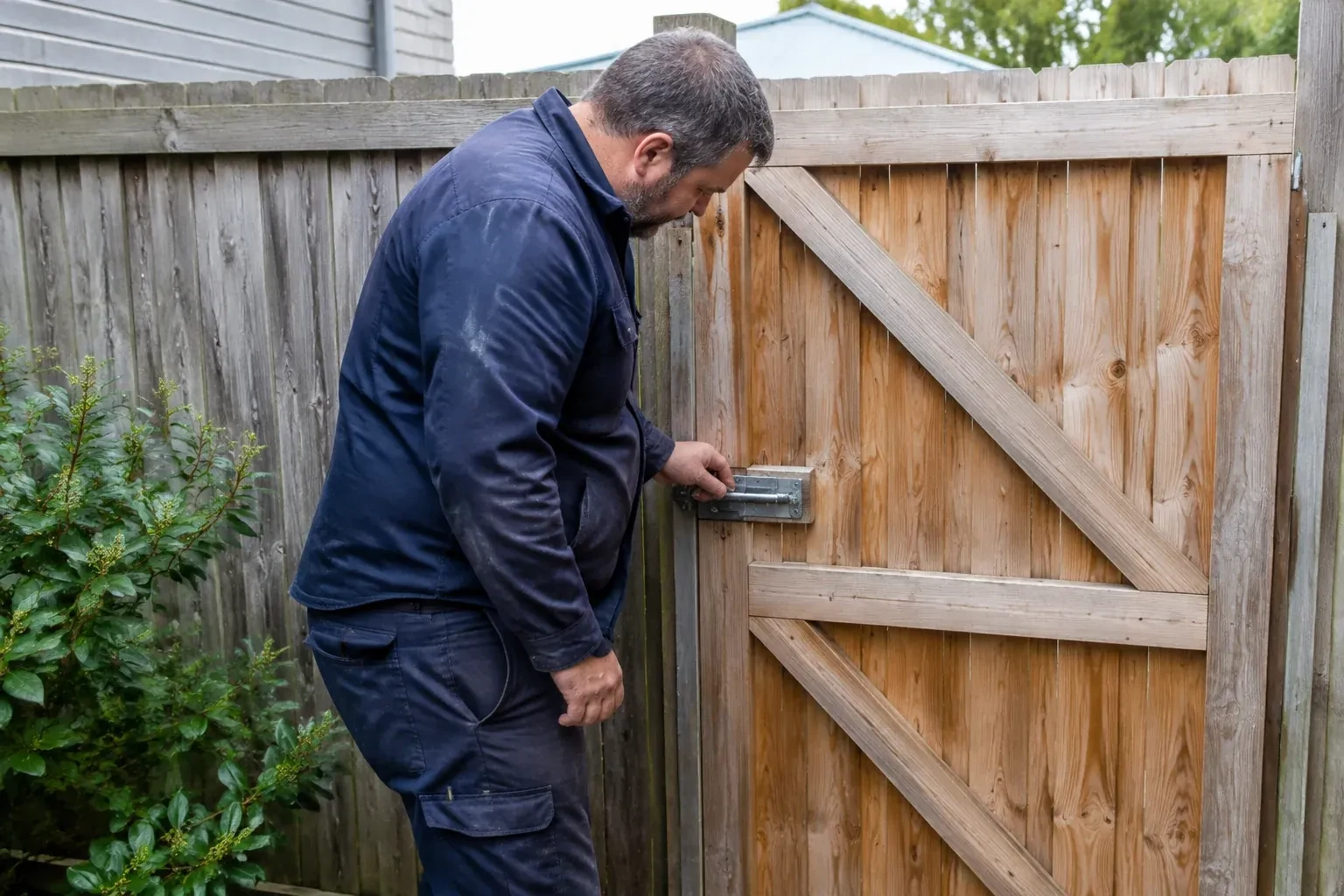
The driveway gate drags a groove into the gravel every time it swings, and the latch stopped catching weeks ago.
In plain words
A gate or door that will not latch is rarely just a lock problem; more often the hardware is being asked to catch a moving target. This visit reads the gate or door's actual swing, sag and alignment first, then brings the closer, hinges, strike and cylinder into agreement with each other rather than replacing parts one at a time. Once the physical fit is right, the same lock that seemed unreliable for months often turns out to have been sound all along.
How the visit goesThe gate to the side yard used to close with a satisfying click. After a winter of frost heaving the fence post, the latch now sits a full inch below where the strike is waiting for it, and the gate swings free no matter how hard it is pulled shut.
Gate & Building Entry Locks
How the visit goes
Weather exposure and corrosion
A gate lock lives outside in every season, so the assessment looks specifically for what weather has already done to it: pitting on the cylinder face, a stiff plug that hints at rust inside, green corrosion around a padlock shackle, or a closer that has started to weep hydraulic fluid. Ground-level hardware near a driveway or walkway gets checked especially closely, since de-icing salt collects there over winter. What this turns up decides whether the existing hardware can be cleaned and lubricated or whether weather has already gone past what maintenance alone can address.
Repairing damage from an earlier attempt or a break-in
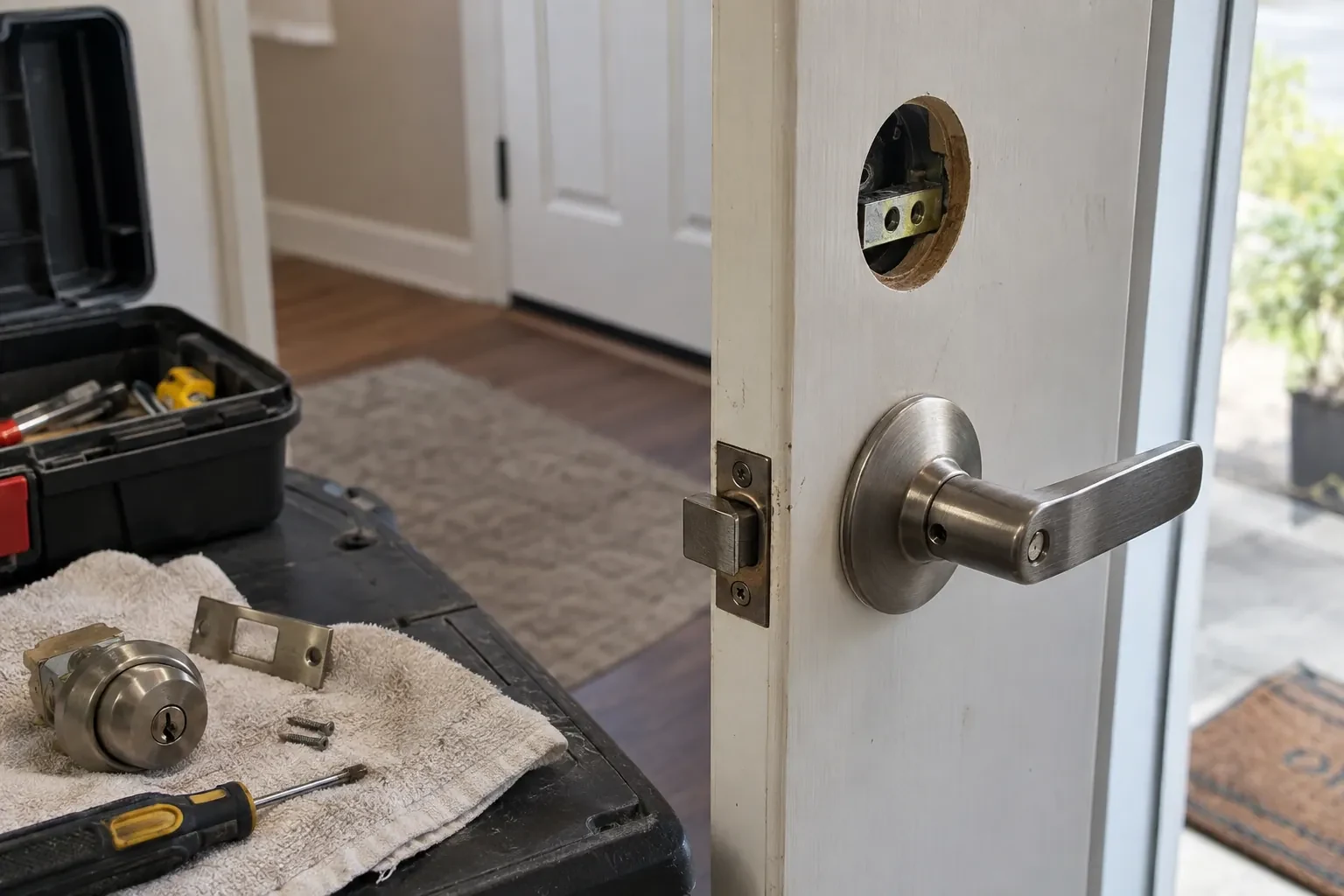
Where the gate or door shows signs of prying, cutting or a spun cylinder, the damaged hardware is removed and assessed on its own before anything is rebuilt: a bent strike is straightened or replaced, a compromised cylinder is swapped rather than trusted, and a cut hasp or shackle is replaced with a heavier one if the original was clearly overmatched. The surrounding wood or metal gets checked too, since forced entry often stresses the frame as much as the lock. The finished gate or door is tested to confirm it closes, latches and locks exactly as it should.
Nothing left half-finished after a break-in attempt
Where the visit followed prying, cutting or an attempted entry, you leave with every damaged piece accounted for: what was replaced, what was straightened, and what was simply cleaned up and reused because it tested sound. The gate or door is shown closing, latching and locking normally, and any weak point the attempt revealed, such as an undersized hasp or a strike with too little bite, has been addressed rather than left as it was found.
Gate & Building Entry Locks
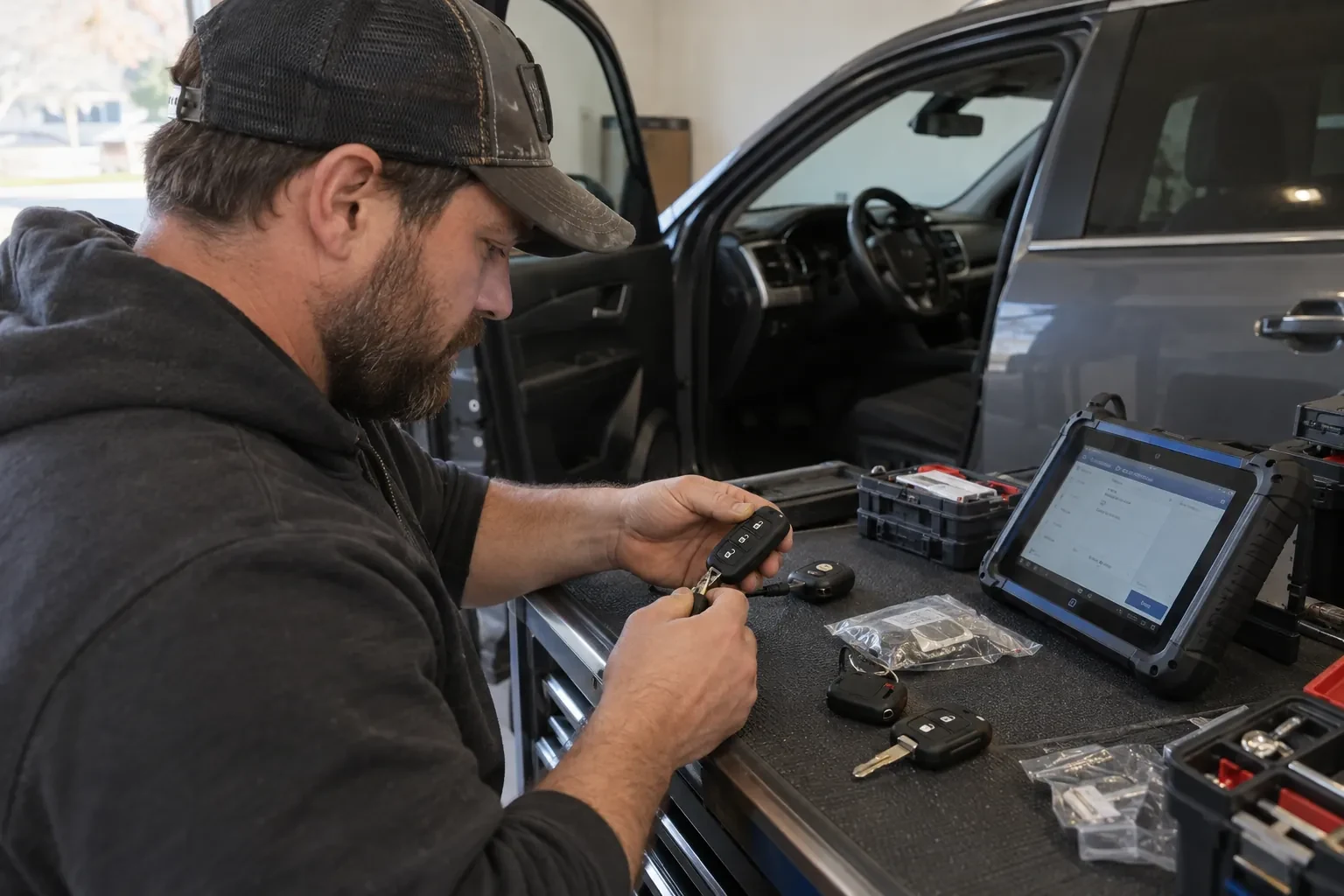
In the van
Hinges, pivots and shims
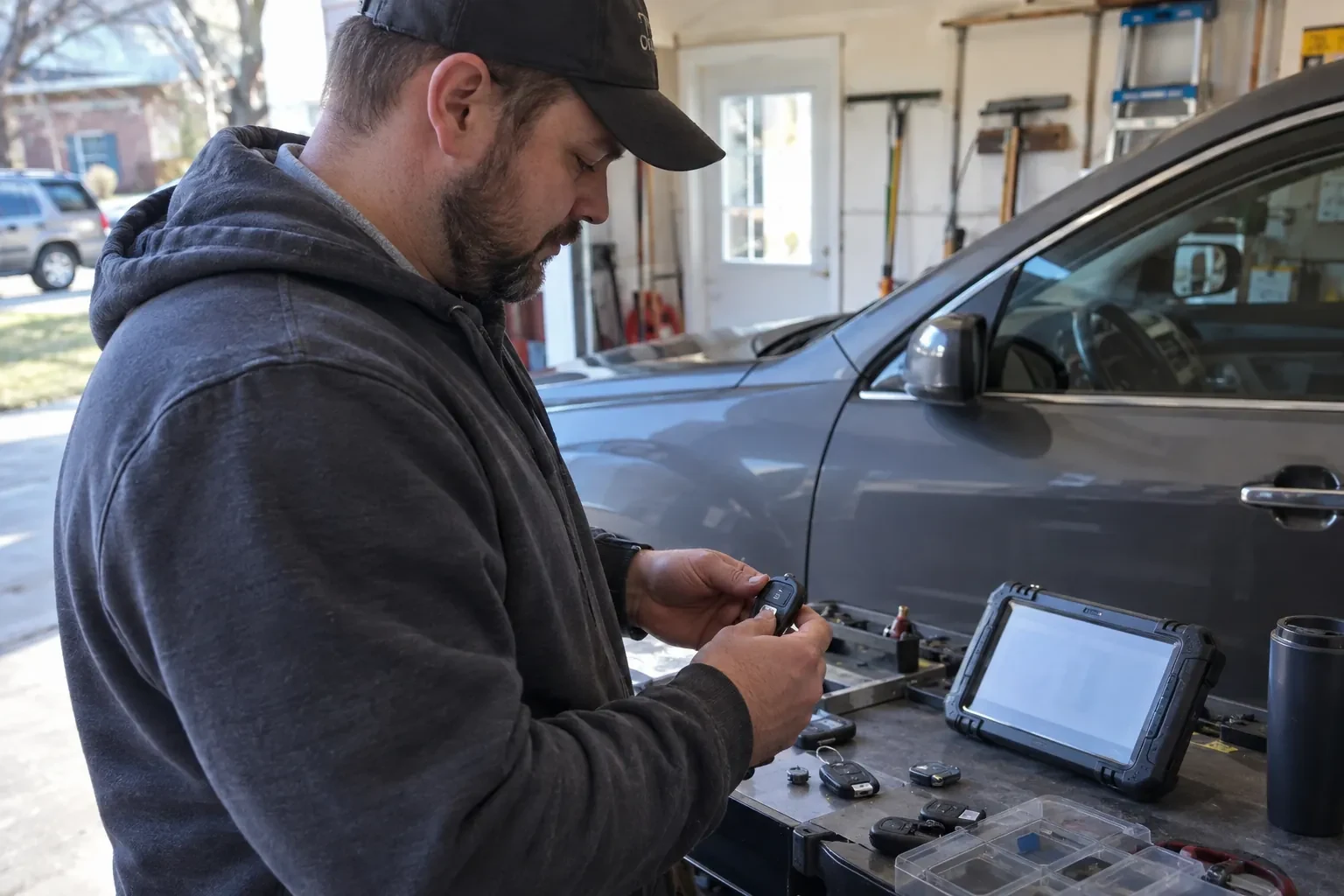
Voltage tester for electric strikes
Strike plates and keepers
Plug follower and repinning kit
Gate locks and latches
Gate & Building Entry Locks
What affects the quote
Any damage from a prior forced entry
Where pry marks, a bent strike or a cut hasp are found, repairing or replacing that damaged hardware is additional to a routine lock adjustment, and the locksmith points out what was already there before quoting it.
Whether the property manager or a board is involved
Work on a shared building entry sometimes needs sign-off from a property manager or condo board before proceeding, and coordinating that approval, along with providing a record of the work for their files, is part of the visit.
Condition of the closer, hinges and post
Simple adjustment of an existing closer is a smaller job than replacing a worn closer, correcting sagging hinges, or resetting a post that has shifted with the ground; the quote follows whichever combination the assessment finds.
What to have ready
- Is the gate sagging, dragging, or hard to close by hand?
- Do you manage this property, or should someone else be involved in the decision?
- Are there other gates on the property that should share a key?
Gate & Building Entry Locks: questions
QuestionsCan several padlocks around a property be keyed alike?
Yes, provided the padlocks themselves are a type built to be rekeyed or matched, which is a feature of the specific model rather than something price or quality decides. The locksmith either rekeys the existing padlocks to a shared combination or replaces any that cannot be rekeyed with new ones cut to match. The result is one key working the front gate, the side gate and the shed, instead of a separate key for each, though a utility gate can be left on its own key.
Someone tried to force our gate open. What happens now?
The locksmith first looks over the damage without disturbing it, noting pry marks, a bent strike or a cylinder that has been scored or spun, since that record is useful to have regardless of what else follows. Any hardware that was compromised is replaced rather than trusted, and a weak point the attempt exposed, such as an undersized hasp or a strike with too little bite, is addressed at the same time so the same approach would not work a second time.
A tenant moved out of our building. Do we need to rekey the shared entry?
It is worth doing, since a move-out is exactly the situation a rekey is meant to cover: a former tenant's key still operates the same lock everyone currently living there relies on. Rekeying resets the cylinder to a fresh combination and issues new keys to current residents, without requiring a whole new lock in most cases. Bringing any other gates or doors that share that key along at the same time keeps the whole property on one current combination.
Related services
- Deadbolt InstallationYou moved in three weeks ago.
- Lock Replacement & UpgradeThree teenagers, a dog walker, a cleaner and one house key that keeps going missing.
- Vintage Mortise Lock ServiceThe key turns freely in the round cylinder on the door, all the way around and back, without the bolt shifting at all.