Change or rekey · Newbury
Deadbolt Installation in Newbury
You moved in three weeks ago.
In plain words
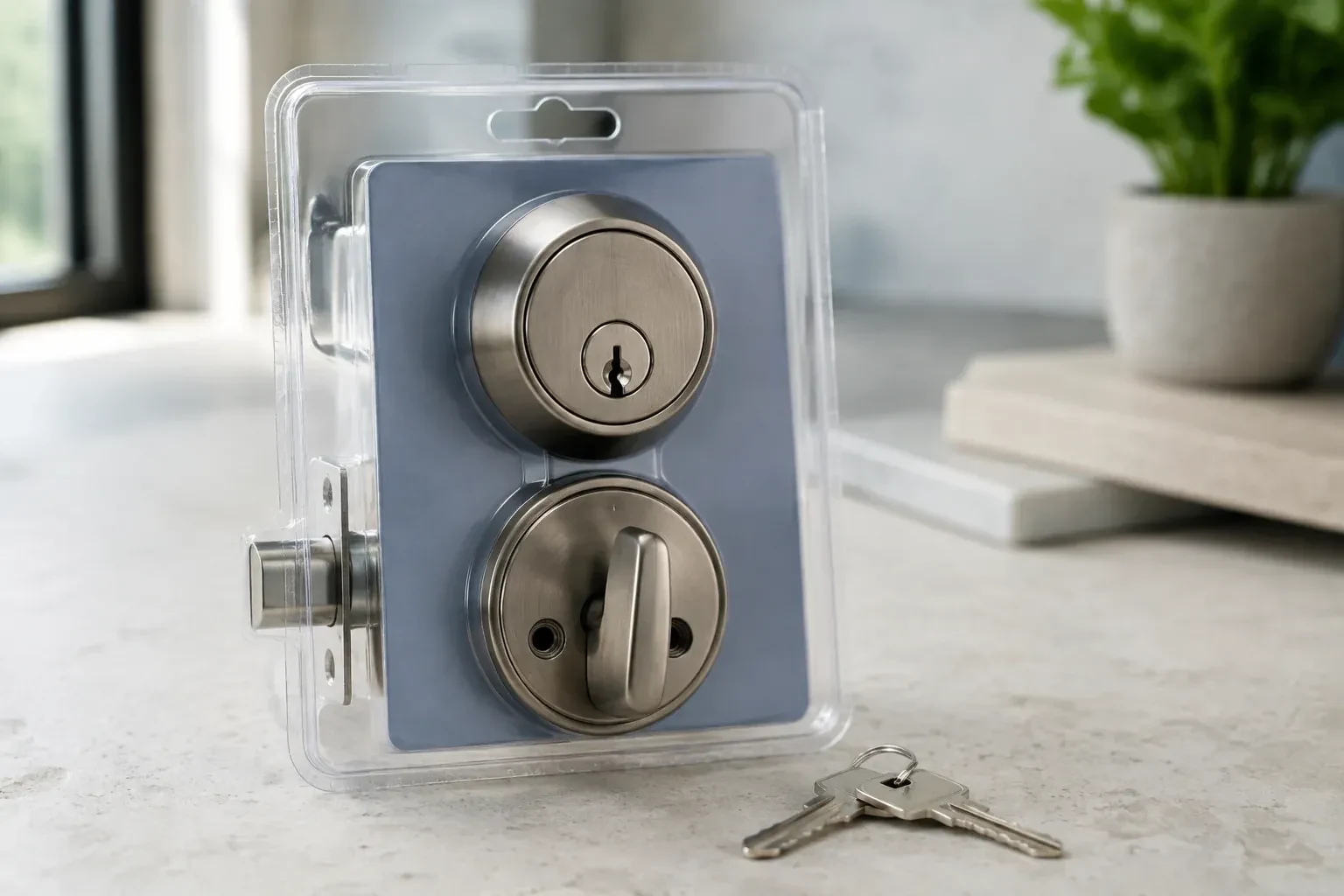
For a main exit door the hardware choice has a safety side as well as a security side. A door people leave a home through should open from the inside without a key, so a single-cylinder deadbolt with an inside thumb-turn is the standard fit rather than a bolt keyed on both faces. Where glass sits close to the lock, the answer is a captive thumb-turn, laminated glass, or a tested security-film system with its specified frame attachment, not a key on the inside. The locksmith explains the trade-offs, fits the lock that keeps a stranger out and the family able to leave, and shows everyone the thumb-turn.
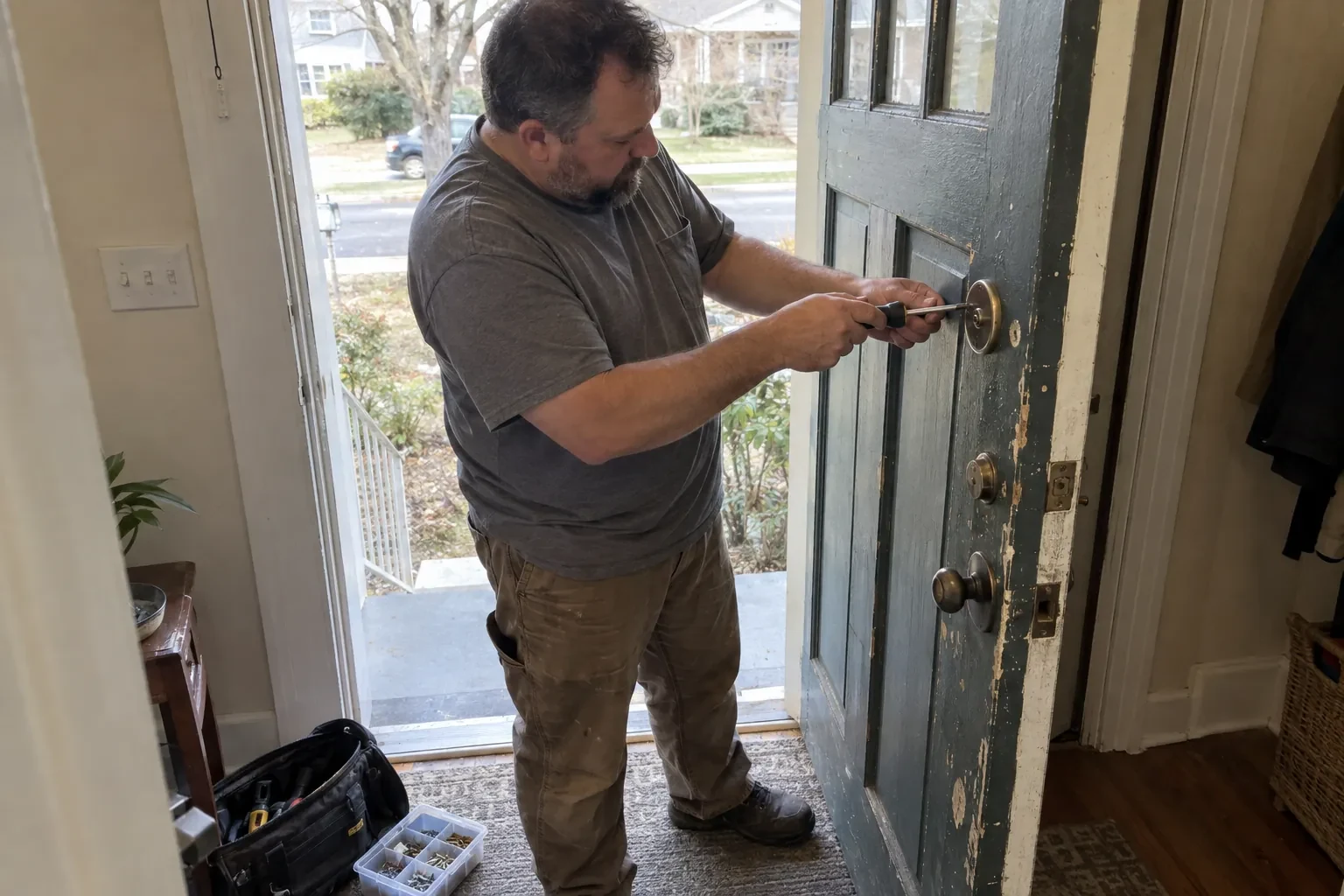
How the visit goesYou moved in three weeks ago. The previous owner left a handful of keys, none labelled, and the bolt on the side door rattles in its housing. You would like every exterior door to bolt, and to know exactly who can open it.
Deadbolt Installation
How the visit goes
The frame behind the strike
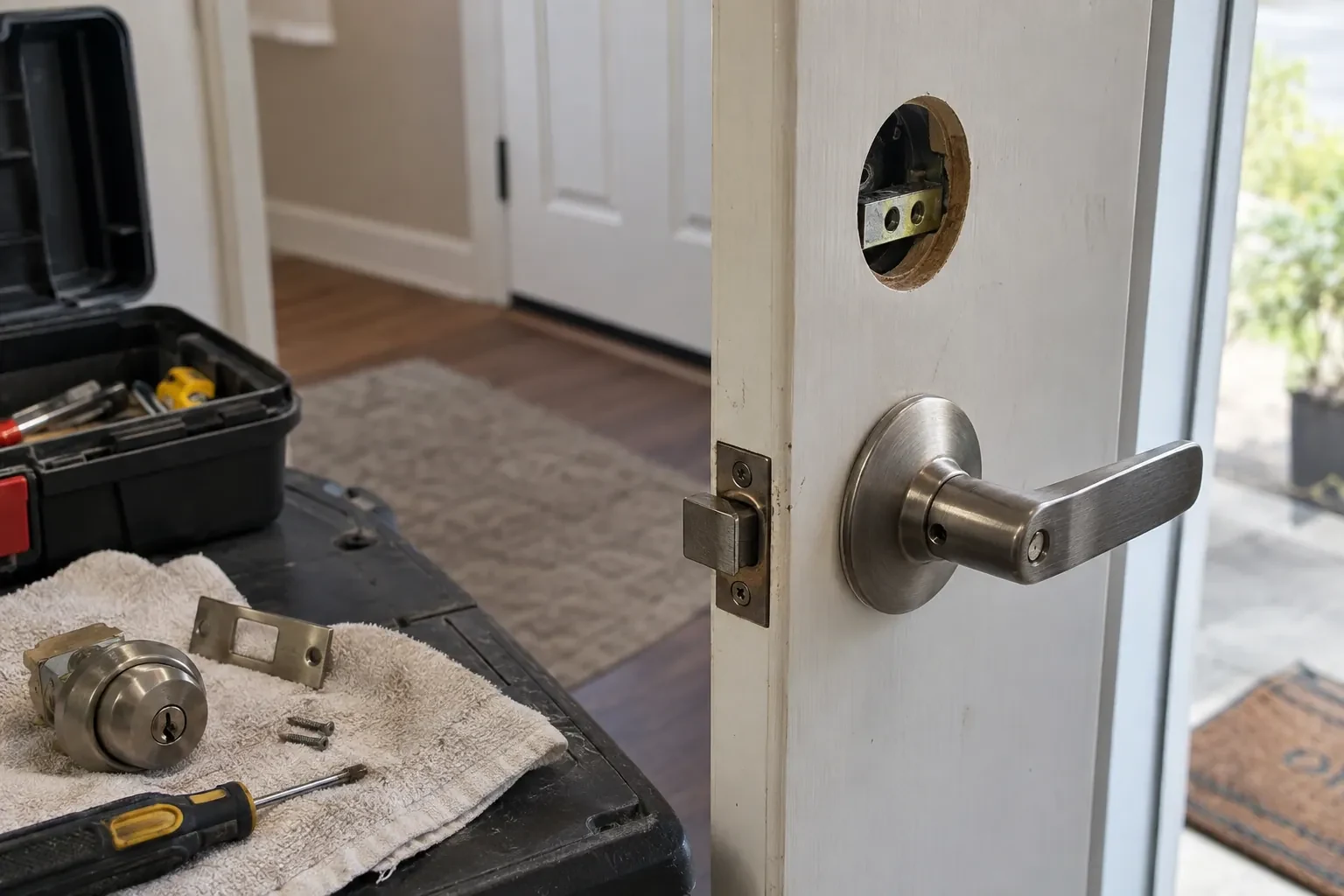
A bolt is only as good as what it throws into, so the jamb gets a hard look before anything is ordered. The locksmith checks whether the jamb is wood or steel, whether it is backed by solid framing at lock height or by a gap of shims and air, and whether earlier screws have torn out or been stripped. A jamb that flexes under a palm tells its own story. Where a strike has been fitted before, the old pocket is examined for depth and position, since a shallow or offset pocket is the usual reason an existing deadbolt feels stiff. This check decides between a plain strike, a reinforced strike with long screws, or a full-length jamb reinforcer.
Fitting the bolt and setting the backset
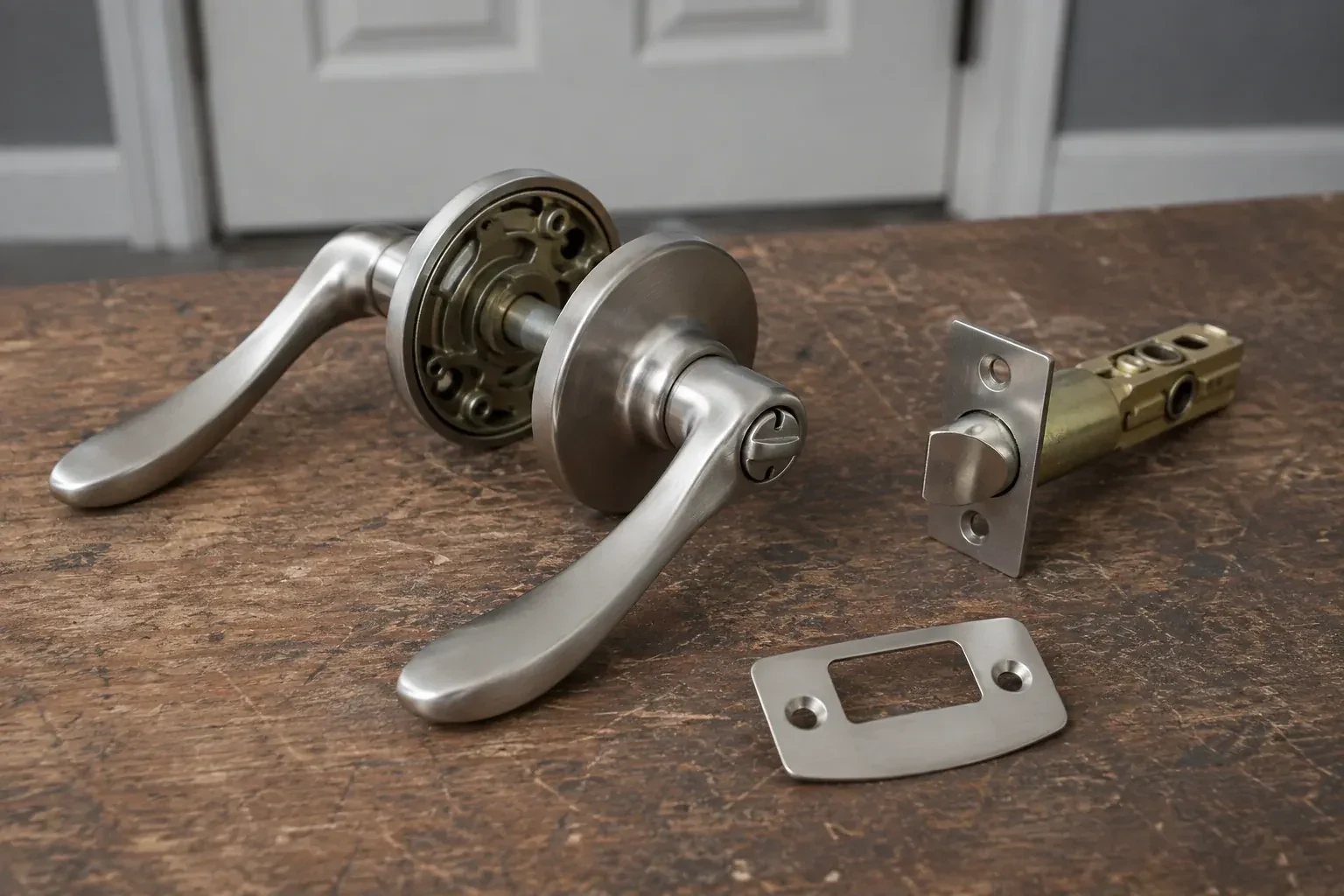
The bolt assembly slides into the edge bore with the faceplate set the way its maker marks, commonly the word "top" facing up. Most residential bolts adjust between 60 mm and 70 mm by twisting or sliding the faceplate, and the locksmith sets it to the backset measured earlier so the tailpiece from the cylinder lands in the centre of the bolt's cam. The bolt is secured with its two short screws, and the locksmith works it in and out by hand to feel that it runs freely through the door without rubbing on the bore. On an insulated door a round drive-in collar may replace the flat plate where the edge is too thin to mortise.
A safer way out as well as a stronger way in
With a thumb-turn inside, everyone in the household can leave through this door without hunting for a key, day or night. The locksmith walks the family through the thumb-turn and shows children how it turns. If a double-cylinder bolt was replaced, the inside key is no longer needed at all and can be retired. Where glass sits near the lock, whatever measure you agreed on, a thumb-turn that locks with its own small key, a laminated pane, or a tested security-film system that can delay an arm's reach, is in place, so security did not come at the cost of a clear way out.
Deadbolt Installation
In the van
Reinforced strike plate
Manufacturer's bore template
Bolt faceplate or drive-in collar
75 mm (3 in) strike screws
Strike box
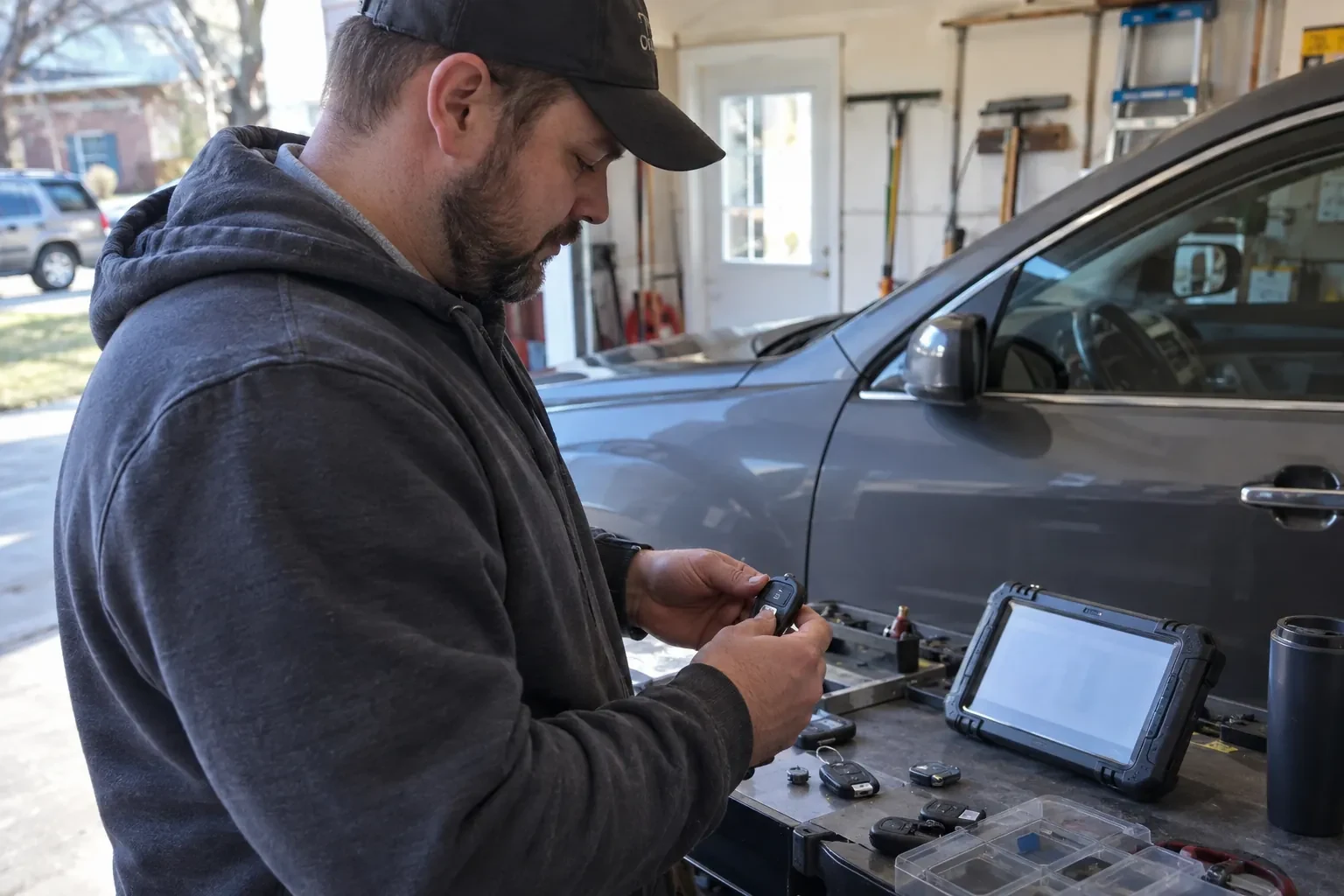
Deadbolt Installation
What affects the quote
Keying alike or a fresh key
Pinning the new cylinder to your existing key, or setting several doors to a new key, is bench work quoted per cylinder, plus the number of keys you ask to have cut.
Number of doors
One front door is the simplest case. Front, back, side and garage-to-house doors done in one visit share the travel and setup, so the per-door figure usually eases as the count rises.
Non-standard bore or backset
Older doors with a small cross bore, an unusual backset or a mortise lock case need adapting or filling before a modern deadbolt fits, and that preparation is quoted before work begins.
What to have ready
- Which doors do you want a deadbolt on, and does each one already have a bolt or only a knob?
- Does the door have to be pulled or lifted before it latches or locks at the moment?
- Is there a storm door or screen door in the same opening?
Deadbolt Installation: questions
QuestionsHow long should the bolt be?
The bolt should extend at least 25 mm into the frame, which is the standard throw for a dwelling's entrance doors and the length most residential deadbolts provide. Part of the bolt stays inside the door for support while the rest sits in the pocket. A hardened steel insert that spins under a saw blade is a common feature worth having on doors that face a street or laneway.
What about glass beside the door or a window in it?
Glass within reach of the lock is the one case where a plain thumb-turn deserves thought. Options include a captive thumb-turn that turns freely until you remove its small key, laminated glass or a tested security-film system with its specified frame attachment, or simply setting the bolt farther from the glass. Lock manufacturers describe sidelights as a weak point, so the locksmith measures the reach and lays out the choices rather than defaulting to a key on the inside.
What do backset and bore mean, and why does the locksmith ask?
Two measurements decide whether a deadbolt fits your door. Bore is the diameter of the big hole through the face, 54 mm on most current hardware. Backset is how far the centre of that hole sits from the door's edge, 60 mm or 70 mm on nearly all residential doors. A replacement must match both to use the existing holes, and a fresh installation is cut to match the knob below, so knowing them ahead puts the right hardware on the van.
Related services
- Lock Replacement & UpgradeThree teenagers, a dog walker, a cleaner and one house key that keeps going missing.
- Vintage Mortise Lock ServiceThe key turns freely in the round cylinder on the door, all the way around and back, without the bolt shifting at all.
- Smart Lock InstallationThe deadbolt is a stiff double-cylinder model that needs a key from both sides, and in the dark hallway finding it is a nuisance.